by Nebula Haze
Table of Contents
Introduction to Plant Training: Indoor Training Tactics for Bigger Yields!
Three Main Types of Plant Training
1.) Bending & Securing Parts of the Plant
2.) Damaging or Removing Parts of the Plant (in a Strategic Way)
3.) Manipulating Timelines to Get Faster Yields
Why Does Plant Training Increase Yields?
Introduction: How to Train Indoor Plants for Bigger Yields
Are you interested in increasing your yields when growing indoors? If so, you’re in the right place! Plant training is one of the easiest ways to increase your cannabis yields without having to upgrade your light or setup. It can be used to increase your yields up to 40% compared to not training, and it’s free!
First off, what is plant training?
“Plant training” means physically manipulating the plant so it grows more bud sites, resulting in increased yields indoors
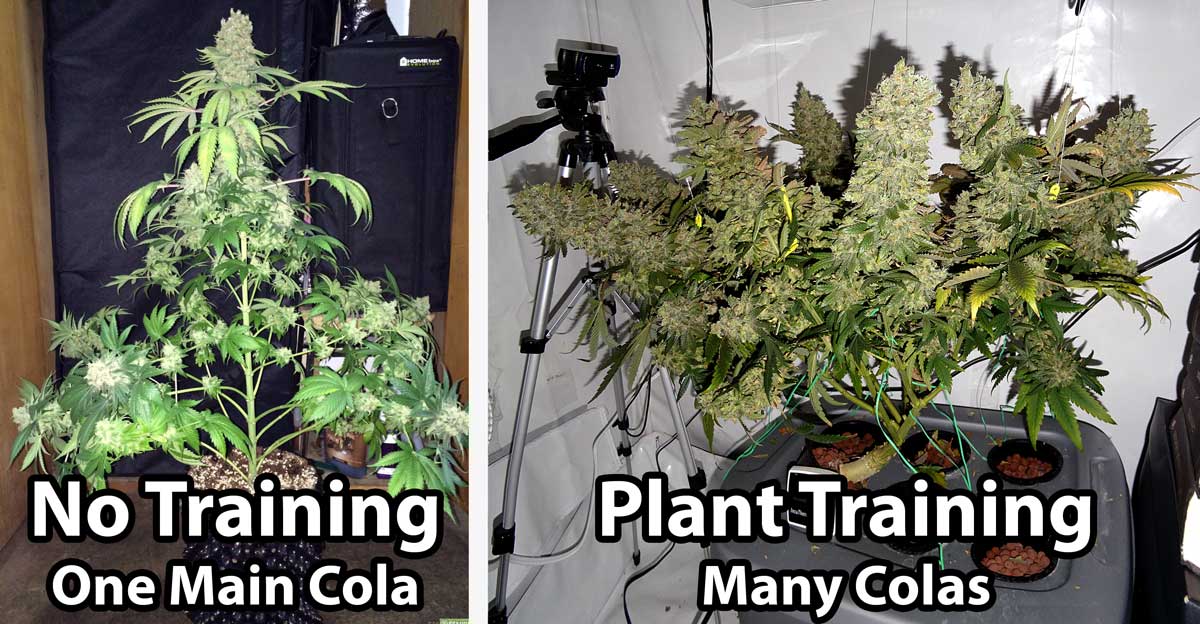
Why not let plants grow naturally? Cannabis naturally grows in a “Christmas Tree” shape that is optimized for sunlight, not grow lights. Unlike the sun, cannabis grow lights do not rise and set every day, providing light from the sides. Furthermore, indoor grow lights have almost no penetration when compared against the sun; the light from a 1000W HPS is usable for a few feet while light from the sun is usable to plants after traveling 93 million miles!
Even outdoors, lower buds tend to grow smaller than the top ones (cannabis is a wind-pollinated plant and favors buds that are higher up). But the lack of growth in lower buds becomes more pronounced indoors. With grow lights, the vast majority of the light produced is aimed straight down over the top of the plant, and in most setups the sides don’t get much light at all. Because of these reasons, the Christmas Tree shape can be really inefficient indoors, causing your plant to have just one big, top bud and many smaller ones that don’t weigh nearly as much.
The main idea of plant training is to create several top colas to take the best advantage of indoor grow lights so less light is lost and yields are higher overall.
Make many cannabis colas instead of just one!
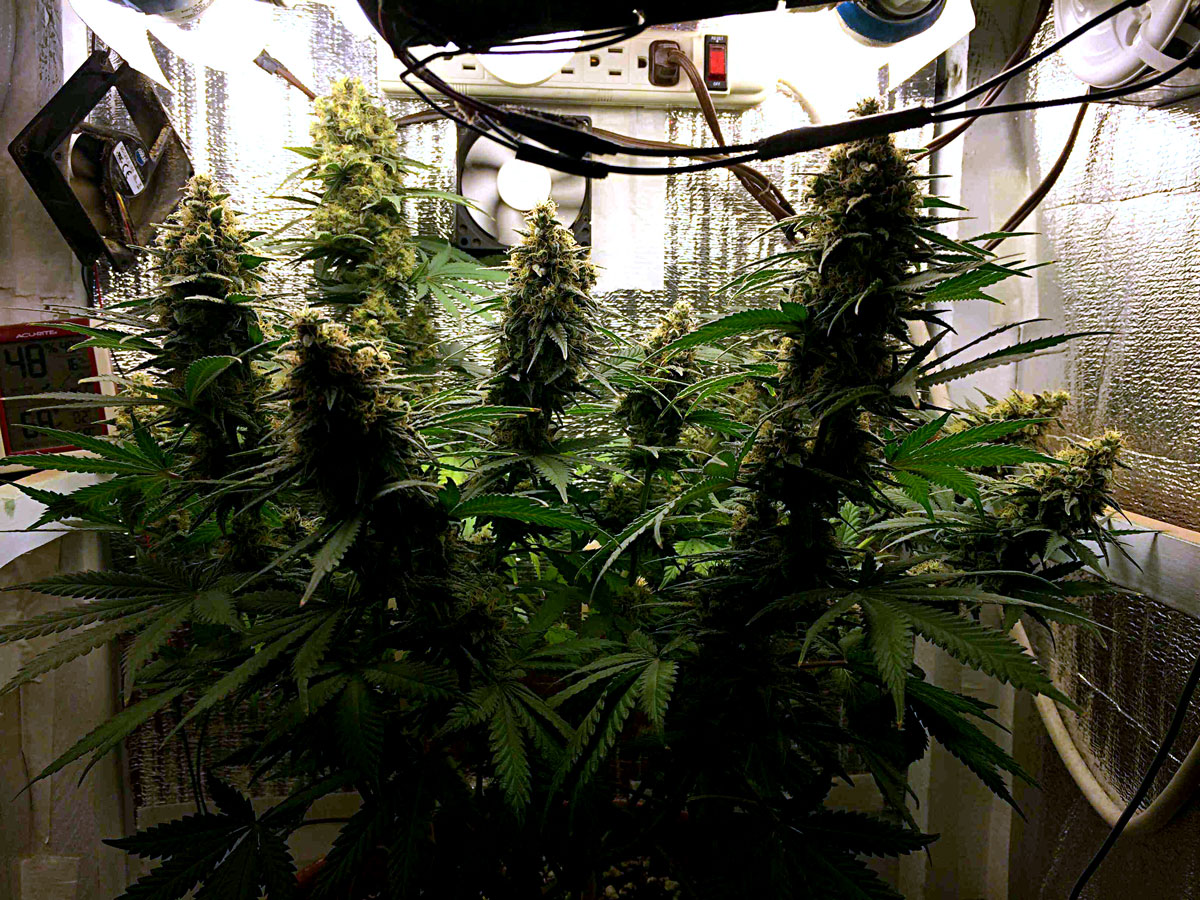
Three main types of marijuana plant training
- Bending and securing parts of the plant while causing little-to-no physical damage to the plant
- Damaging or removing parts of the plant in a strategic way to get it to grow in a more desirable shape
- Manipulating timelines to get faster or bigger yields
Usually, growers will use more than one of these types of training because they can complement each other, but it’s also possible to use just one and not any others. For example, when growing auto-flowering strains you can’t manipulate timelines and it’s generally advised not to damage the plant since they have such a short life and that could result in stunting. So for auto-flowering plants, the main option is just bending and securing.
Next: a breakdown of each plant training technique so your garden has tons of colas!
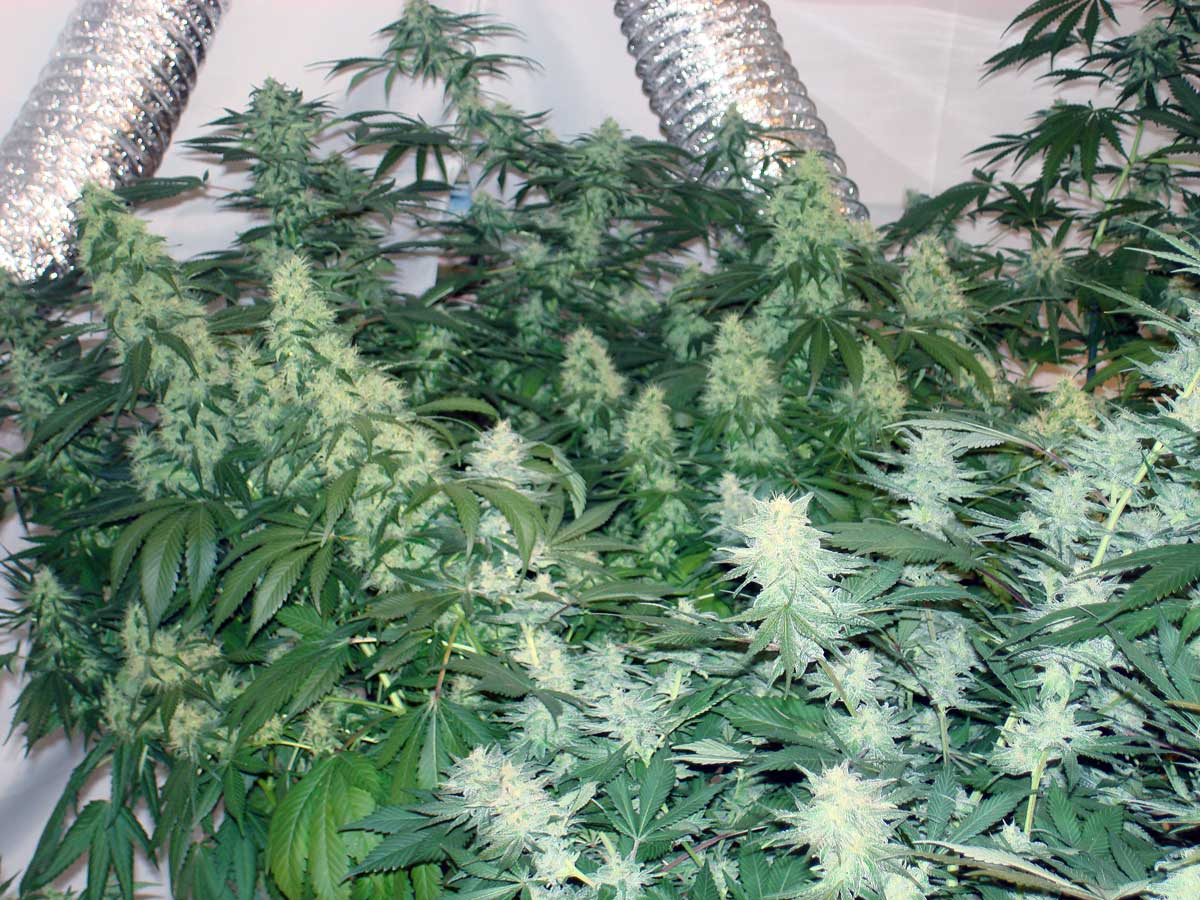
Bending & Securing Parts of the Plant
Bending and securing parts of your plant is usually referred to as “Low Stress Training” (LST).
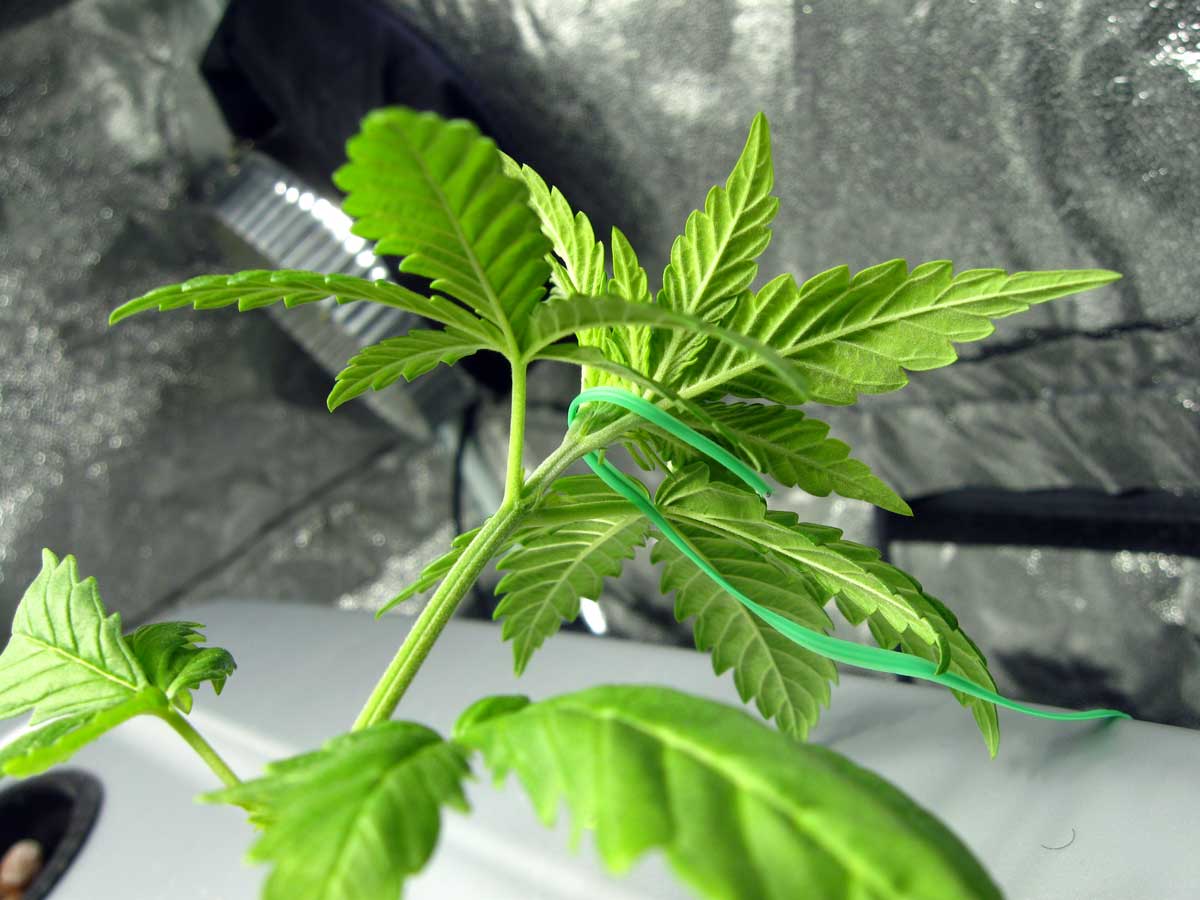
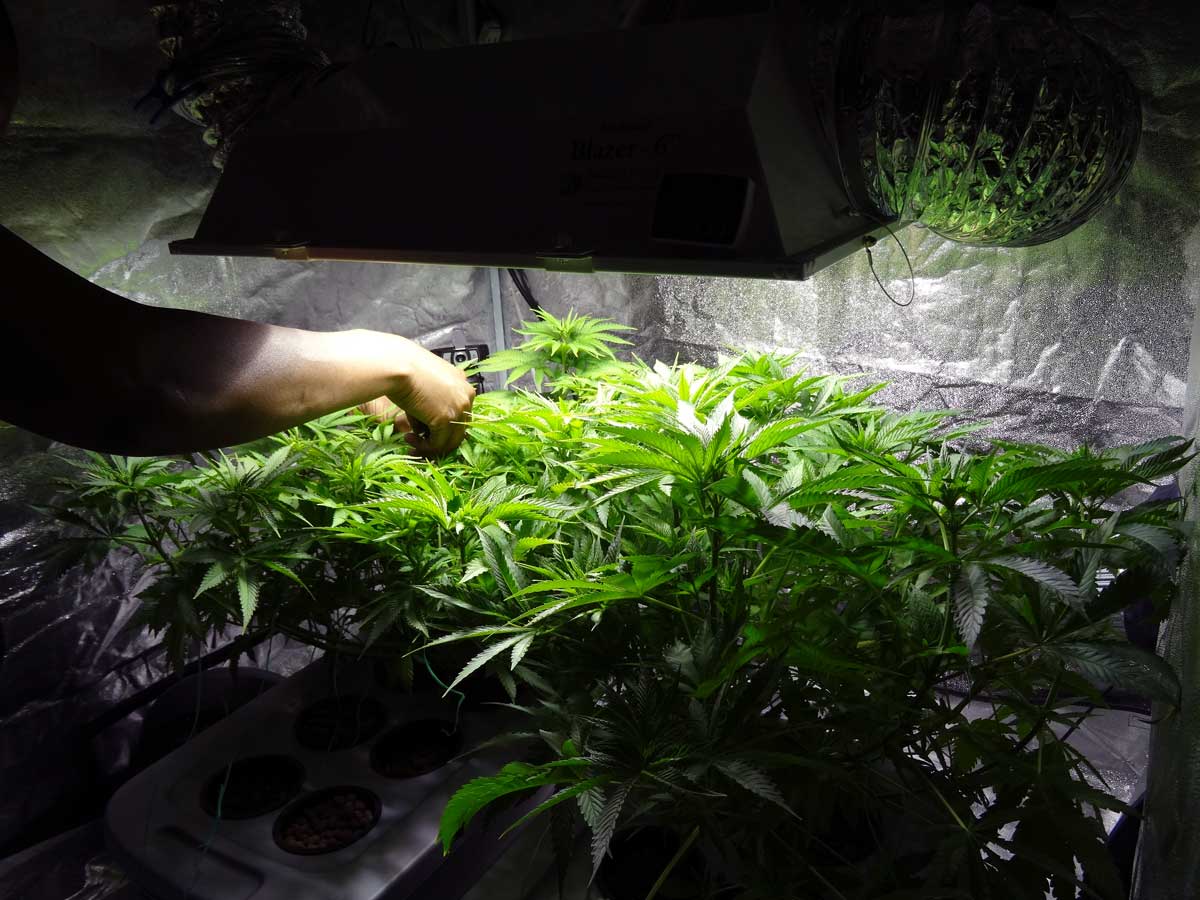
General Low Stress Training (LST) – LST is the process of bending stems and securing them in place. The general idea is to bend tall stems down and away from the middle of the plant as it grows so the plant takes on a more flat and wide shape. This should be started when the plant is still a seedling since its young stems will be flexible, while the stems of older plants become rigid and woody. Some growers use the term “LST” as an umbrella term to cover all types of plant training, while others use it to refer only to bending.
Plant Twisty Ties are commonly used to secure stems in place after bending them over, but lots of growers get creative (pipe cleaners, soft coated wire, etc). Just don’t use anything “sharp” like chicken wire because it cuts into the plant as it grows.
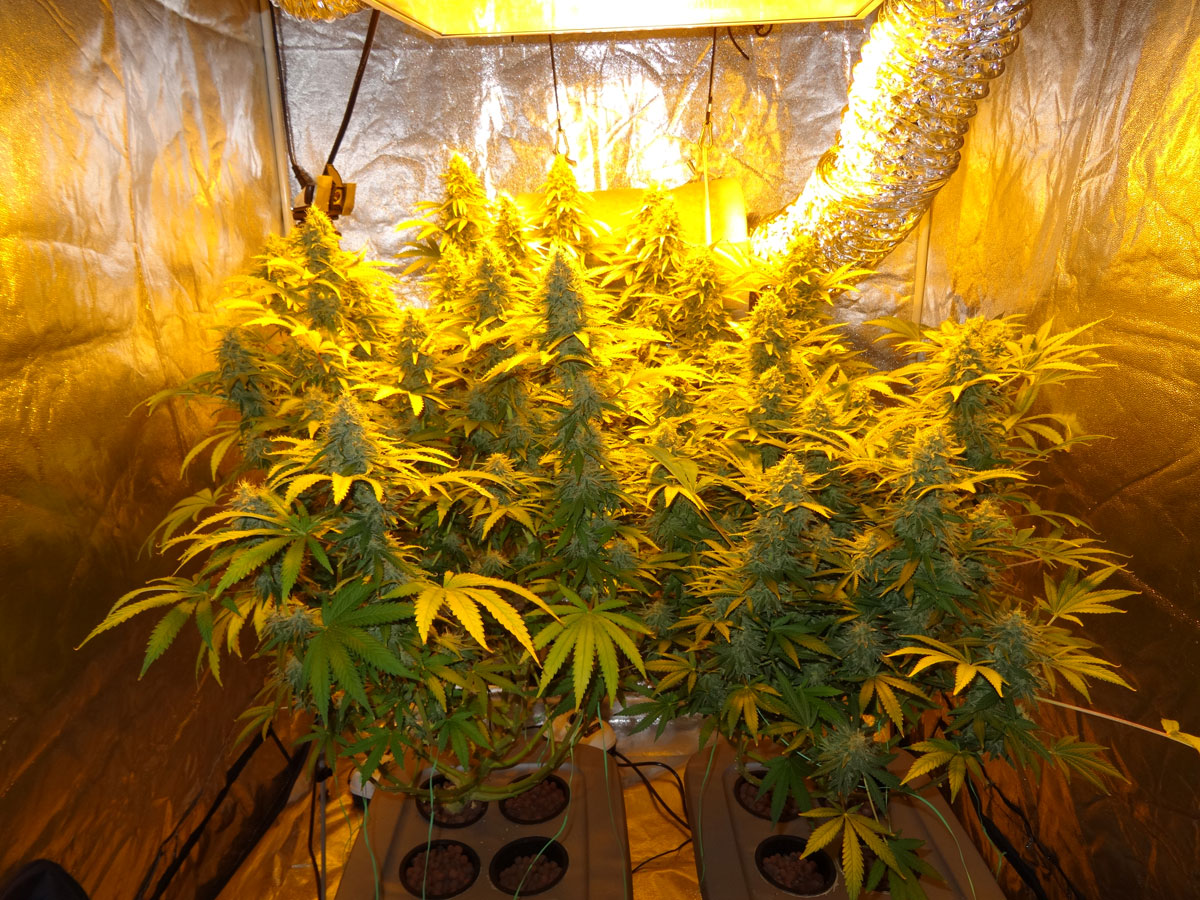
This grower consistently bent the tallest stems down as the plants grew, resulting in a flat, table-top shape
When the plant starts making buds, this flat, wide shape results in multiple colas that are all around the same distance from the light
Read the complete article on Low Stress Training.
No-Technique Plant Training – This is cannabis plant training in its most basic form. If it’s your first grow and you want to keep things simple, or if you don’t have much time and want to do the bare minimum to get results, this is for you!
The main stem was bent over 90° when the plant was very young, so all the lower branches were able to grow up and become main colas. Bending the main stem was the only training done to this plant, no fancy techniques!
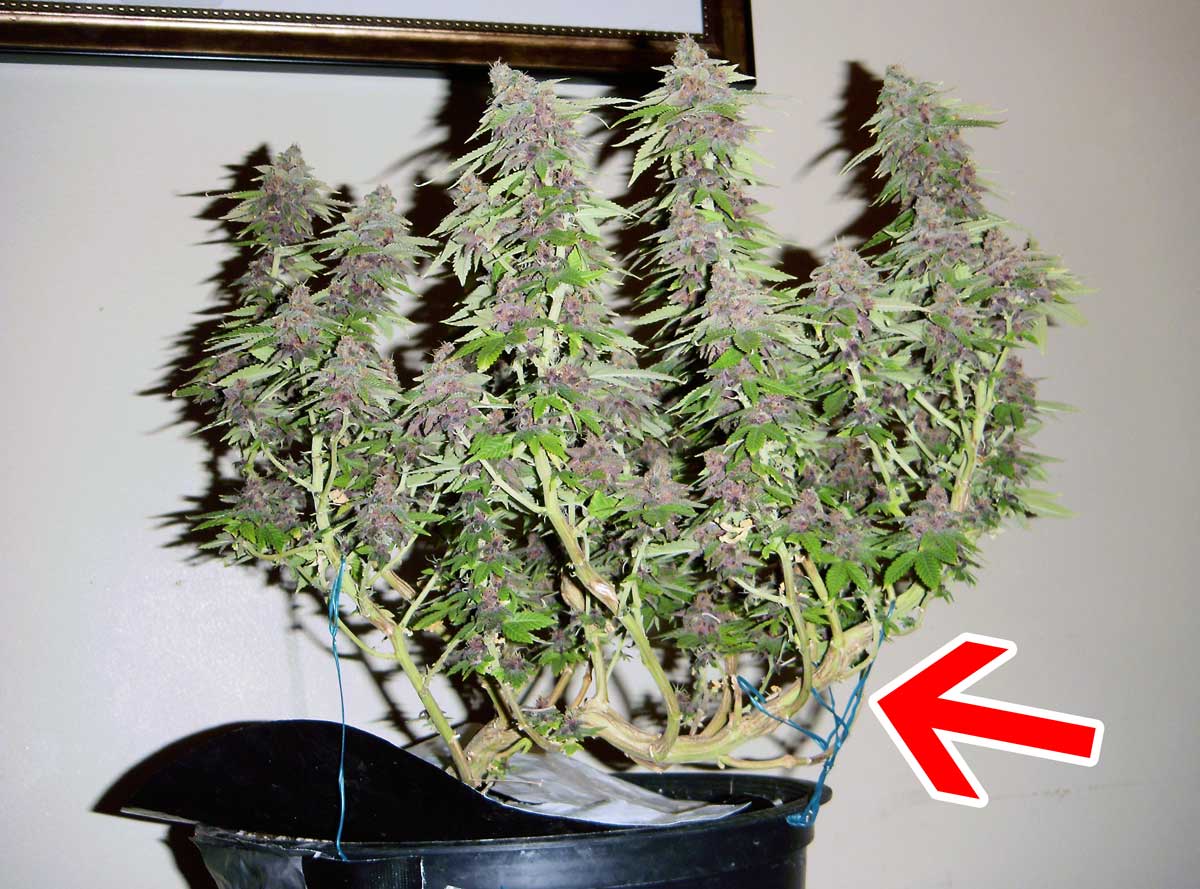
Read the complete article on No-Technique Plant Training.
Supercropping – this technique is a more “extreme” kind of bending, and is used for stems that are too tall but have become woody and difficult to bend. With supercropping you “soften up” the stem first before bending it at an extreme angle. Supercropping can be incredibly helpful towards wrangling an out-of-control plant, and it has a few other benefits too because it can stress the plant in a “good” way.
Supercropping involves extreme bending, but without hurting the “skin” of your plant

Read the complete article on Supercropping.
Screen of Green (ScrOG) is a technique where growers use a screen over their plants and weave stems through the screen as they grow. When the plant starts making buds it’s already in a flat, table-top shape with lots of well-spaced bud sites under the grow lights. The screen also provides support for heavy buds.
Example of Screen of Green (ScrOG)
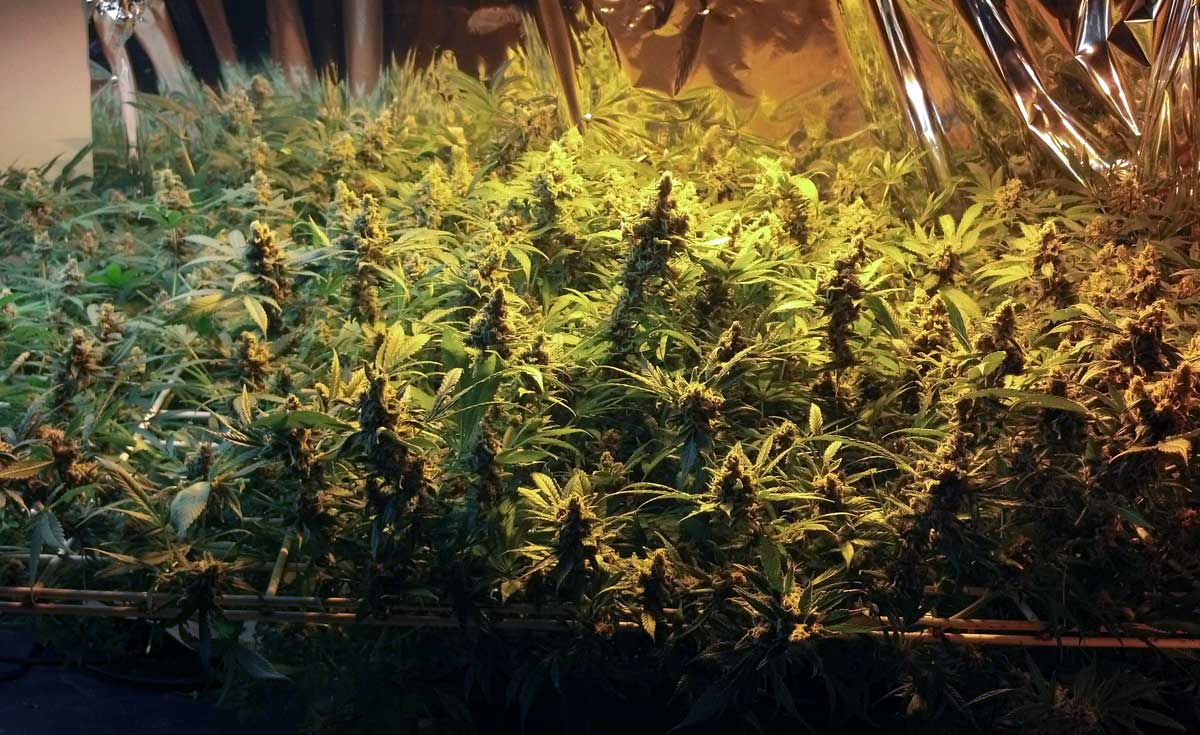
Read the complete article on Screen of Green.
Damaging or Removing Parts of the Plant
These training techniques all involve pruning the plant in some way to improve growth and increase yields indoors.
Topping & FIMing are ways of damaging the plant at a very young age to lead to plants growing m0re bud sites.
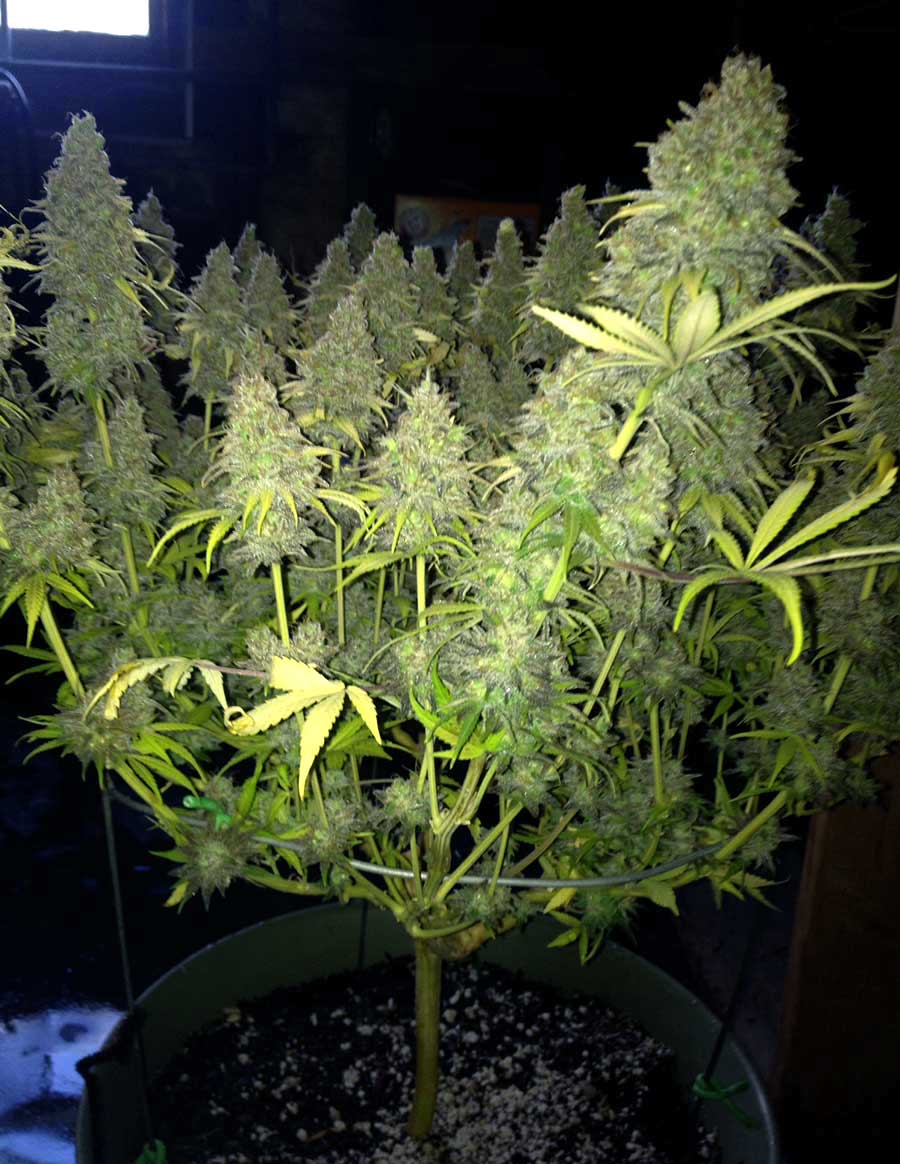
In this next picture, notice how the plant sort of “splits” at one point near the base of the plant. That split is where the plant was topped or FIMed and the apical dominance was broken. As a result, the plant turned many stems into main colas instead of only growing big buds on one main stem
Read the complete article on Topping & FIMing
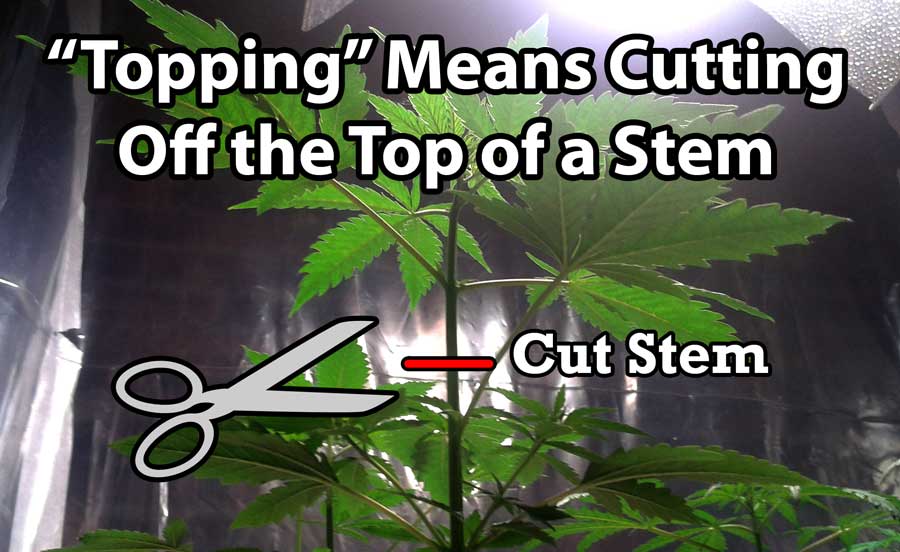
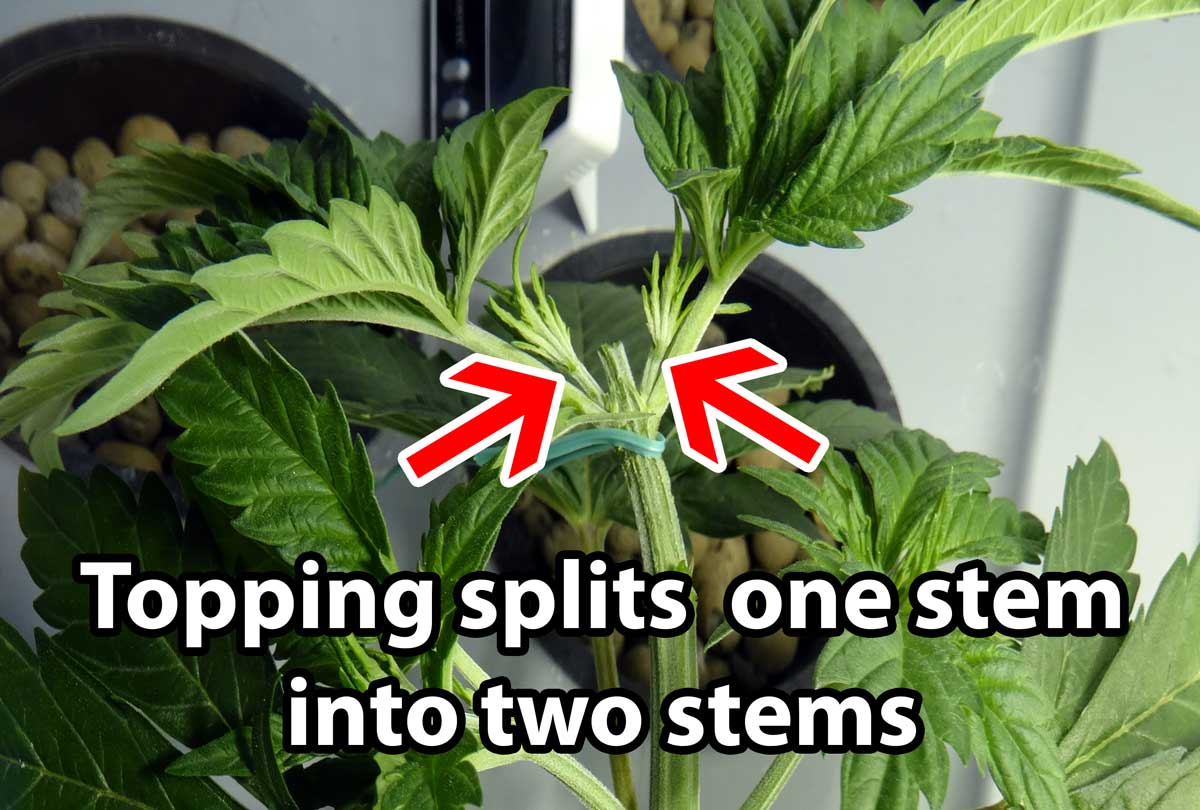
Topping – The idea is to completely remove the top of the plant’s main stem as a seedling. This breaks its apical dominance, or tendency to grow one main cola, and immediately splits the plant into two main stems. As a result of being topped at a young age, the plant will naturally grow multiple colas even if you don’t do anything else.
FIMing – A very closely related technique to topping. The idea of FIMing is to damage or “shave” the top of the plant instead of removing it completely. This can accomplish many of the same goals as topping, but has less of a chance of stressing the plant. The downside is it’s more likely to fail at actually breaking apical dominance (plant may still tend to grow one main cola).
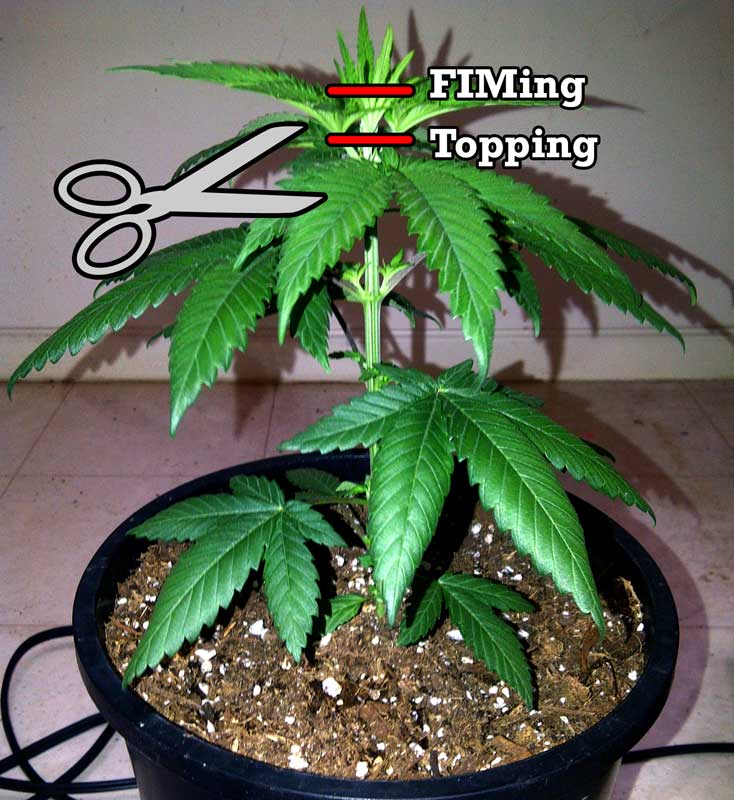
Learn more about topping vs FIMing.
Manifolding – This describes a sequence of topping the plant two times in a specific way so that it forms a wide “manifold” at the base of the plant. This is an easy way to achieve a lot of training without much time on your part. A benefit of training the plant with manifolding is buds tend to grow bigger, longer and more uniform than they would with some other training methods. The downside is topping your plant twice can add a week or two onto your grow.
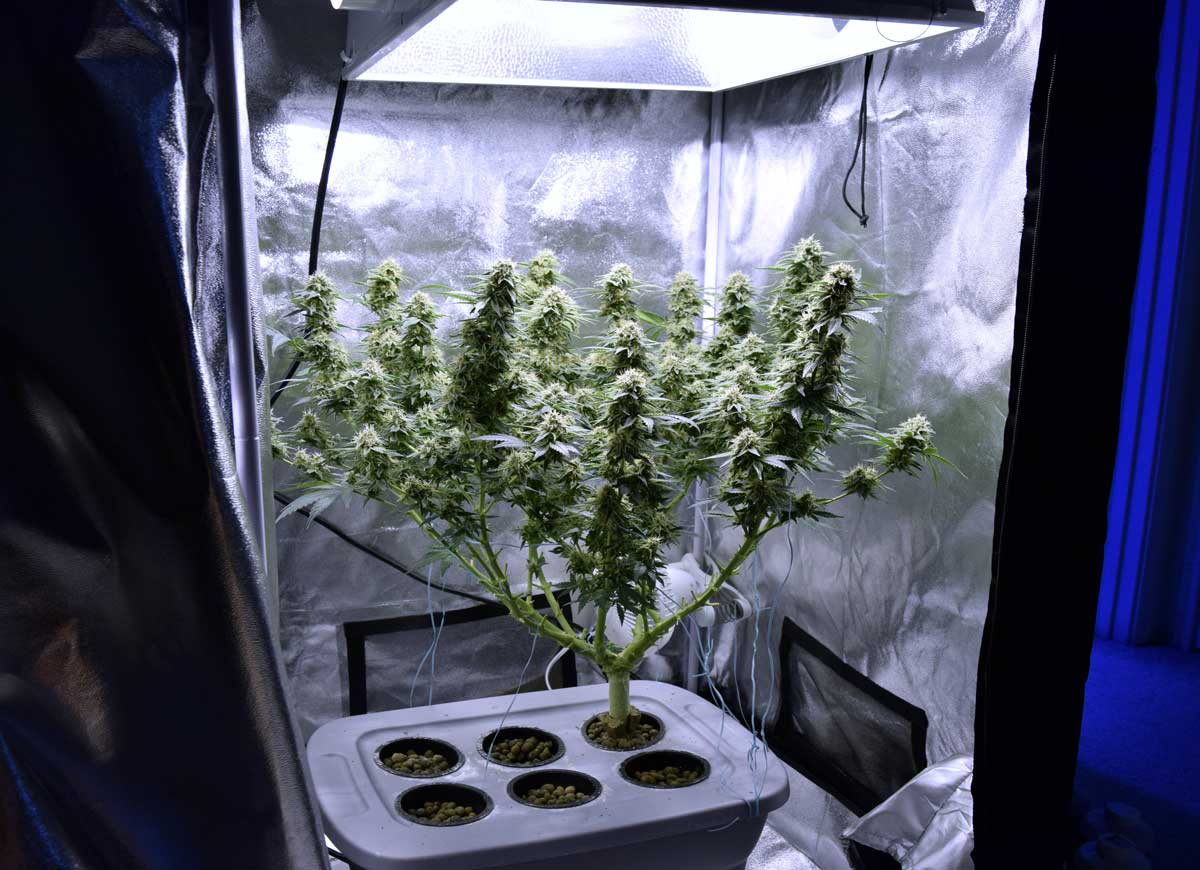
Read the complete article on manifolding.
Defoliation – Defoliation means removing leaves on your plant, usually only the biggest fan leaves. This might be done in the vegetative stage for various reasons, but the main “technique” is using defoliation in a certain way during the first month of the flowering stage in order to encourage buds to grow bigger. With this technique, the cannabis plant is defoliated right before the switch to the flowering stage, then another time or two during the first few weeks while the plant is in the midst of the explosion of growth known as the flowering stretch.
Defoliation involves removing fan leaves in a strategic way in the first part of the flowering stage
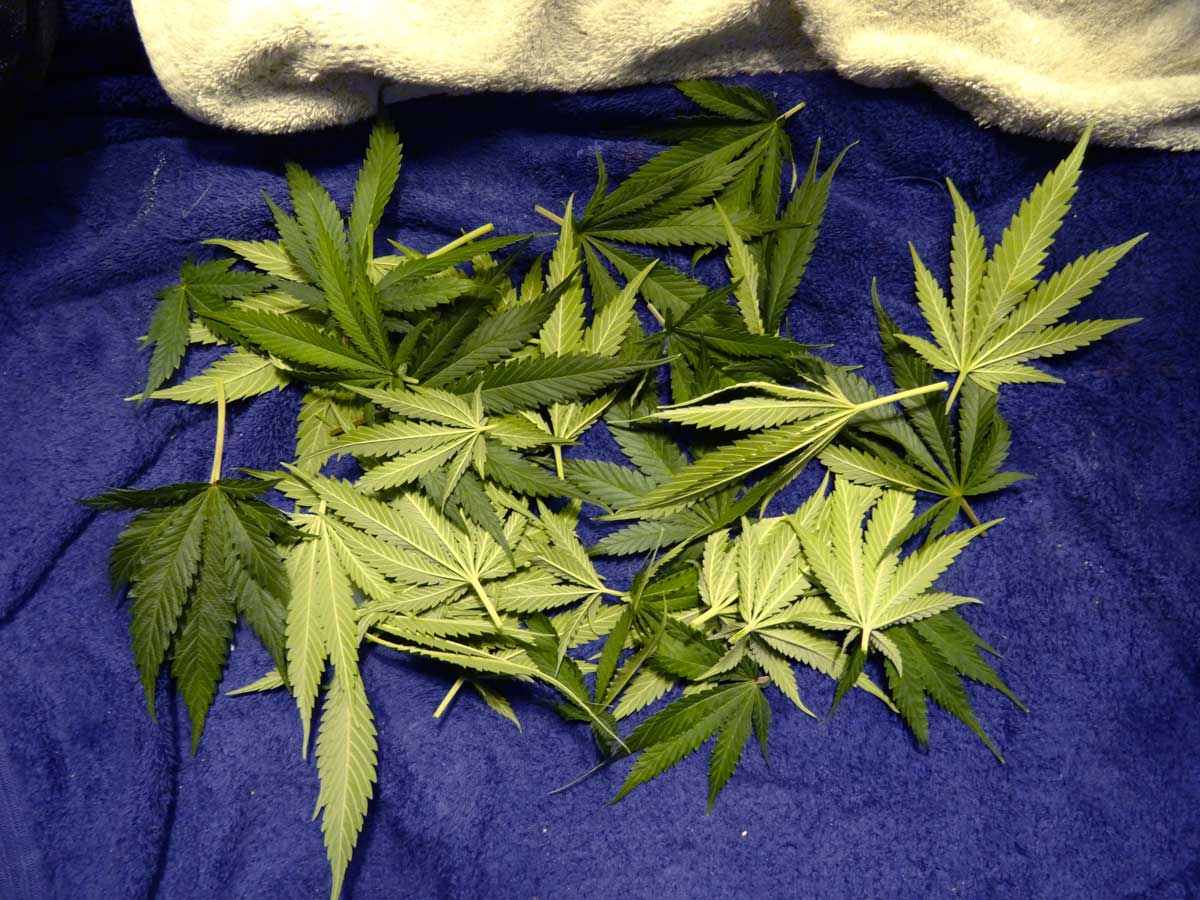
This strategic defoliation exposes all the newly forming buds to light and air right when they’re at their most crucial stage of development. Because of how cannabis (a wind-pollinated plant) buds reacts to light and air, this dramatically increase the size and density of the buds as long as you take off the right amount of leaves at the right time (overdoing this or doing it too late in the flowering stage can do more harm than good!). It’s also very important to note that defoliation should only be done to indoor-grown plants, and even then only plants that are healthy!
Notice how few fan leaves this plant has? That’s because it was strategically defoliated during the first few weeks after the switch to 12/12. In response, the buds grew long, fat and dense.
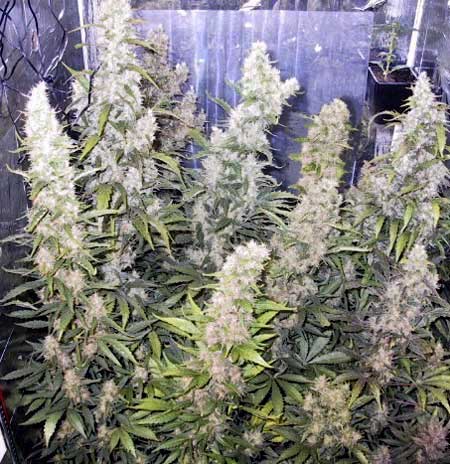
Read the complete article on defoliation
These aren’t necessarily “training” techniques per se, but they are techniques that growers use to increase yields for free, and the main principle is the same – more buds directly under the grow light!
12-12 From Seed is the technique of trying to make seedlings start flowering (making buds) as soon as possible by giving them a “12-12” light schedule from seed. The idea is to get a harvest as quick as possible.
12-12 from Seed results in a quick harvest, but tends to cause stunted plants
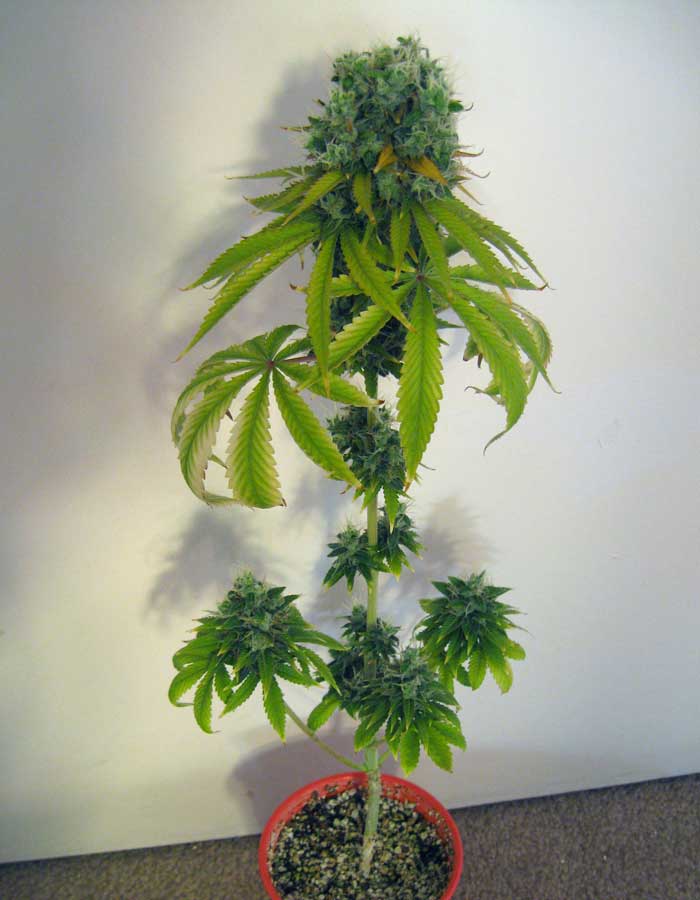
Read the complete article on 12-12 From Seed.
Sea of Green is a related technique to 12-12 From Seed. The idea with Sea of Green is to grow many small plants instead of a few big plants. This allows a grower to make a sea of buds without having to do any plant training and can result in big yields that take less time. The main idea is to let seedlings grow for only 4-5 weeks before immediately switching them to the flowering stage. Since each plant doesn’t have to get very big, the time needed before flowering is reduced by several weeks. Many growers will also “top” their seedlings by removing the tips of seedlings when they have about 4-6 pairs of leaves.
For SoG, initiate the flowering stage when plants are this size or bigger
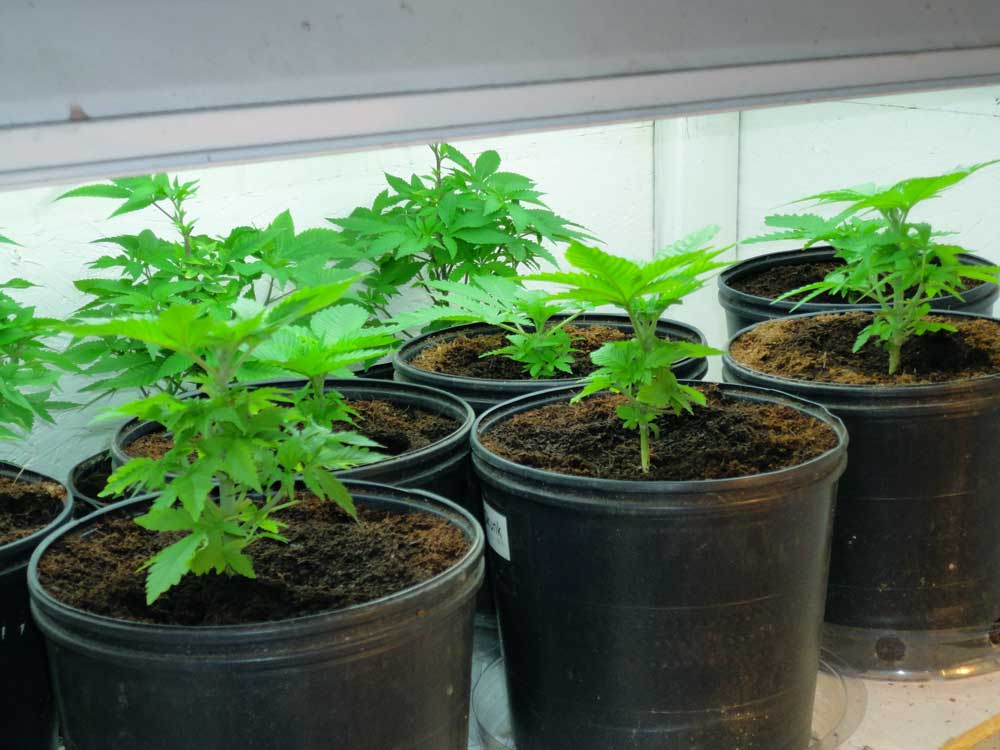
Sea of Green in Action
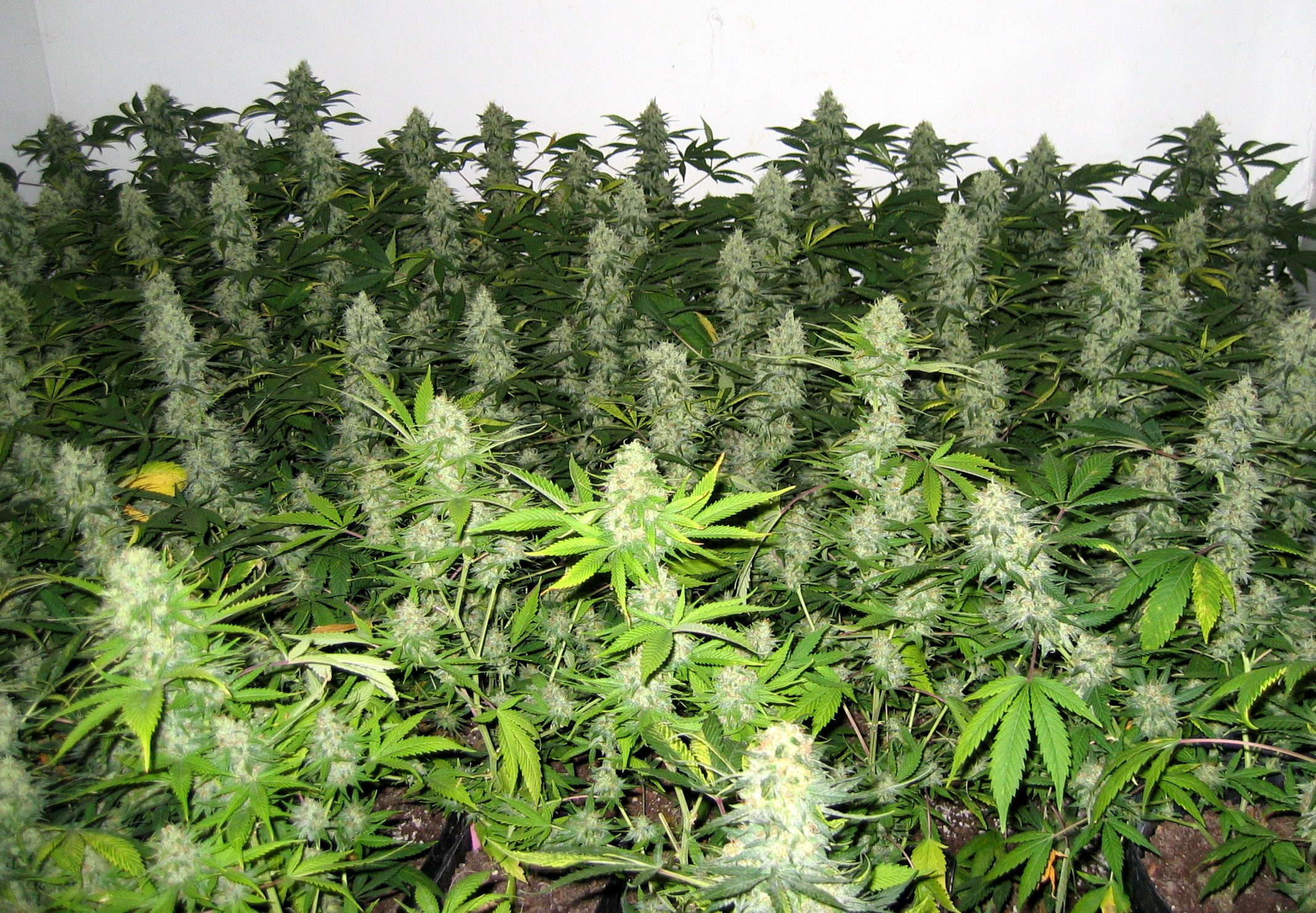
Read full article about Sea of Green
Why Should Growers Train Cannabis Plants to Grow Flat?
How Does Plant Training Increase Yields?
Indoor cannabis growers train their plants to grow with lots of thick bud sites because that shape produces the best yields under the limited power of grow lights.
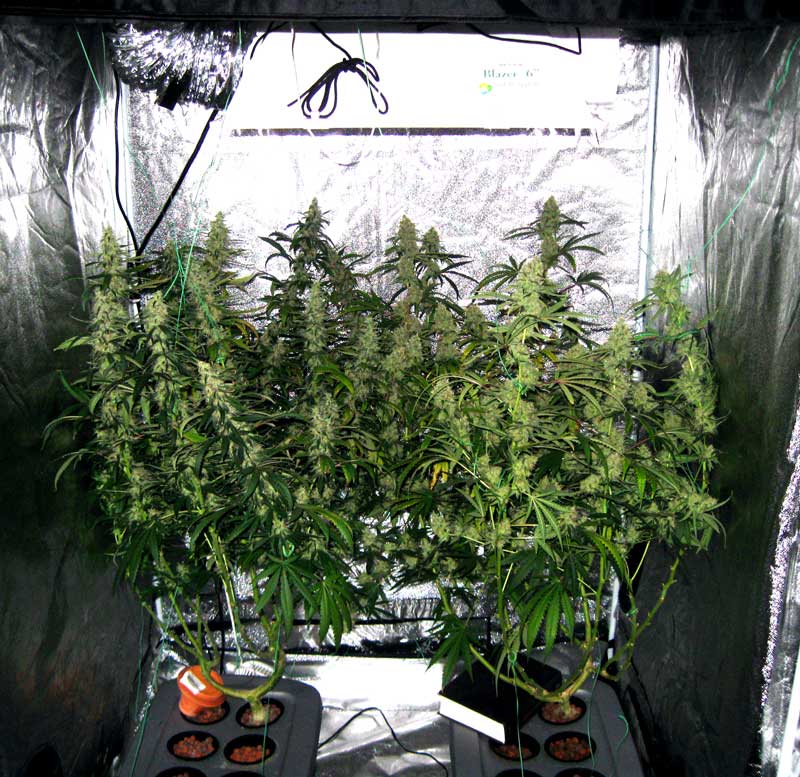
As a grower, you can control a lot of the final size and shape of your plant by using proper cannabis training and growing techniques while the plant is young, such as topping, FIMing, LST, main-lining, supercropping, defoliation, SoG, ScrOG and more, as described in this page. This page explains everything else you can do to get your cannabis to grow the way you want, whether it’s small or big, so you get the best yields possible.
However, no matter how well you train your plants during the vegetative stage, some growth patterns (and many of aspects of your buds like appearance, smell and potency) are going to be determined by your plant’s genes, especially in the flowering stage. If you don’t have access to cannabis seeds or clones where you live, you can control the genetics by growing a strain from a trustworthy breeder and ordering seeds online.
Light is Like “Food” for Cannabis Plants
Many indoor and outdoor cannabis growers prefer to keep their plants relatively short, growing bushy and wide instead of tall and thin. Keeping small plants helps make sure each plant gets plenty of light – light is like “food” for your plants, and providing the right amount of light will give cannabis plants the energy to grow.
The spring/summer sun is all the light an outdoor cannabis plant needs to survive (as long as it’s getting direct light for the majority of the day). It can help with stealth to keep plants shorter than nearby fences or camouflage plants, and training is effective at that, but training isn’t really that effective at increasing yields outdoors.
Outdoors, the natural shape of a cannabis plant is already very well suited to using the light from the sun as it moves in the sky. The best way to get bigger yields outdoors is to grow a bigger cannabis plant with more bud sites. Ultimately, the most important thing you can do for outdoor cannabis plants is put them in an open space that gets as much direct sunlight as possible.
Notice how the plants that get the most direct sunlight grow the biggest
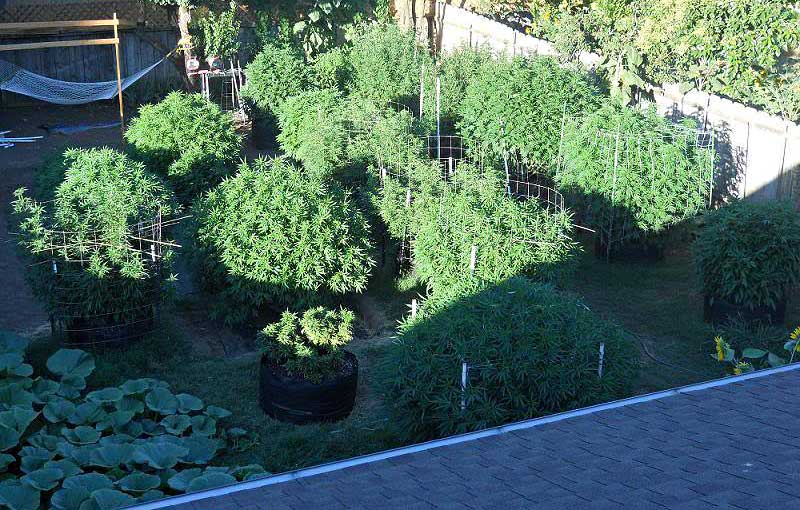
Why do indoor cannabis growers want short or wide plants?
For indoor growers, plants tend to yield more if a lot of the plant is kept just the right distance from the grow lights. This means trying to maintain a flat cannabis canopy under the grow lights and almost always using growth training methods like topping, FIMing, main-lining, ScrOG, etc. These training methods help make sure all the buds get as much light as possible, so you get bigger yields from the same grow lights.
Why do cannabis plants need to be close to the grow lights? It is because indoor grow lights are heavily affected by the inverse square law of light. Unlike indoor grow lights, the sun is so far away that the inverse square law of light doesn’t make a difference – your plant will get about the same amount of light whether it’s on the ground or 10 feet in the air.
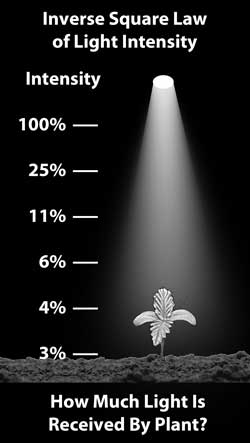 Since indoor grow lights are so close and are so much weaker than the sun, the distance between the light and the plant has a huge effect on how much light the plant will receive.
Keeping grow lights closer will deliver more light to the plants!
But… keeping them too close can severely hurt your plant!
This is a huge part of why it’s important to understand how far away your lights need to be, depending on what type of light you have.
Learn how far away to keep your cannabis grow lights
Powerful Grow Lights – Some grow lights are very bright and powerful (like MH/HPS grow lights or bigger LEDs). More powerful grow lights can cover a wider area with more plants, but the more powerful the light, generally the further it needs to be kept from your plants. Keeping grow lights too close causes light burn, which bleaches your upper leaves and buds, and can possibly cause seeds to form (plants may “herm” as a result of stress which causes seedy buds). Light burn can also possibly affect the potency of the buds.
Vegetative and early flowering plants are harder to light burn, but it’s much easier to do it in the second half of the flowering stage when the plant is no longer making any new leaves, especially with higher wattage lights.
Less Powerful Grow Lights – Grow lights like CFLs and fluorescent lights have a “sweet spot” that is only a few inches away. The further you get, the less light your plants get. These types of lights can grow cannabis plants, and may be a good choice for some growers, but with less powerful lights, it becomes even more important that you learn how to train your plants to grow short and wide with many colas. Little weed plants are the best way to take advantage of CFL grow lights! Luckily the methods on this page like topping, FIMing, SoG, ScrOG, main-lining and more will give you the tools you need to get the most from your grow lights. By using plant training techniques, it becomes possible to harvest ounces of bud even from relatively small grow lights.
Complete Article on How Far Away to Keep Your Grow Lights
In the diagram below, you can see that the natural plant (left – completely untrained) has less parts of the plant in the area with the best light level. As a result, this plant only has one main cola, and the rest of the colas are much smaller because they are further from the grow lights.
Leaves in the “Sweet Spot” of Your Indoor Grow Light Make the Most Energy, Producing Faster Growth and Bigger Buds
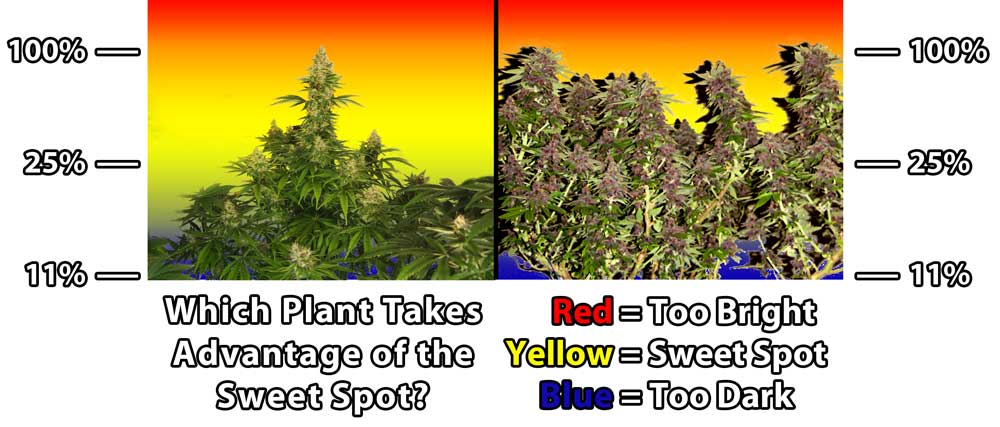
Why settle with just one big cola when you could have many big colas?
The trained plant (right – which has been topped and trained with LST) has many colas that are directly in the sweet spot. In fact, almost the whole plant is getting bathed in just the right amount of light from the grow lights. This means the plant has many big colas and none of them are getting burned by the lights.
Generally, the top of the grow light sweet spot is where the biggest buds form. Cannabis plants love a lot of light, much more than your average house plant. As long as you stay away from the “too bright” zone for your particular indoor grow light (which can cause light burn, even if air is cool), you want to get as many colas in the top of the sweet spot as possible.
Colas in the Top of the Sweet Spot Grow Biggest, So Maximize Yields by Training Cannabis Plants To Grow Many Colas On the Same Level!
It doesn’t matter what type of grow light you use. Each type of grow light has a sweet spot, and whenever grow lights are positioned above the plants, there are likely benefits to training your cannabis plants to grow short and wide. By having more of your plant at the best distance from your grow light, your cannabis leaves and buds will be exposed to more light and give your plant more energy to grow.
When your grow lights are positioned above your cannabis plants….
Plants with a flat canopy will produce more energy than tall & thin plants. As an indoor cannabis grower, you don’t have to just accept the way cannabis grows naturally. You actually have a lot of control over how your cannabis plants grow. So train your plants to efficiently fill up your grow space, giving you the best yields possible with your grow lights.
Don’t Grow This Plant!
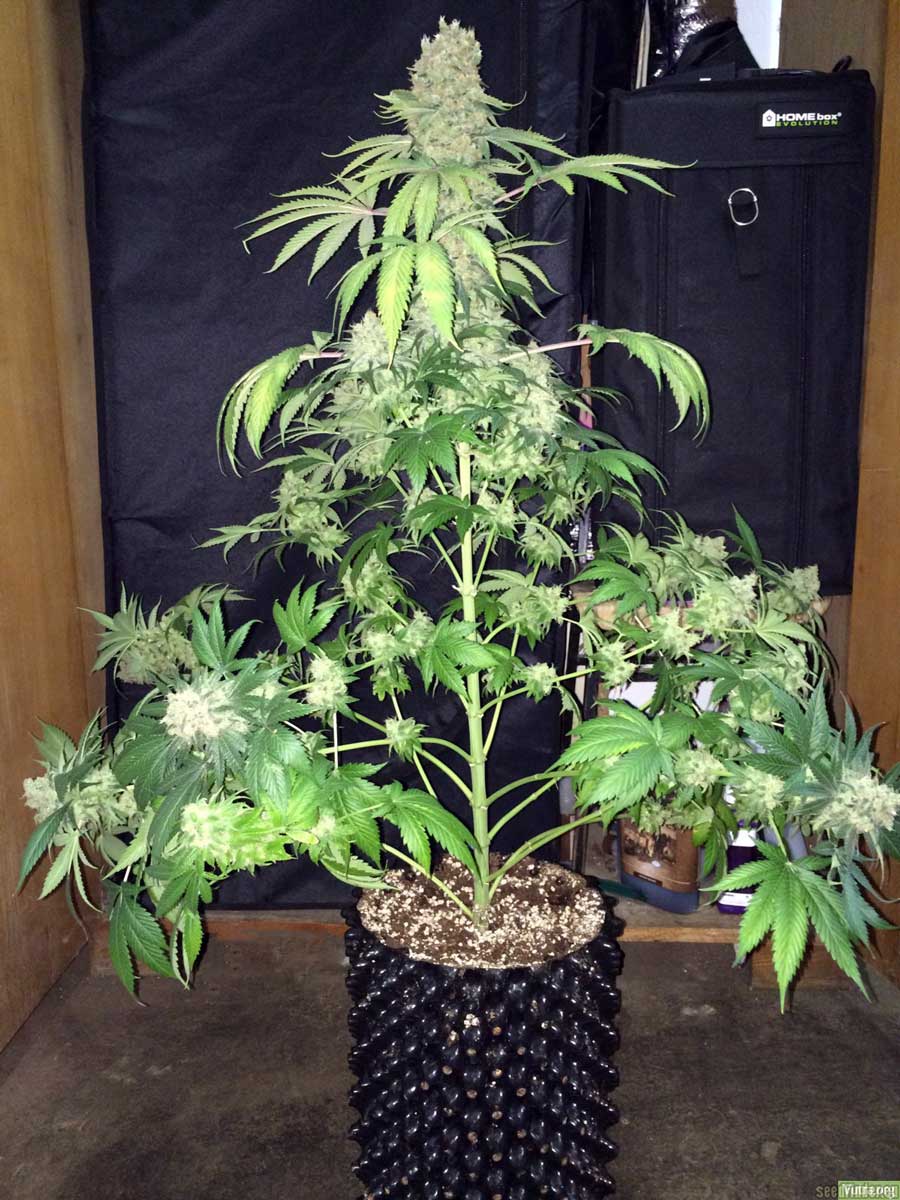
Grow a Trained Plant With A Cluster of Colas!
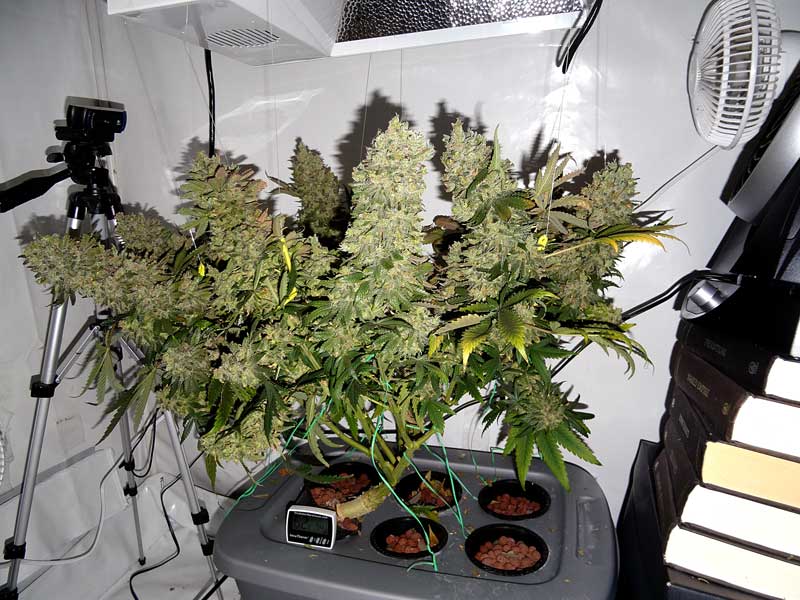
This article on plant training shares several ways to train your plant to achieve this shape!
Learn how to get set up for the most effective plant training!
Now that you have mastered the art of cannabis plant training, what do you want to learn how to improve next?
Bonus: What Determines Yields?
Learn How to Create the Perfect Growing Environment (plus the following sub-articles)
- Temperature Tutorial
- 5 Secrets to Heat Control
- Manipulate Humidity for Better Buds
- How to Make Plants Grow Faster with CO2
Jump to…
10-Step Quick Start Grow Guide
Should I get a regular or autoflowering strain if I want short plants?
Supercropping: the simple secret
Picture gallery of common marijuana growing problems

FOR SERIOUS GROWERS ONLY
You’ve told me you’re looking for a complete guide to growing marijuana that covers everything, from beginner to ultra-advanced.
And growing short and bushy plants is just one technique to getting seriously killer harvests. If you want to learn ALL the secrets…
Learn from the best!
Invest in the most advanced Grow Bible Available:
Growing Elite Marijuana + 7 bonuses (including one-of-a-kind comprehensive strain guide)
Total care explained step-by-step… indoors… outdoors…
Monster cropping… advanced growth control… bud production secrets… and much, much more…
Over 700 pages of pictures, tutorials and advanced insider tips!
Get Instant Access to It All Right Here:
GrowWeedEasy.com/growing-elite-marijuana
I thought I already knew it all, but after I went through this grow bible, I discovered that there were still new ways to increase my yields and grow more potent buds!
-Nebula