
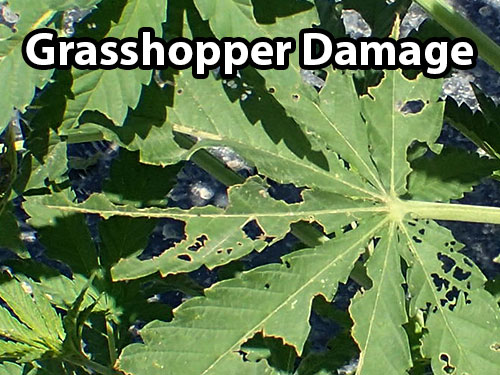
Get the Solution to Grasshoppers!
by Nebula Haze
How to Identify Grasshopper Damage (on Leaves and Stems)
Grasshoppers (and sometimes locusts, which are basically just grasshoppers with wings) happily eat your cannabis leaves, leaving holes, defoliating entire plants, and living among the branches. They can also eat through stems, killing the entire branch, or even cause entire plants to fall over from the massive damage. They leave surprisingly large brown poops (“frass”) on your plants. Grrrrr. If you see this pest, or signs of grasshopper damage, it’s a good idea to get rid of them before they build up in numbers.
Grasshoppers may look cute but they love to munch on cannabis leaves!
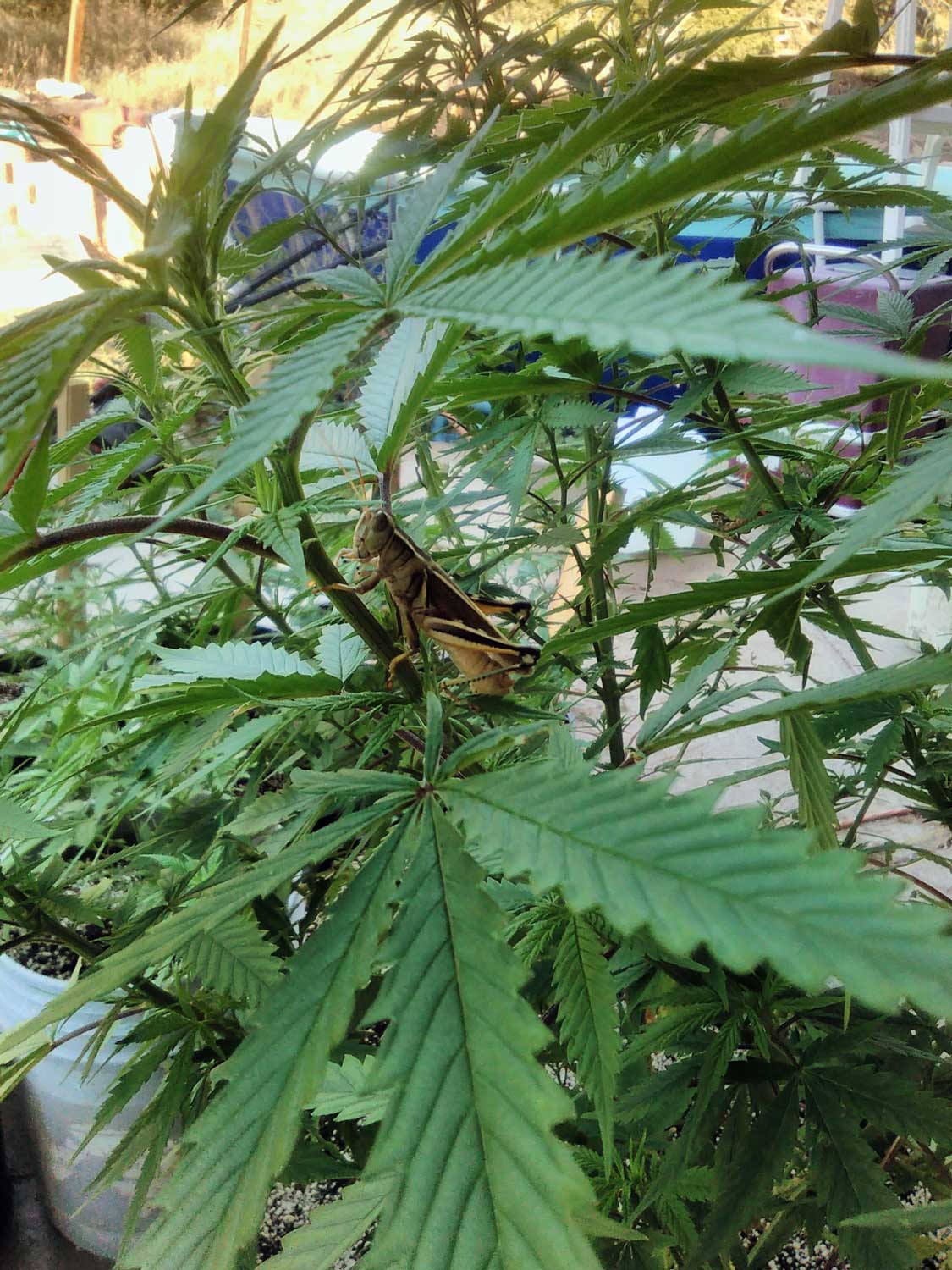
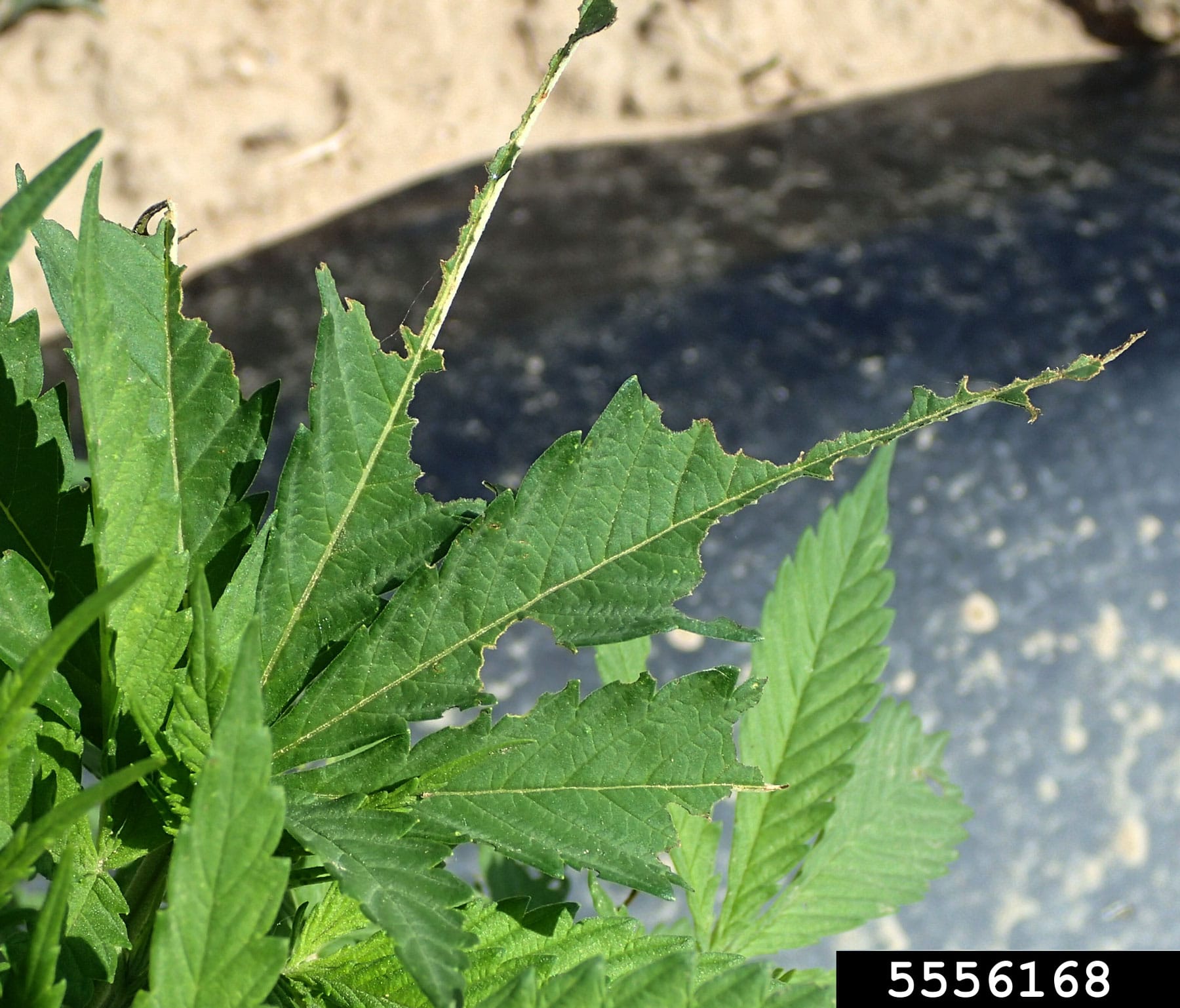
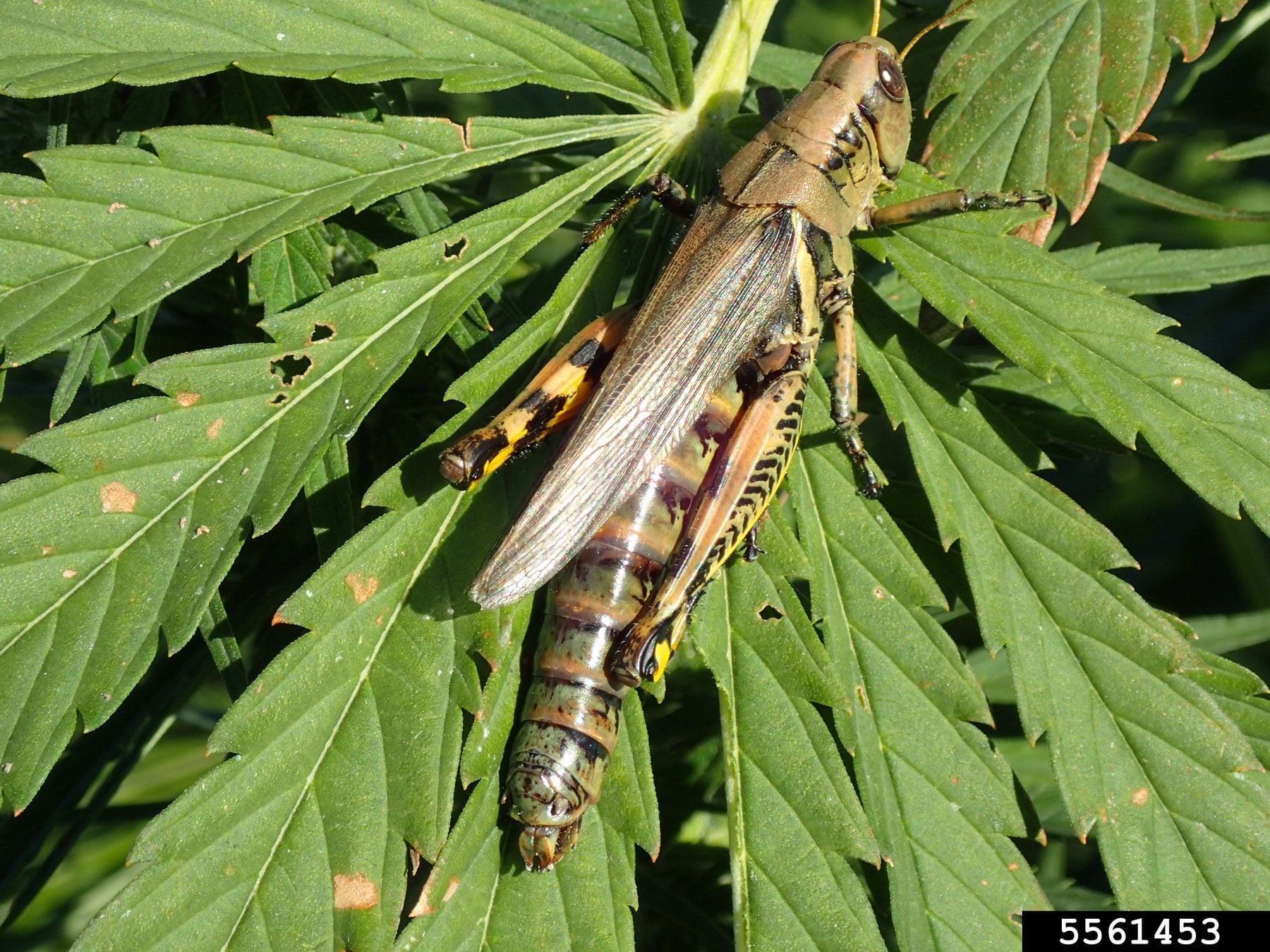
Many of the following pictures of grasshoppers on cannabis and grasshopper leaf damage are by Whitney Cranshaw, Colorado State University, Bugwood.org. (They are the pictures with the black bars and white numbers in the lower right). He has taken dozens if not hundreds of pictures of various pests on marijuana plants to help with bug identification, and his work is greatly appreciated!
Example of grasshopper leaf damage
A grasshopper chilling on a cannabis leaf. Get away from there! This is a differential grasshopper (Melanoplus differentials) full of eggs.
Example of stem damage from the spur-throated grasshoppers (Melanoplus sp.)
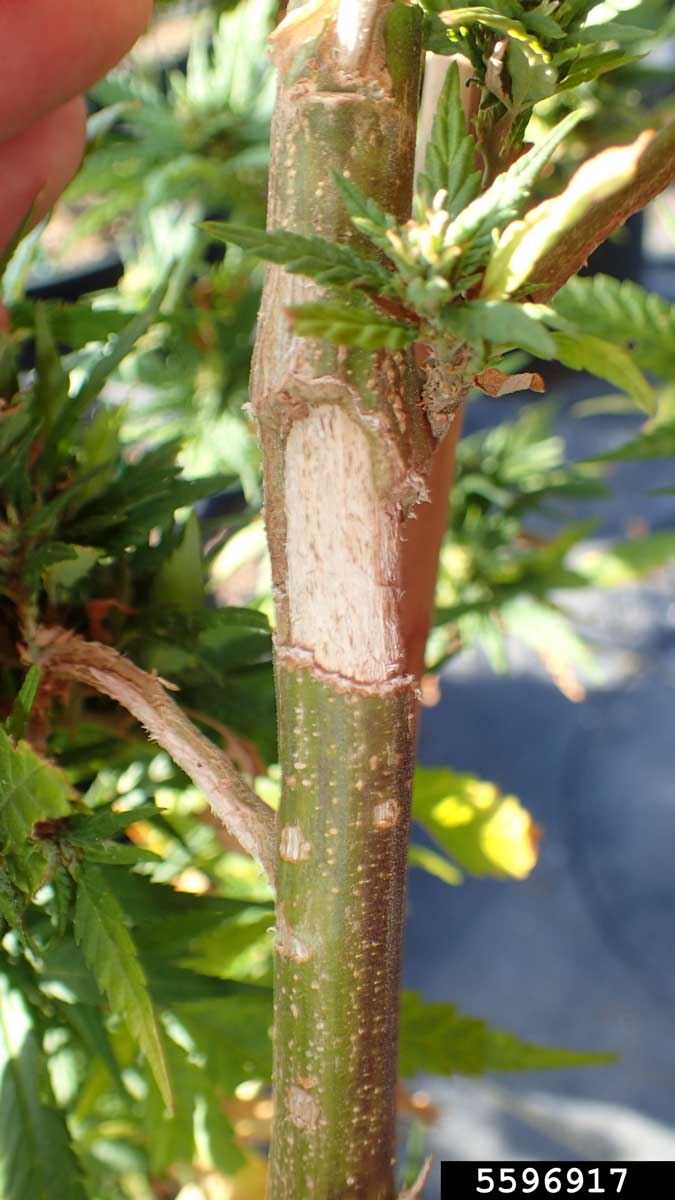
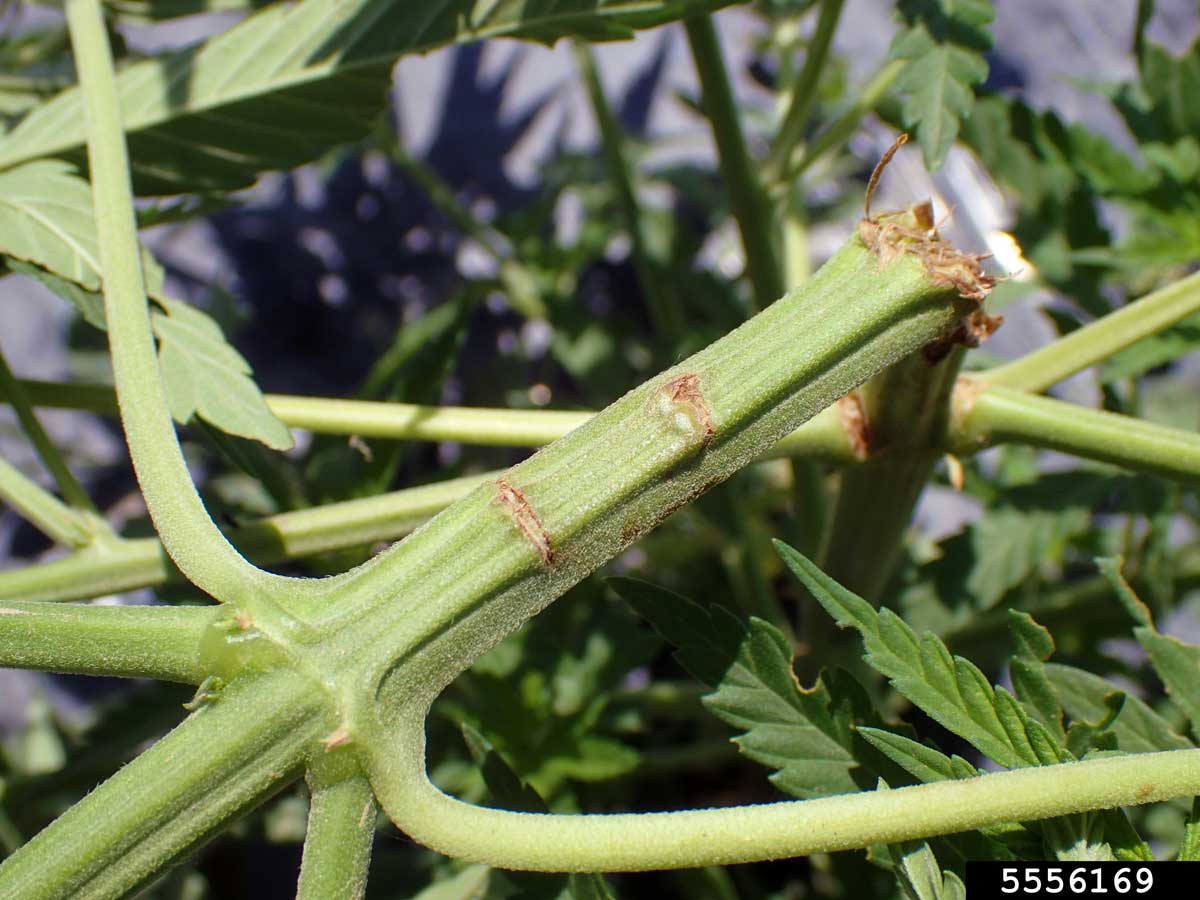
You can sometimes see signs of healed stem damage on your branches. This cannabis stem damage from grasshoppers is often mistaken as being from a large animal like a deer.
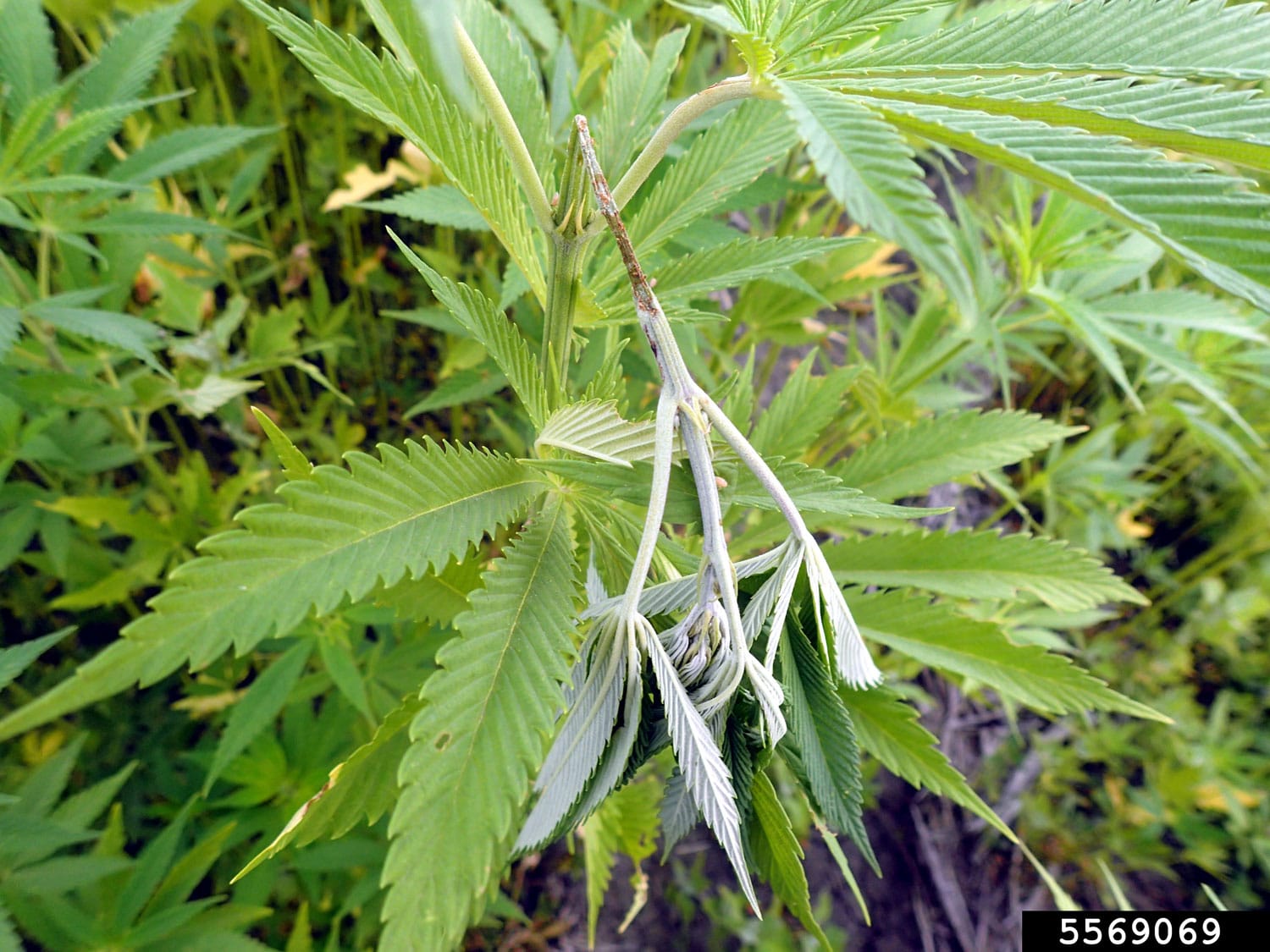
The grasshoppers ate the stem of this cannabis leaf, so the whole leaf started drooping.
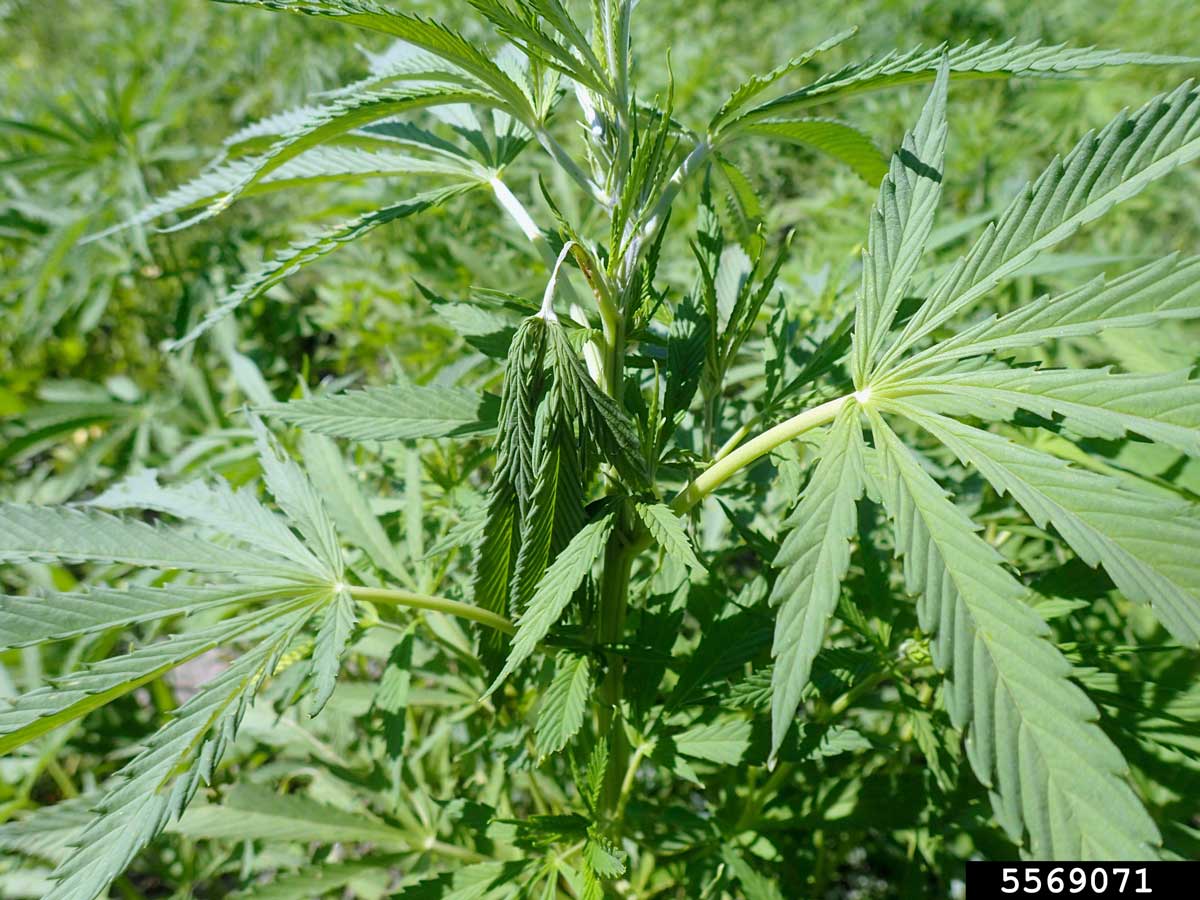
This branch was completely stripped bare by two-striped grasshoppers. One apparently got full halfway and is just dozing and enjoying the weather.
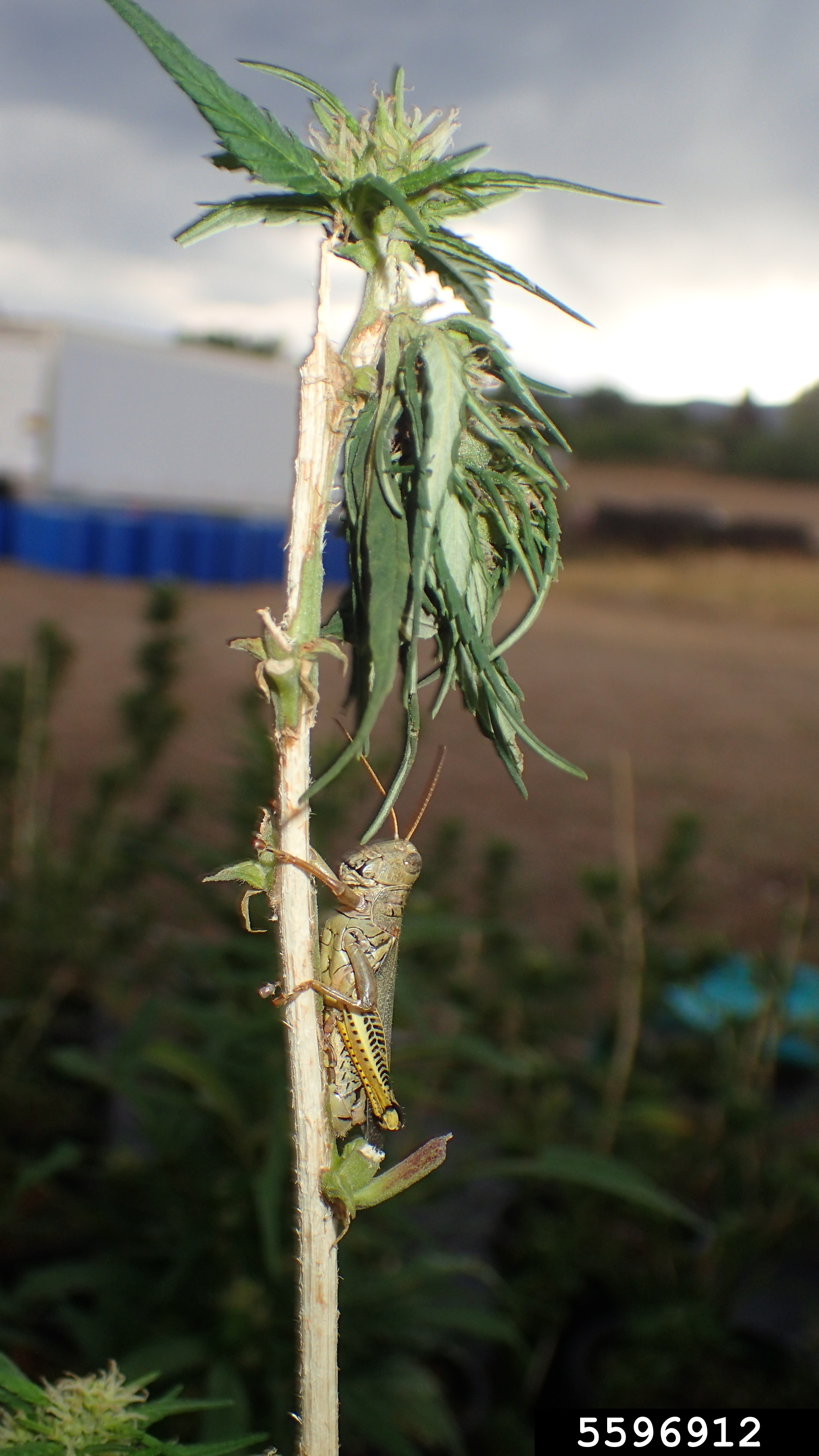
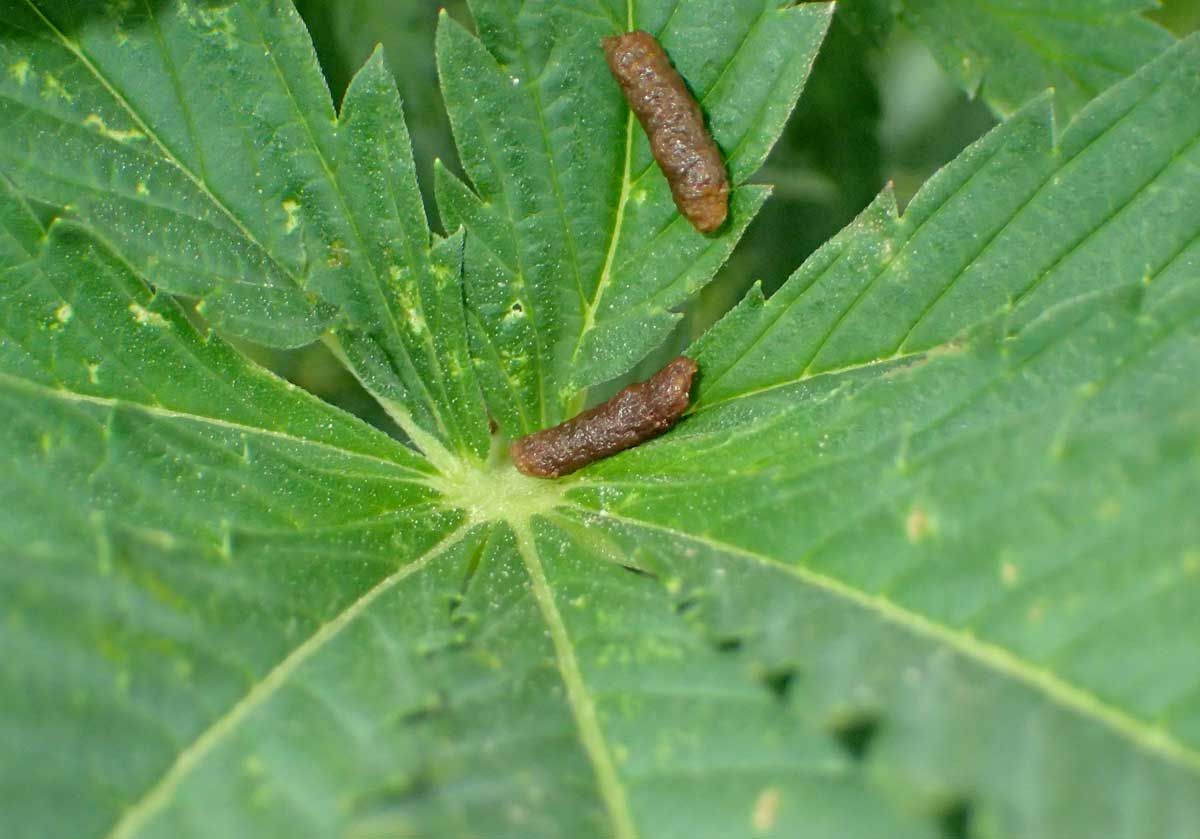
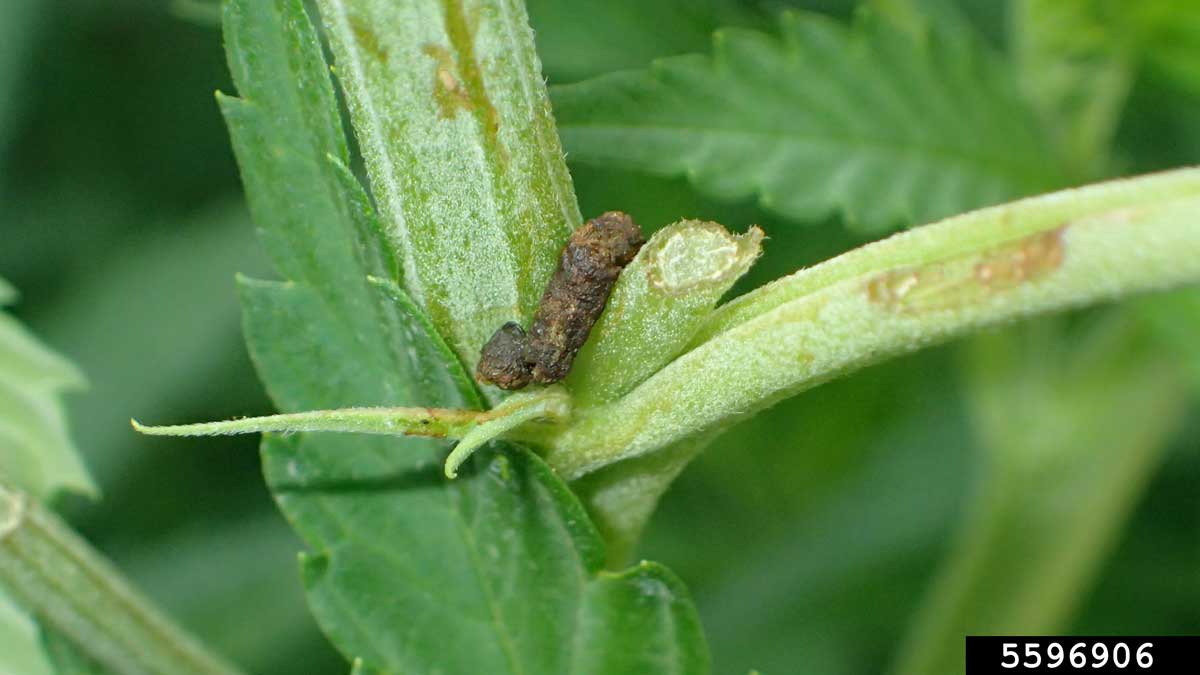
Grasshoppers leave little brown poops (“frass”) on your cannabis leaves, too! Yes, those came from a grasshopper.
Different types of grasshopper damage on cannabis plants
Here are several more pictures of grasshopper damage on cannabis and hemp leaves:
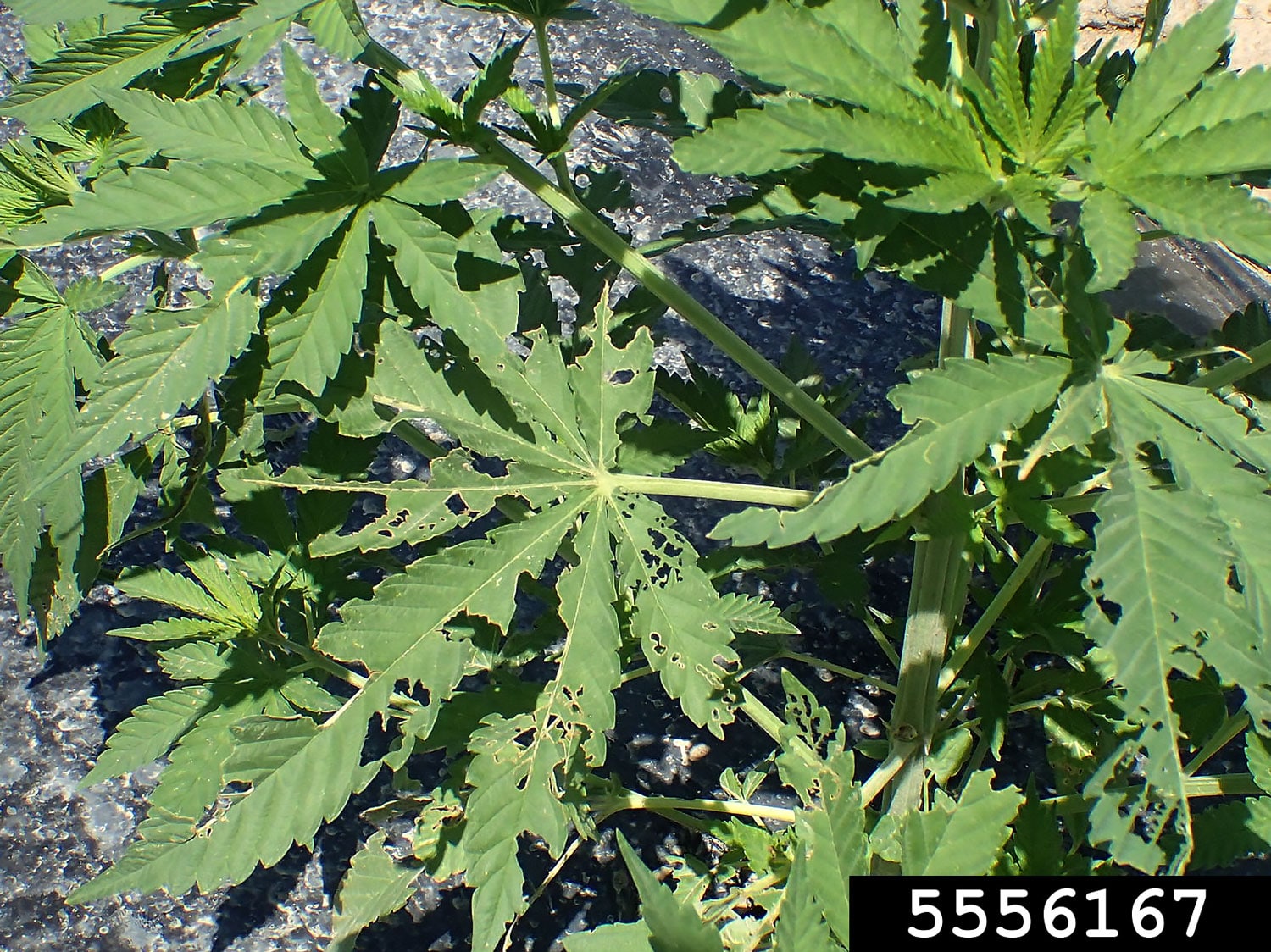
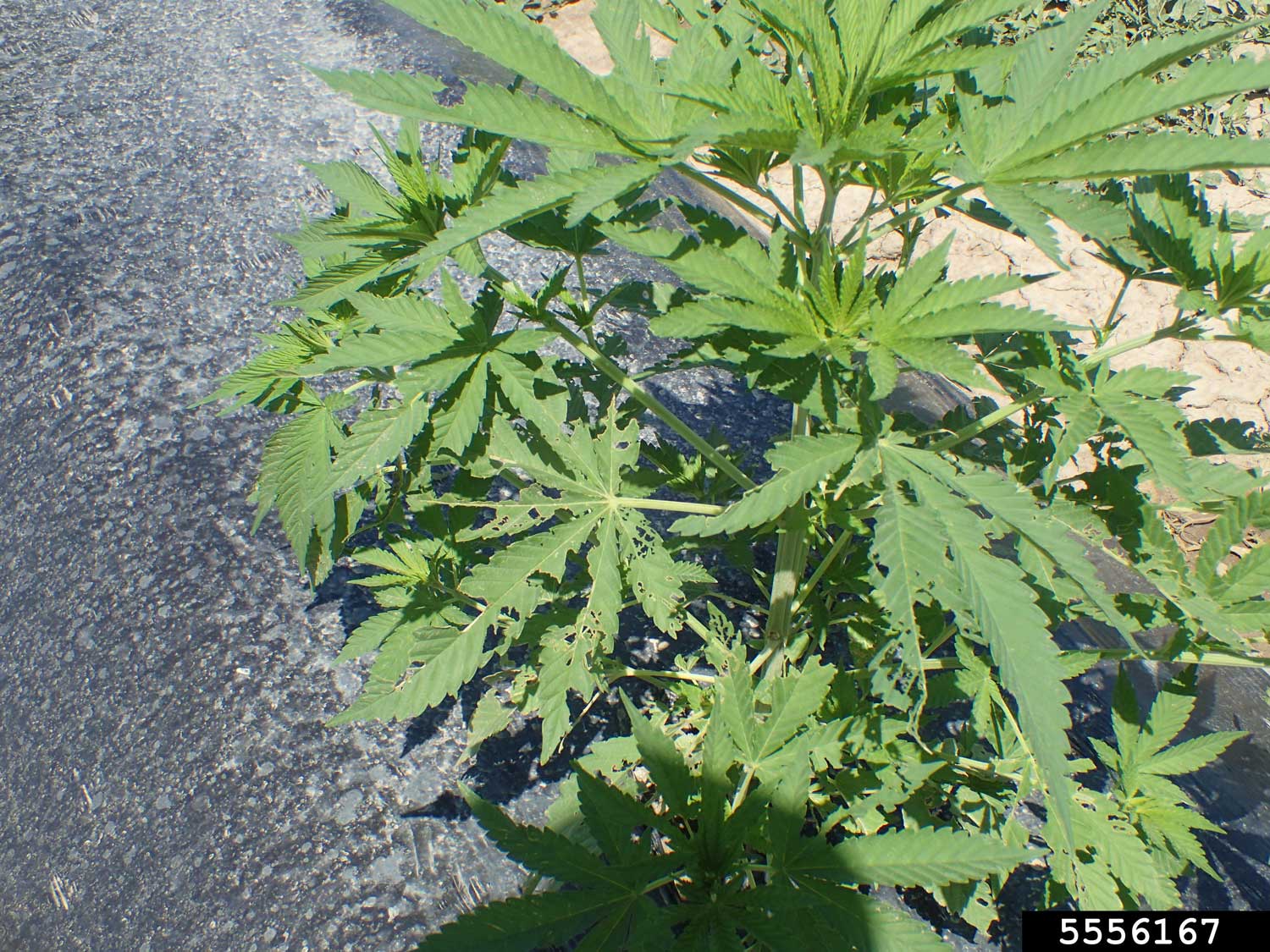
Grasshoppers eat holes and put visible bites in the leaves
Here are a lot more examples of holes in cannabis leaves caused by grasshoppers, to help you compare with the damage you’re seeing.
Grasshoppers eat through stems and can cause branches or plants to fall
Here are several examples of grasshopper stem damage and breaking branches.
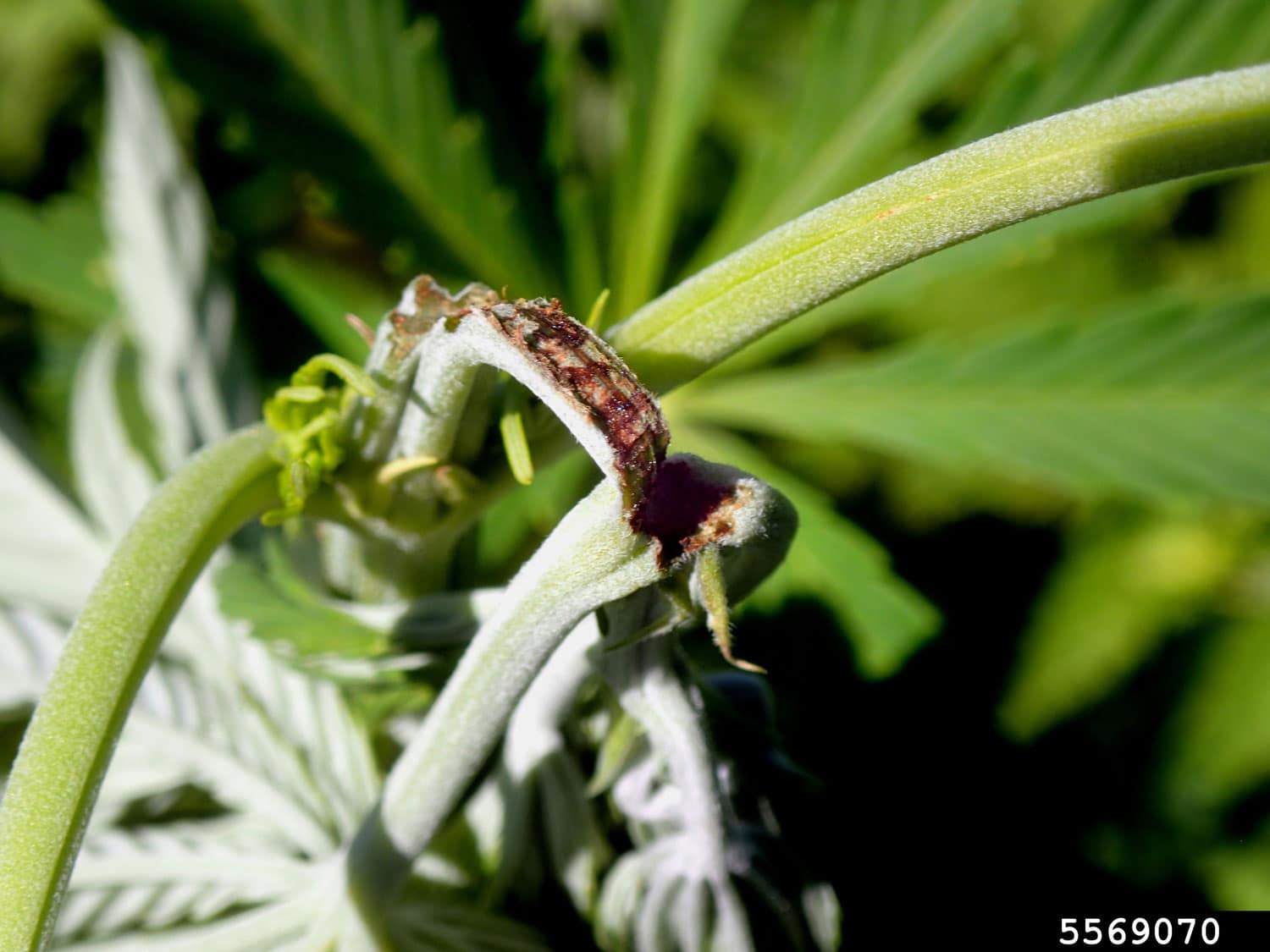
Grasshoppers ate through the stem and caused the entire stem (and bud site) to fall and die. These bugs are vicious to cannabis plants!
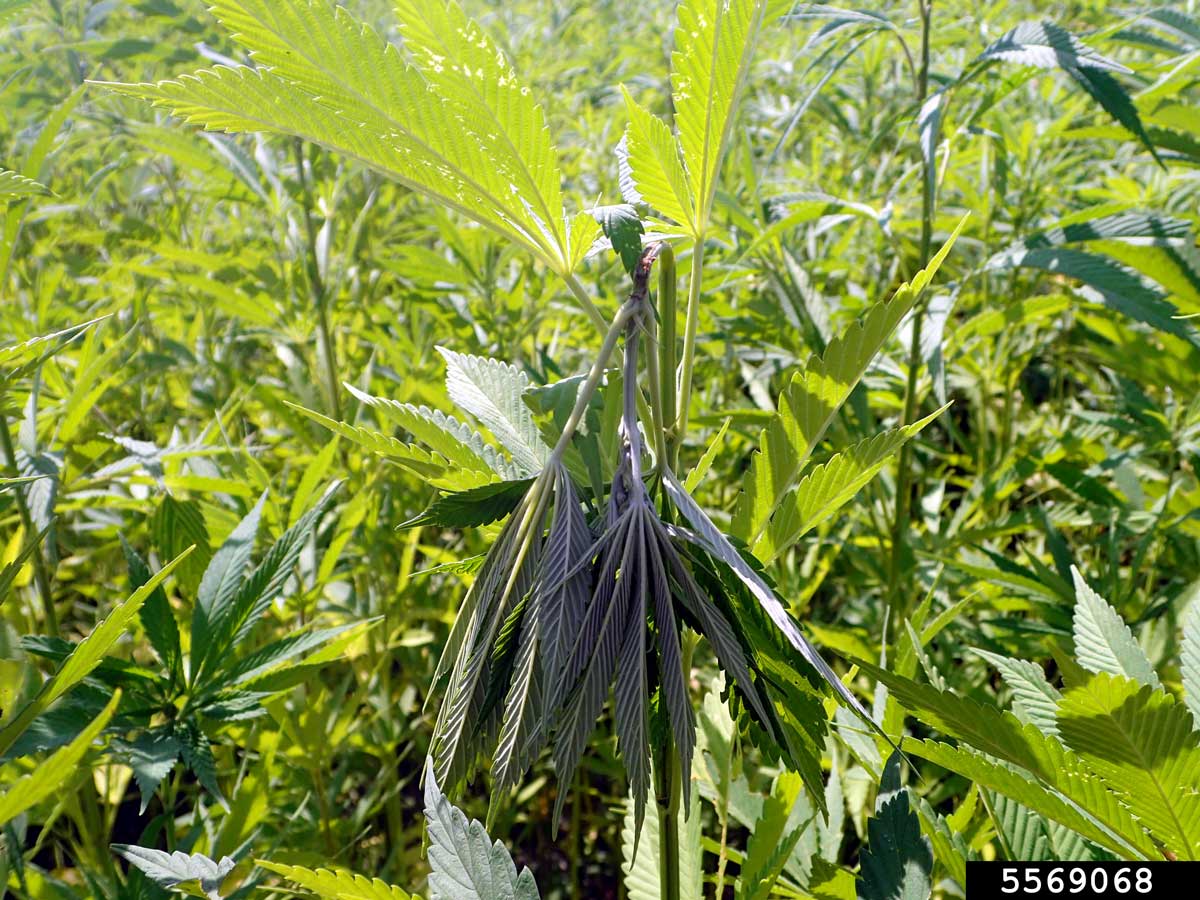
The two-stripped grasshopper ate this cannabis stem totally bare! Check out this extensive grasshopper stem damage.
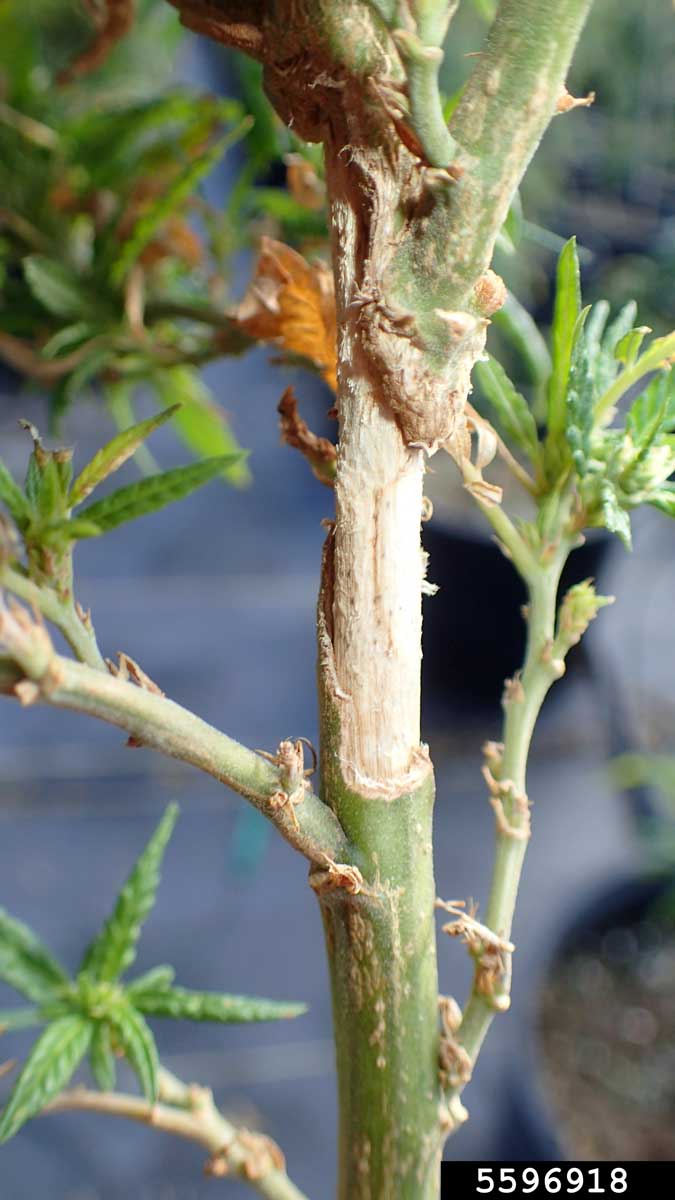
Old grasshopper stem damage on a weed plant:
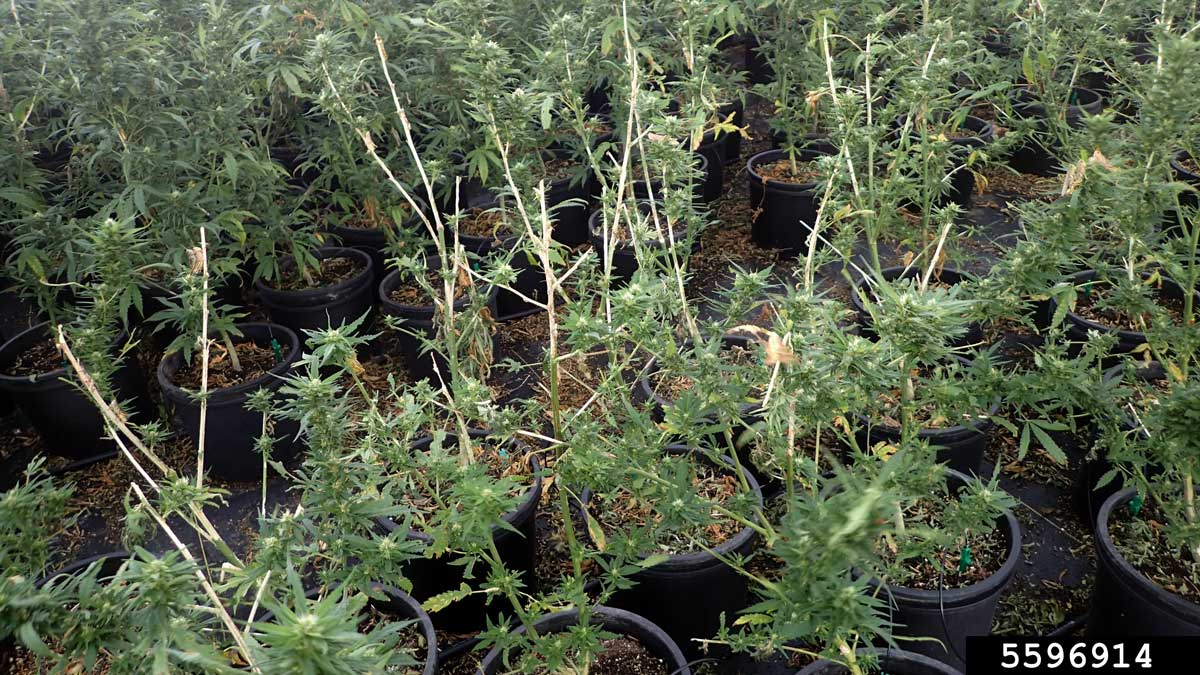
Grasshoppers can eat the leaves of an entire crop of cannabis almost overnight
The two-striped grasshopper species (Melanoplus bivittatus) decimated this hemp field. Many of the hemp plants have no leaves. Some plants look like barren sticks.
Grasshoppers leave poop on the leaves
I was pretty shocked when I learned that this is what grasshopper poop looks like! It’s like a fairy pooped on your plant lol If you see these on your leaves, it’s a sign that grasshoppers have been eating a ton of plants in the nearby area.
Common grasshopper species that attack cannabis plants
Examples of different species of grasshoppers that attack hemp or marijuana plants.
This is the “Differential Grasshopper” (Melanoplus differentials). This is a common and voracious cannabis pest in North America.
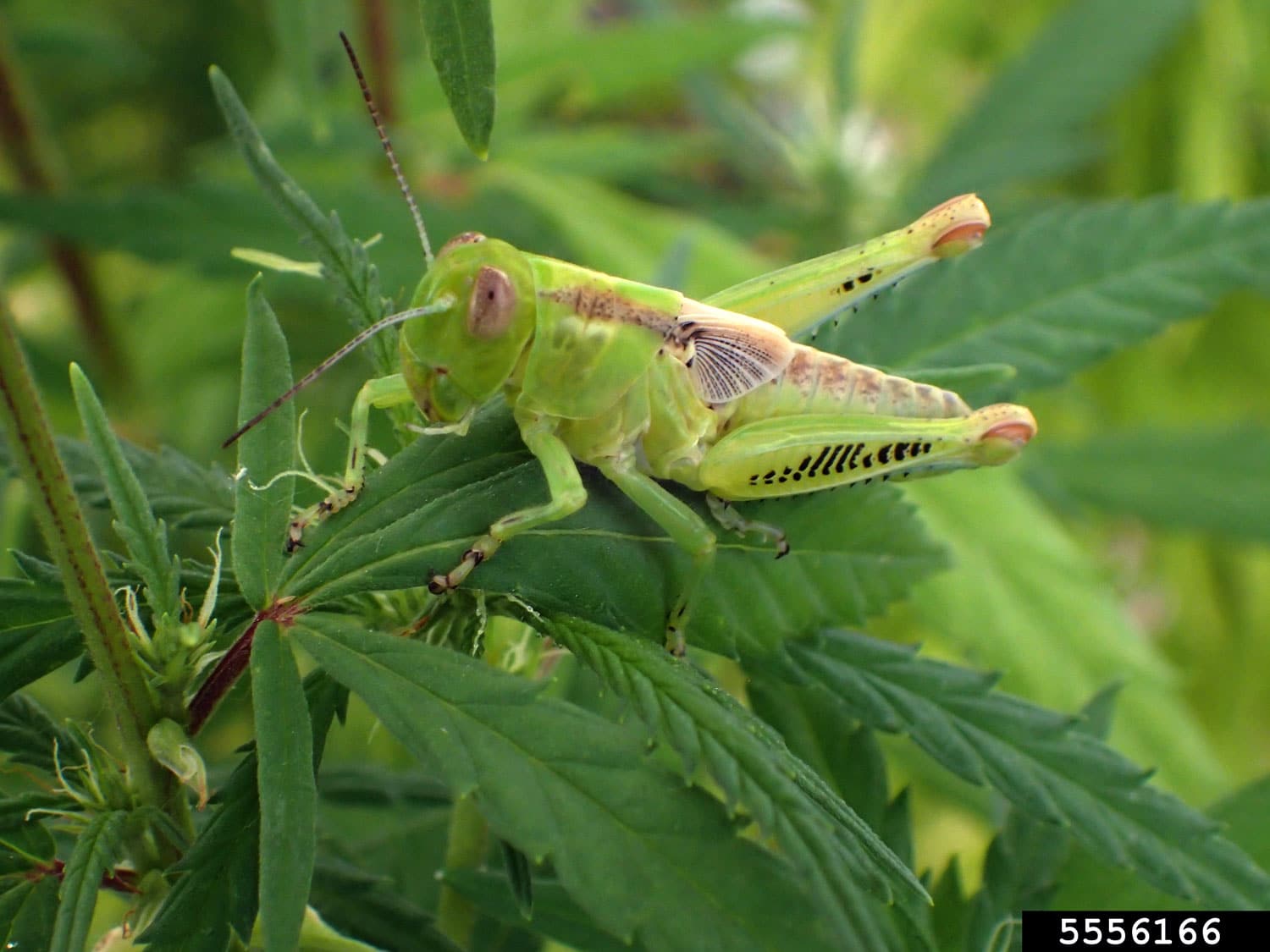
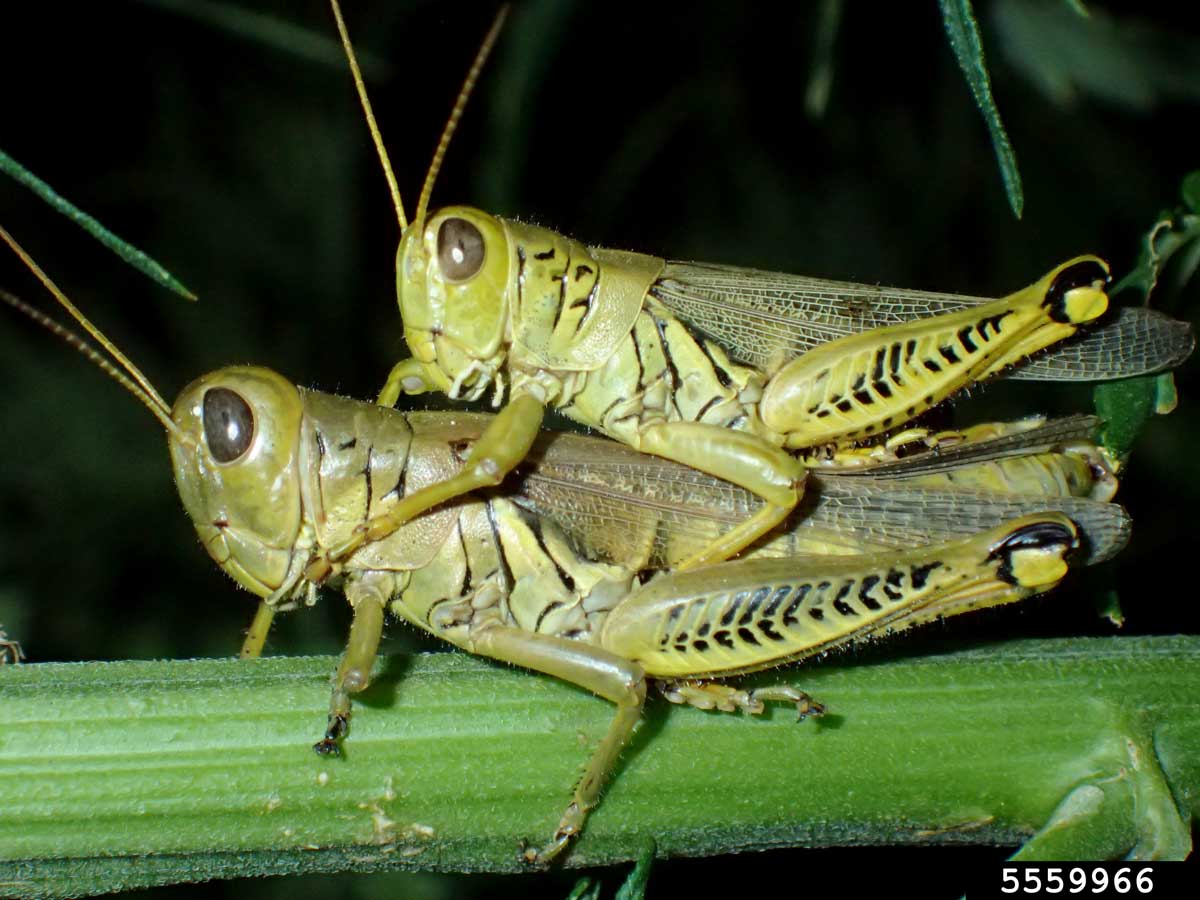
The Differential Grasshopper (Melanoplus differentials) can have somewhat different colors. Grasshoppers are typically active during the day or at dawn/dusk. Here are two more as darkness falls:
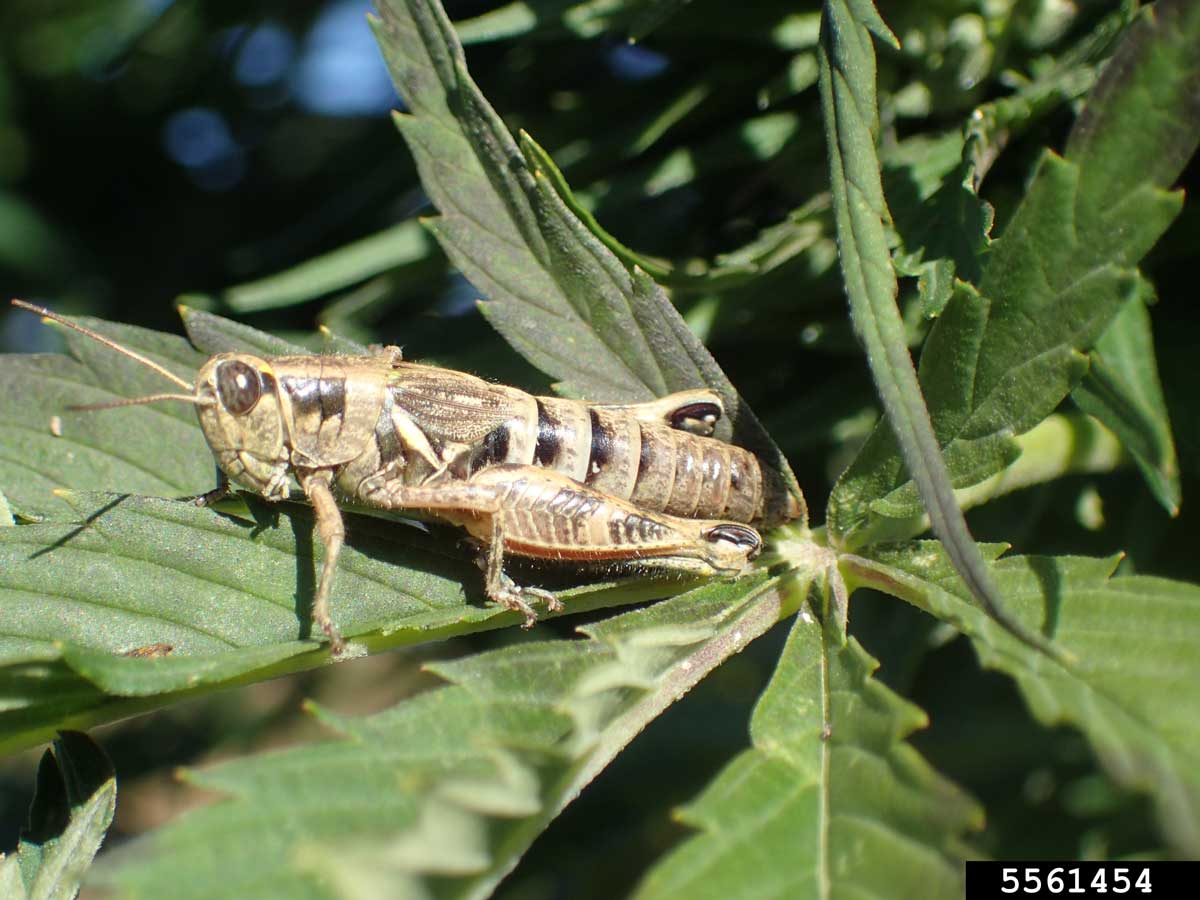
This female Differential Grasshopper (Melanoplus differentials) is tan / brown in color and full of eggs.
Black Differential grasshopper (Melanoplus differentials). This species of grasshopper also has a black / melanistic form.
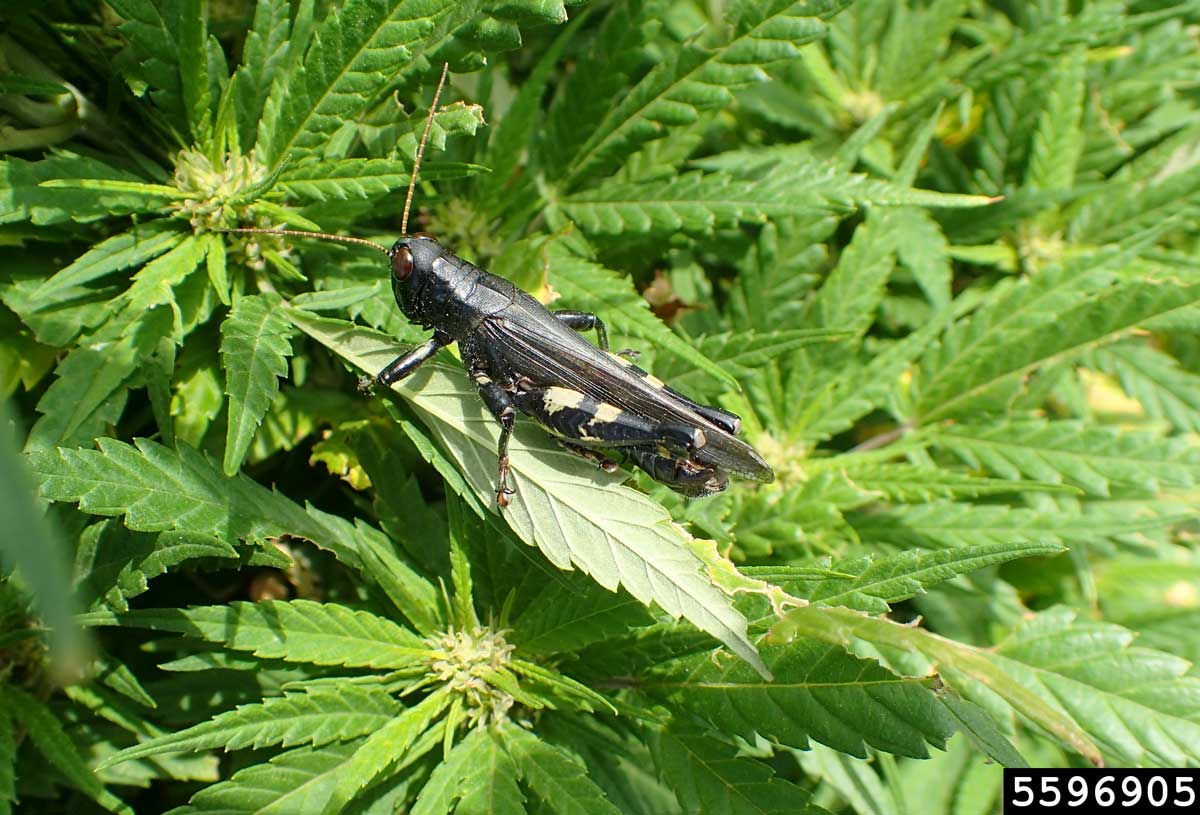
Lakin grasshopper (Melanoplus lakinus) is another common cannabis pest species of grasshoppers.
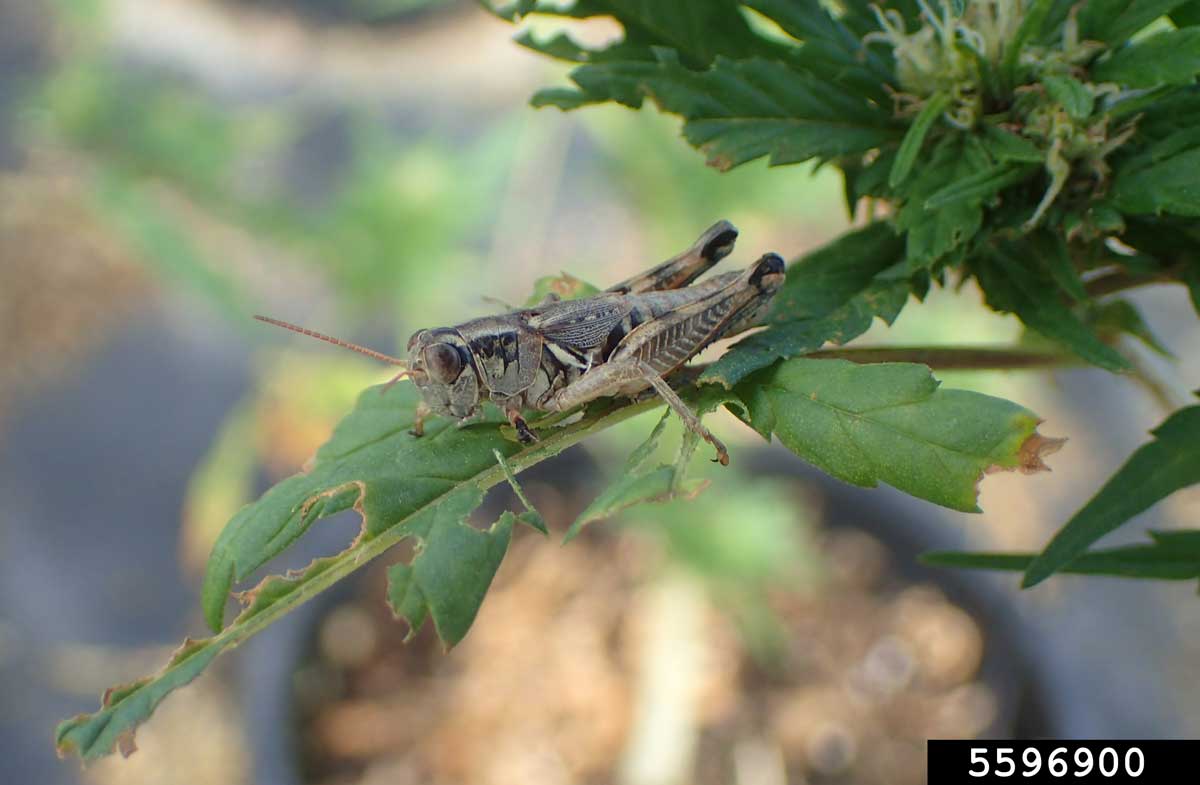
Another Lakin grasshopper (Melanoplus lakinus) living its best life on a hemp plant.
Example of a Migratory grasshopper (Melanoplus sanguinipes) on a cannabis plant.
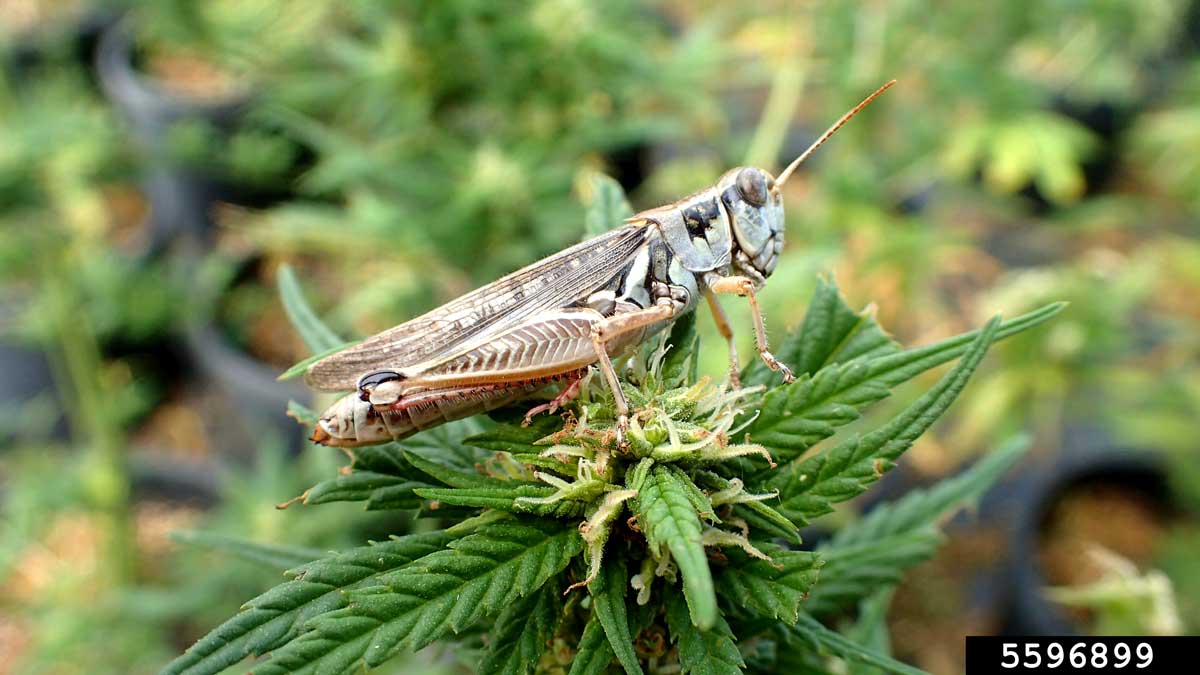
Here’s an example of a bunch of bold two-striped grasshoppers (Melanoplus bivittatus) chilling on a stem they stripped bare.
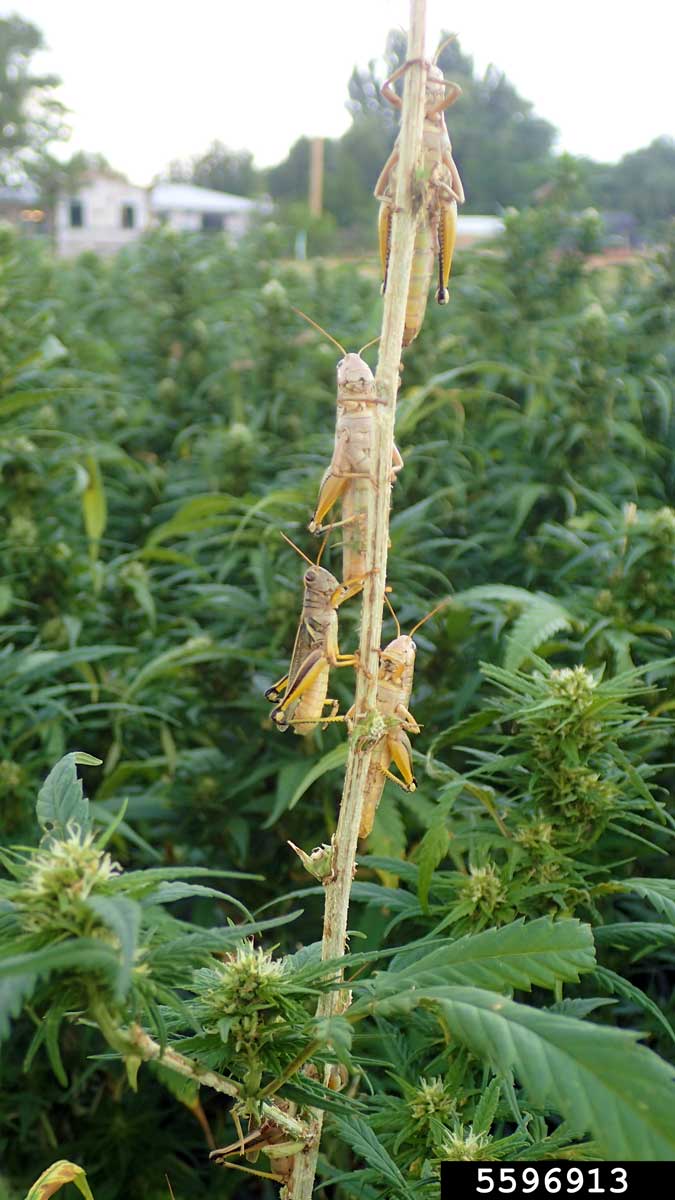
This is an unknown species of cannabis grasshopper pest. Contact us if you can identify the species! (and don’t hesitate to submit any cannabis pest pictures to share!)
Thank you to Whitney Cranshaw for generously providing grasshopper pictures to the cannabis-growing community!

Solution: How to Get Rid of Grasshoppers (and Locusts) on Cannabis
Grasshoppers will eat holes out of your cannabis leaves, and you don’t want that! If it’s just one or two grasshoppers you may not notice any symptoms but if your plants start getting infested with them you’ll notice tons of spots where they have been munching on your leaves. If an infestation gets out of hand your plants can be seriously affected.
1.) Check regularly for signs of grasshoppers, especially when it’s dry
The best way to prevent a grasshopper infestation (or any bug infestation really) is to catch them as soon as possible. So make sure to look over your cannabis plants on a regular basis.
Inspect plants regularly for grasshoppers and/or grasshopper damage

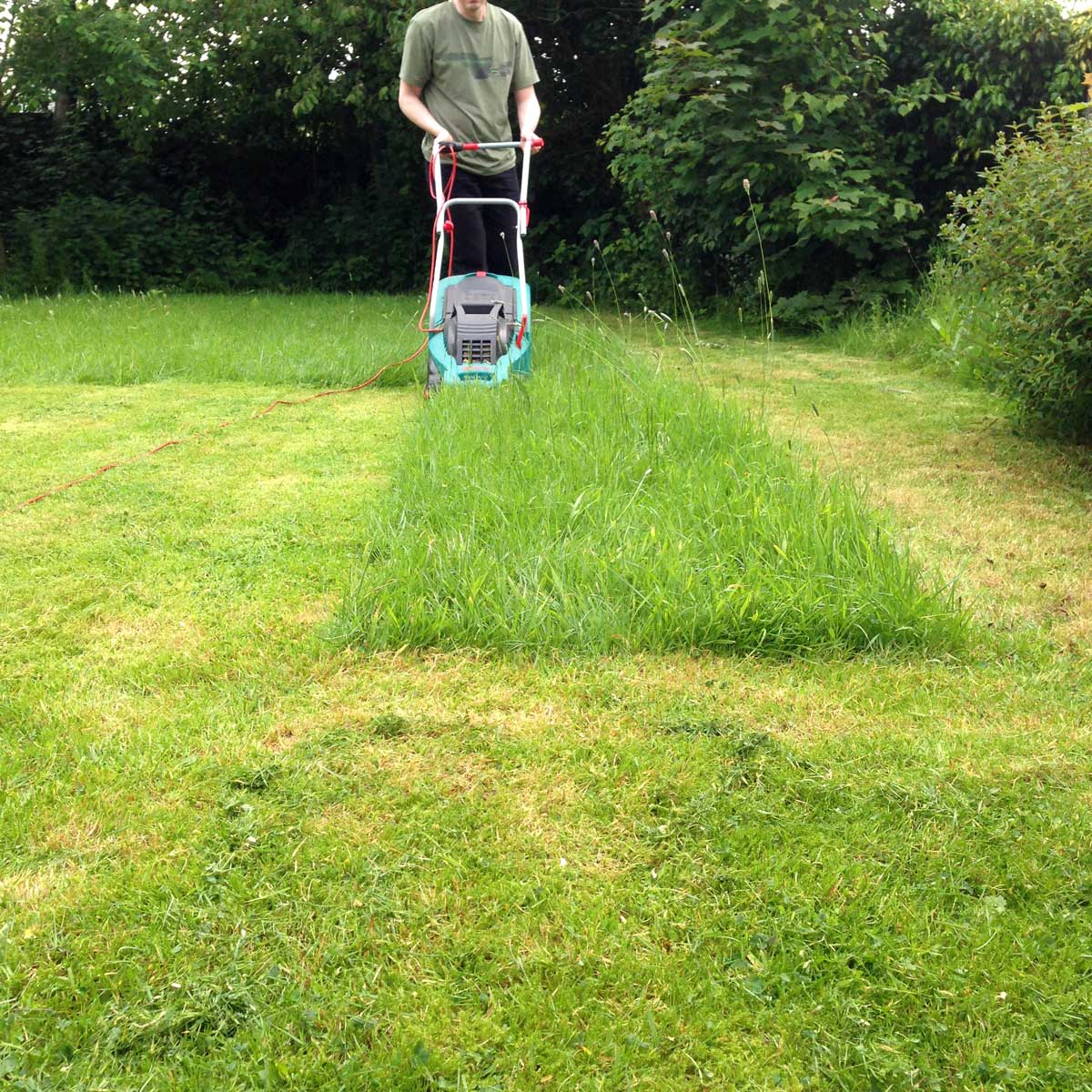
2.) Make sure to keep the lawn clean, and grass mowed short
Grasshoppers love grass. They don’t just eat it but also lay their eggs on it. If you reduce the amount of grass, it may help lower their numbers.
Mow lawn weekly and keep grow area clean. Shorter grass takes away grasshopper food and a place to lay eggs.
3.) Insecticidal soaps
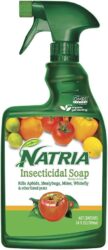
Fatty acid salts or insecticidal soaps can be a good choice against grasshoppers. They weaken the outer shell of grasshoppers but are safe to use on your plants and they don’t leave much of a residue which could kill beneficial bugs in your garden.
With soaps, coverage is very important as it does not stay on your plant for long, so follow-up applications may be necessary. Although this is considered safe, avoid getting any on your buds.
Get insecticidal soap with a sprayer attached.
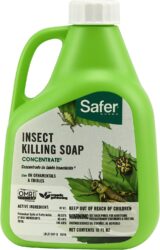
Or save money by getting the Insecticidal soap concentrate to mix with water and use your own sprayer.
4.) Neem Oil
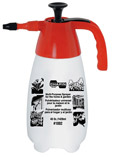
Neem Oil will leave an unpleasant taste/smell on buds when used to treat flowering plants, so again, don’t let this stuff get near your buds! There’s also some evidence Neem oil may be harmful to humans so use with care. That being said, Neem oil is an all-natural remedy that is very effective against many different types of bugs and mold, including grasshoppers. You will need a mister (also called a “One-Hand Pressure Sprayer”) to spray all the leaves evenly, since neem oil and water can separate easily.
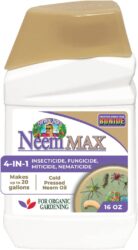
If you use a Neem Oil concentrate to mix with water, make sure to use a sprayer to evenly coat all the leaves.
5.) Sevin – Only for vegetative stage, not for buds!
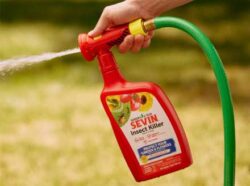
Sevin Insect Killer Spray is very effective against grasshoppers and almost immediately kills them on contact. The main ingredient is 0.35% Zeta-Cypermethrin. However, you should not get this spray on your cannabis buds. It’s best to use in the vegetative stage, and make sure to stop as soon as you see even baby buds forming.
It’s important if you use Sevin Insect Killer Spray to make sure that you let it COMPLETELY dry before you or any pets come into contact with the plants.
Note: Sevin is not allowed in some places due to local laws.
Hook up this version of Sevin Insect Killer to a garden hose to use.
6.) Floating row covers
These may not be the best choice for all cannabis growers, but these are very cheap and effective against grasshoppers because it physically prevents them from getting to your plants, while still letting light in to your plants. You can also water your plants through the netting. These are sometimes used to make mini “green houses” on the plants, or some grower will just drap them over the plant as they’re so light and airy they don’t really bother the plant.
However, these are much easier to use and are more effective with smaller plants, as it becomes difficult to fully cover larger plants. However, for young plants these can be great! They also protect your plant from wind and some harsh conditions.
Floating row covers look like thin netting or mesh

7.) Natural predators
Anything that eats grasshoppers can’t hurt, but this is not a complete solution and should never be combined with any kind of pesticide or insecticide.
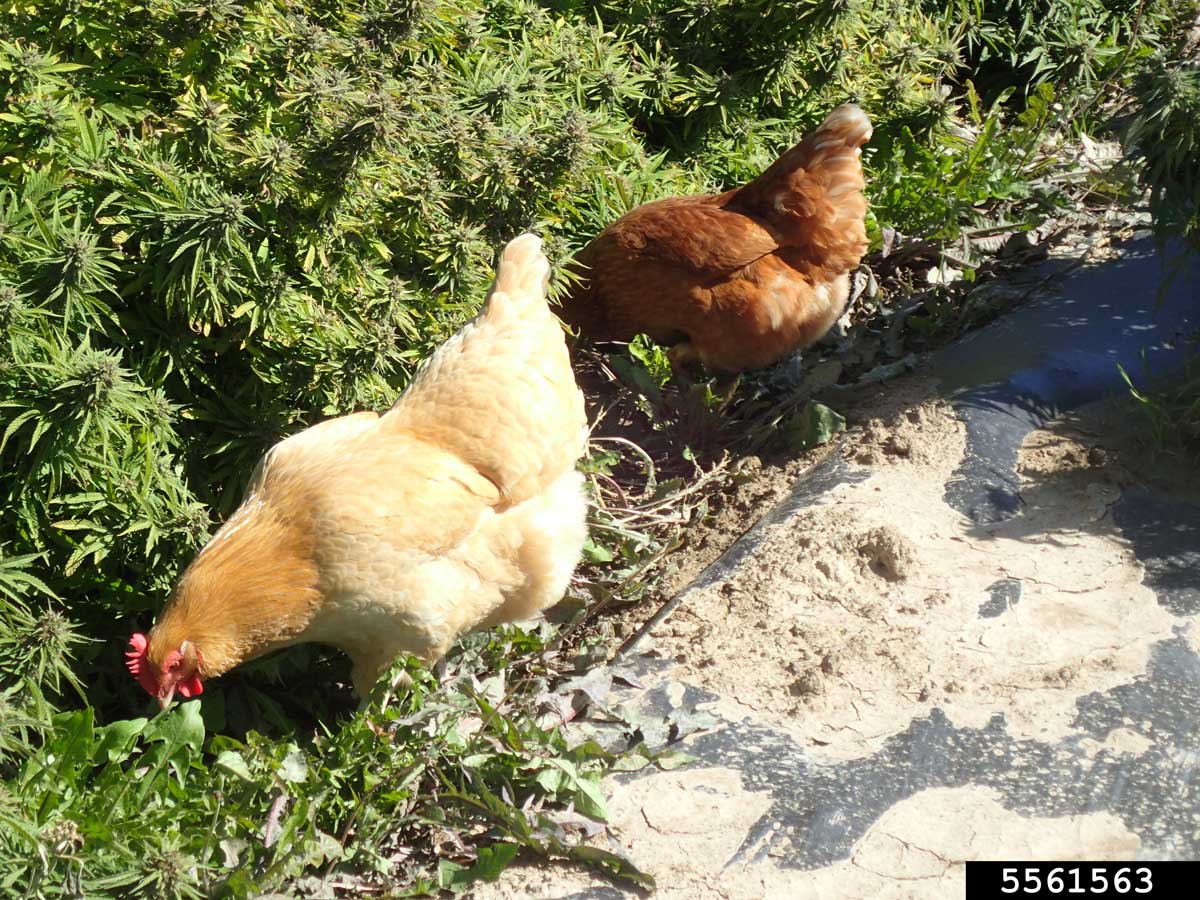
For example, I’ve seen growers allow their chickens to feed on bugs on their cannabis or hemp plants.
8.) Pyrethrin
Pyrethrin-based insecticides are not very toxic for humans and degrade quickly, which is why they’re often recommended for vegetable gardens. You will need a mister (also called a “One-Hand Pressure Sprayer”) to spray all the leaves evenly.
Pyrethrin products break down quickly, over the course of just a day or two. So you will need to re-apply often.
The major problem with them is they are very toxic to bees. Although cannabis plants generally don’t attract a lot of bees, please use this as a last resort, and also try to use it right after the sun goes down because bees sleep at night. This lets it start to break down before they wake up.
Use pyrethrin products when the sun goes down! Save the bees!
A popular example is Bonide 857 Pyrethrin Spray Concentrate. Use 3 tablespoons of concentrate per gallon of water.
9.) Spinosad (not for commercial growers) – Organic but not the best against grasshoppers
Note: Spinosad is hit or miss with grasshoppers. Some outdoor cannabis growers claim it helps, other growers say it didn’t make a difference. I thought it was worth including just in case you already had some and want to give it a ty.
Spinosad Products (safe & organic) – Spinosad products are organic and completely harmless to pets, children, and plants. Spinosad products can be used directly to kill grasshoppers on contact and should be sprayed liberally anywhere you see grasshoppers and especially under the leaves. Although maybe not as strong against pests as some of the more harsh insecticides, it does work and it’s very safe for plants, animals, and humans!
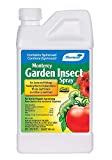
Recommended: Monterey Garden Insect Spray with Spinosad
Spinosad is an organic insecticide made from the fermentation of a specific soil bacteria (actinomycete Saccharopolyspora spinosa) and kills grasshoppers via ingestion or contact by affecting the insect’s nervous system. Spinosad can be a good choice for organic and outdoor growers, because it is very toxic to many common cannabis pests, but is less toxic to many beneficial insects and spiders.
Note: Most spinosad products are effective for only about 24 hours after being mixed with water, so only mix as much as you will need per application. Anything left over will be waste.
Note 2: You won’t see grasshoppers die on contact. It takes a few days for Spinosad to work. Grasshoppers need to ingest it and then let it work.
WARNING: Commercial growers click here!
You will need a mister (also called a “One-Hand Pressure Sprayer”) to cover all the leaves evenly when spraying them with spinosad products.

Jump to…
7-Step Cure to 99% of Marijuana Problems
Marijuana Nutrients – What do I need to know?
Compare Different Cannabis Grow Lights