
by Nebula Haze
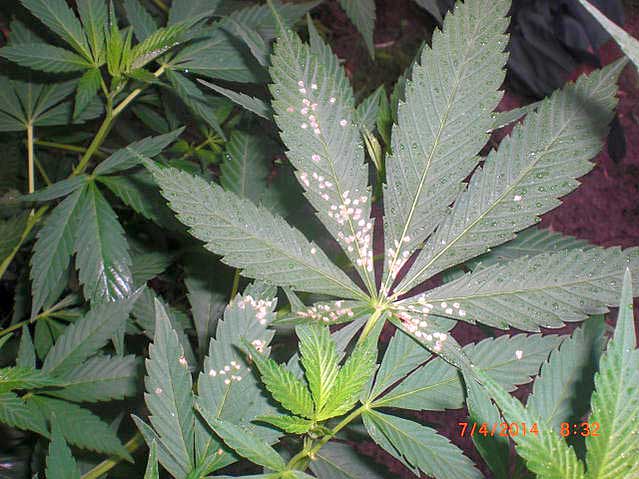
The four-lined plant bug is a common cannabis pest in the United States (also commonly written “fourlined plant bug” and officially Poecilocapsus lineatus). The four-lined plant bug leaves spotting injuries where it sucks out all the juices from inside the hemp or cannabis leaf. Each spot on your cannabis leaves were essentially the meal of a four-lined-plant bug.
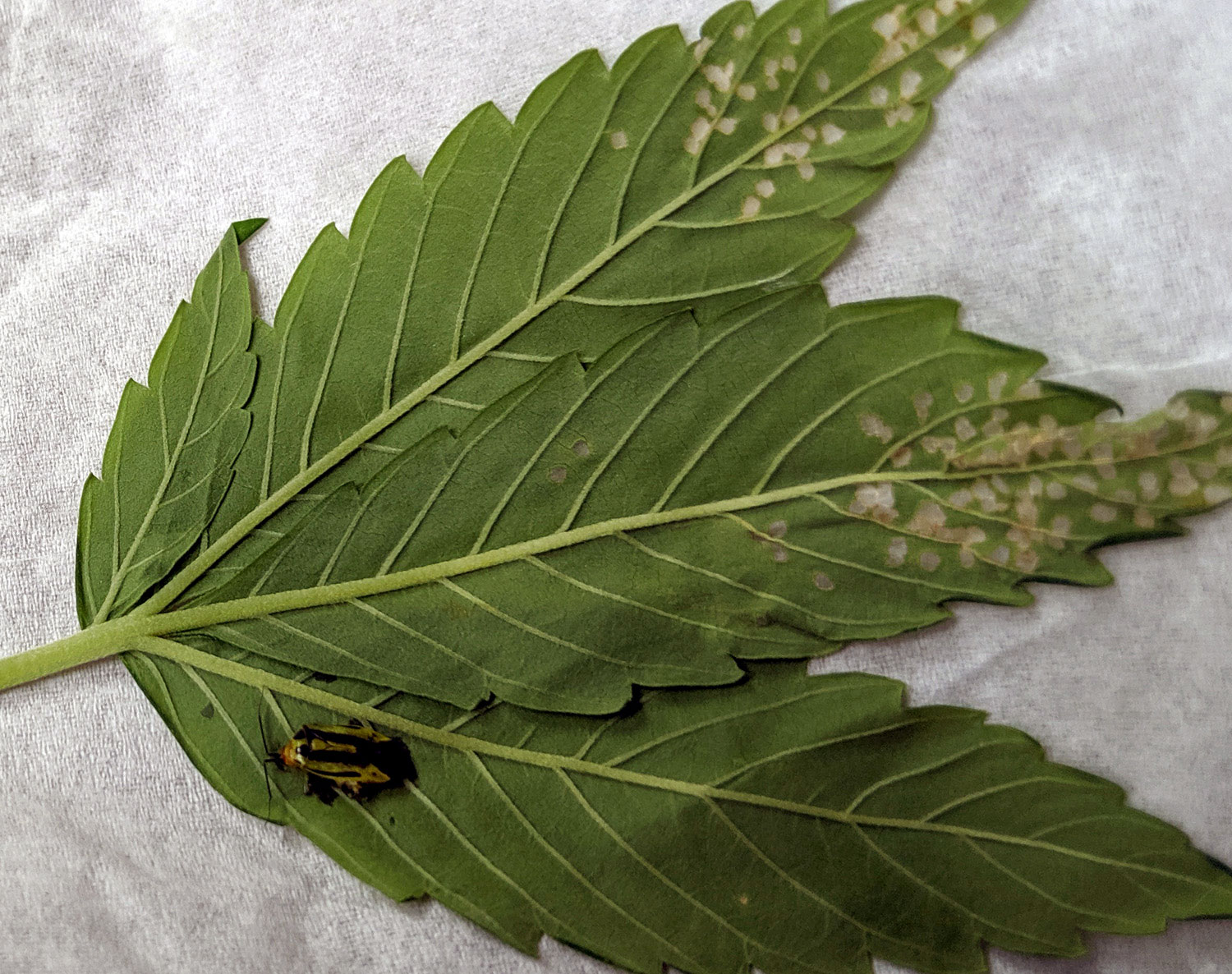
Example of a cannabis leaf injury from four-lined plant bug on hemp. The bug itself is on the lower left of the cannabis leaf.
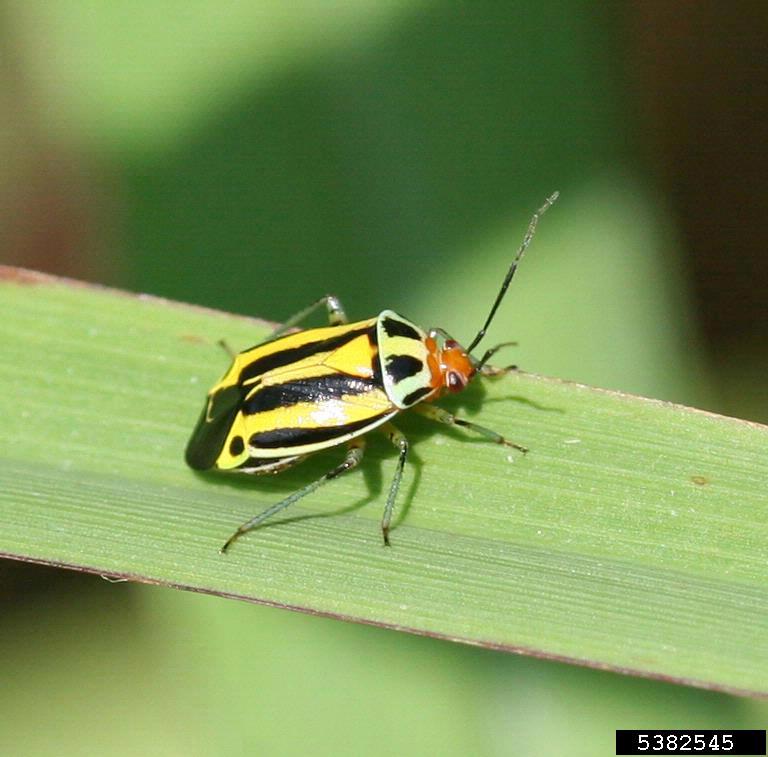
Here’s a closeup of the cannabis pest culprit: Fourlined plant bug (Poecilocapsus lineatus), in its full glory.
Example of a nymph (baby) – Four-lined plant bug nymphs are reddish and active. If you see these, it means the adults are coming next.
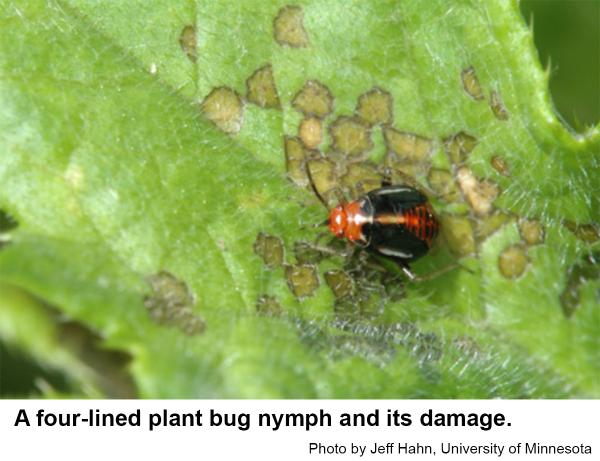
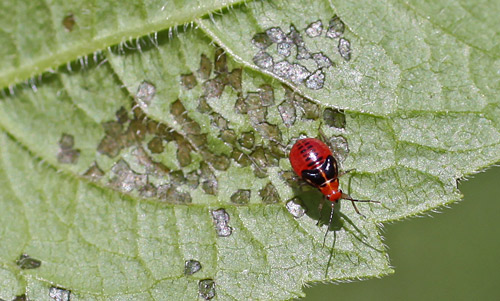
More nymph forms: Early instar nymph of fourlined plant bug, Poecilocapsus lineatus (Fabricius), with feeding damage.
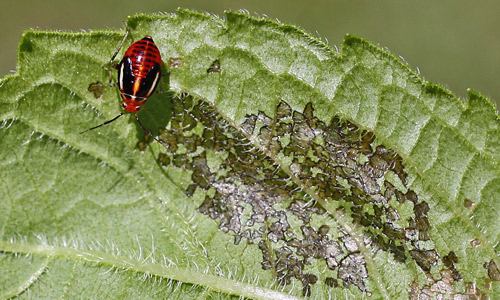
Late instar nymph of fourlined plant bug, Poecilocapsus lineatus (Fabricius), with feeding damage.
What to know about Poecilocapsus lineatus (fourlined plant bug) on cannabis plants
- Clusters of spots on the leaves – These spots kind of look like the leaf was burned. The leaves don’t have holes because the bugs suck out the sap. That’s why there is no green left wherever they feed.
- Nymphs (babies) are reddish and active – Look out for these in the spring as they’re a sign that adult four-lined plant bugs are coming. These also munch on plants and leave similar damage on your cannabis leaves as the adult fourlined plant bugs.
- Adults are black and yellow – If you see them, chances are the were enjoying your plants as nymphs and are still actively feeding on your cannabis plants right now.
- Most active in late Spring and early Summer – These overwinter as eggs on the stems of host plants.
This picture has often been misdiagnosed as Leafhoppers but it is actually the cannabis leaf damage from a four-lined plant bug (Poecilocapsus lineatus). They make spots in cannabis leaves that usually appear in clusters.
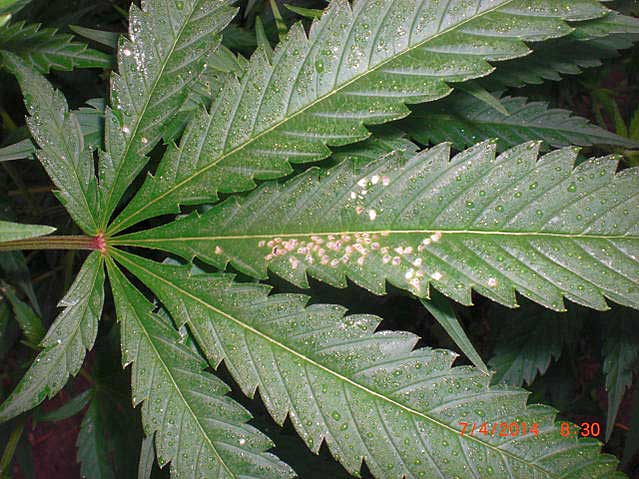
Fourlined plant bugs actually suck out the sap from cannabis leaves, which leaves pale spots that turn brown or bronze over time. Unlike caterpillars, a fourlined plant bug won’t actually put holes in the marijuana plant’s leaves, just spots.
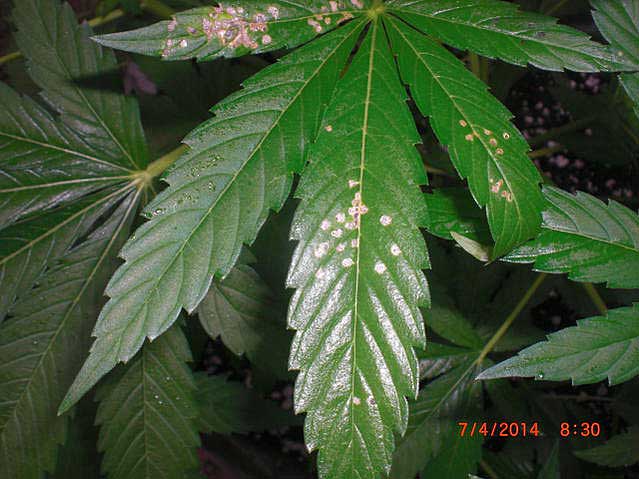
When the injuries are new, it makes the leaves transparent where the bug sucked out the juices. But after a while, the old injuries look raised, almost like brown scabs forming over the damaged parts.
See more pictures of the four-lined plant bug on other types of plants besides cannabis.
More info from the University of Florida:
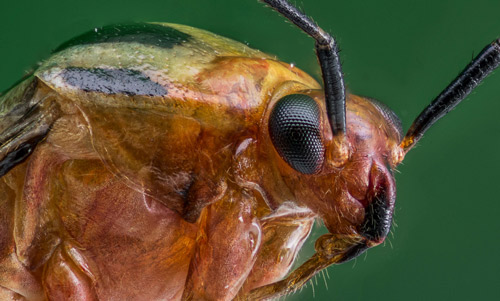
- Color: Fourlined plant bug adults are identified by four distinct black lines against a yellow-to-green background color. The head is orange, with prominent dark reddish-brown eyes. Male and female adults look very similar, although the female is slightly larger and broader, especially in the abdomen.
- Size: They are 7-7.5 mm long, and 3.5 mm wide.
- Reproduction: About a week after adults emerge, the insects mate and females begin ovipositing clusters of eggs. Females live significantly longer than males, so late-season populations primarily consist of females. In general, adults are present for approximately one month.
Solution: How to Get Rid of Four-Lined Plant Bugs on Cannabis Plants
If you can prevent fourlined plant bugs from attacking plants with Integrated Pest Management, that’s ideal. But what do you do to get rid of them if four-lined plant bugs are currently eating your cannabis plants?
Prevention
- Stay alert – always be scouting for signs of these bugs, their damage, or their nymphs.
- Floating row covers – a physical barrier between your plants and bugs like fourlined leaf bugs, grasshoppers, caterpillars, etc.
- Insecticidal soaps – pre-treat plants with insecticidal soap the moment you see any signs of these bugs or their nymphs, or in the spring if you know they’ll be coming where you live
- Remove weeds – Get rid of any weeds near the cannabis plants, as these bugs like to hide.
- Plant trap crop (mint) – Some growers recommend planting mint nearby, as mint attracts the fourlined plant bugs compared to other plants. But this isn’t the best long-term solution because you don’t want to create a thriving ecosystem for them either.
Get rid of as many as you can first
- Vacuum or spray plants with water to spray the bugs off your plants. Some growers recommend drowning the bugs in water.
- Remove eggs – Discard any leaves with eggs.
Plant predators – These eat the fourlined plant bugs but don’t hurt your cannabis plants
- Big eyed bugs
- Damsel bugs
- Pirate bugs
- Jumping spiders
Insecticides – kill them directly
- Insecticidal soap
- Neem oil
- Other horticultural oils
Adult fourlined plant bug, Poecilocapsus lineatus (Fabricius), detailing the head structure and mouthparts.
Sources for more information
- Fourlined plant bugs | UMN Extension – This source provides some quick facts about four-lined plant bugs, their life cycle, their damage, and their management options.
- Fourlined Plant Bug | NC State Extension Publications – This source describes the appearance, biology, damage, and control of four-lined plant bugs in detail.
- The Fourlined Plant Bug – FineGardening – This source lists some of the plants that four-lined plant bugs find palatable and suggests some cultural and chemical control methods.