
by Nebula Haze
A Complete Tutorial on Bud-Based Flowering Stage Defoliation
What is cannabis defoliation, and why/how does removing leaves from a cannabis plant increase yields?
This THC Bomb cannabis plant was defoliated according to this defoliation tutorial.
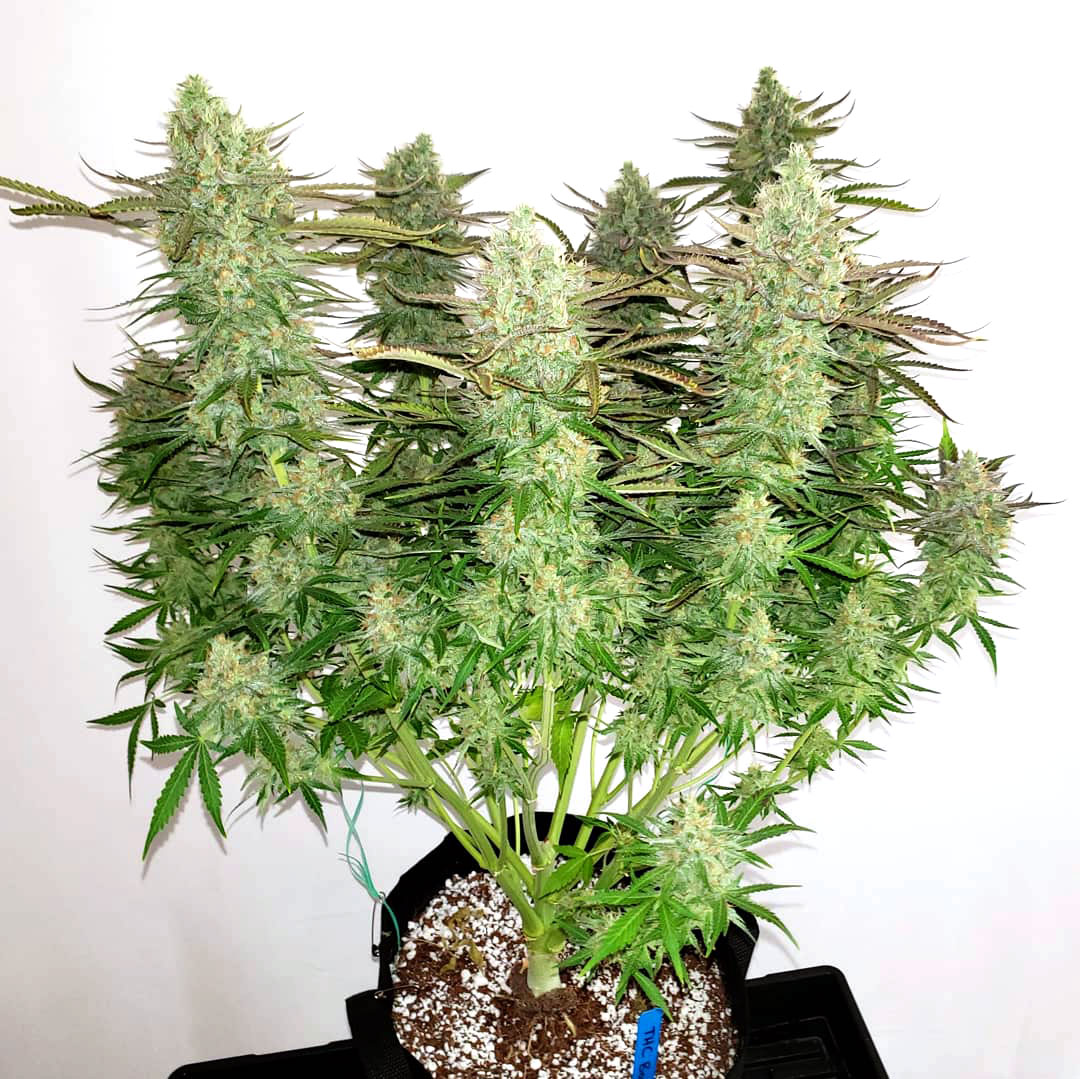
The point of defoliation is to “hack” your plant’s natural processes in the early part of the flowering stage to cause it to grow its buds and colas differently.
You’ll notice in the picture examples that the defoliated plants seem focused purely on bud development. Growers achieve this by removing fan leaves from healthy marijuana plants during early bud development. As a result, plants put more energy on growing buds rather than leaves.
Defoliation is the only way to achieve plants that are ALL buds, like this Aurora Indica plant.
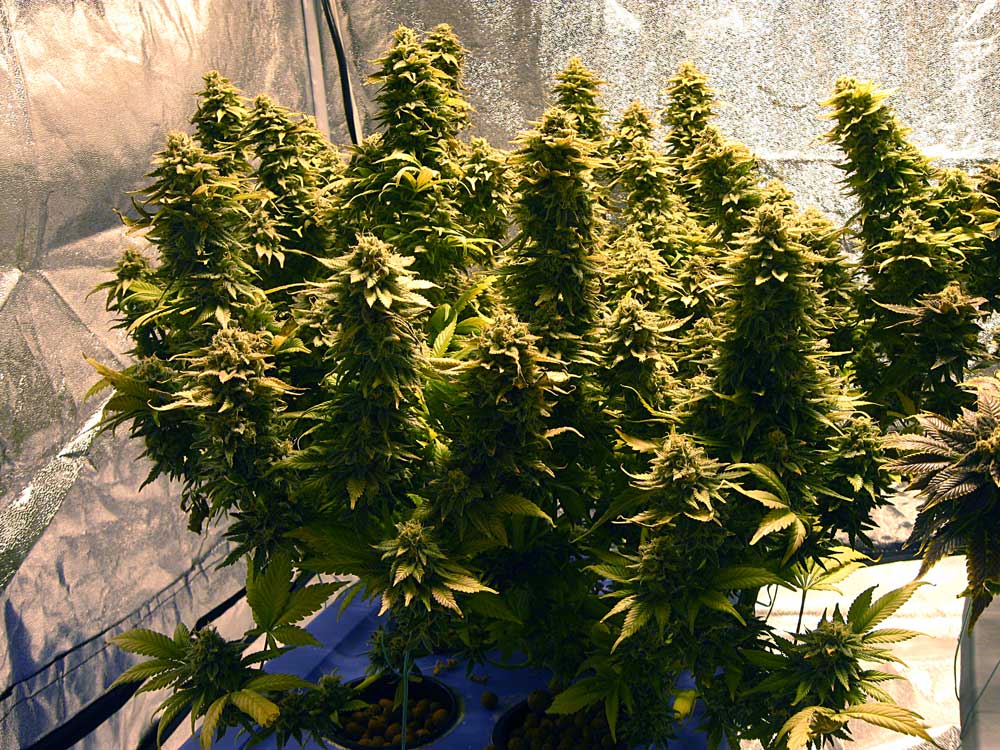
Blue Dream is another strain that responds especially well to defoliation.
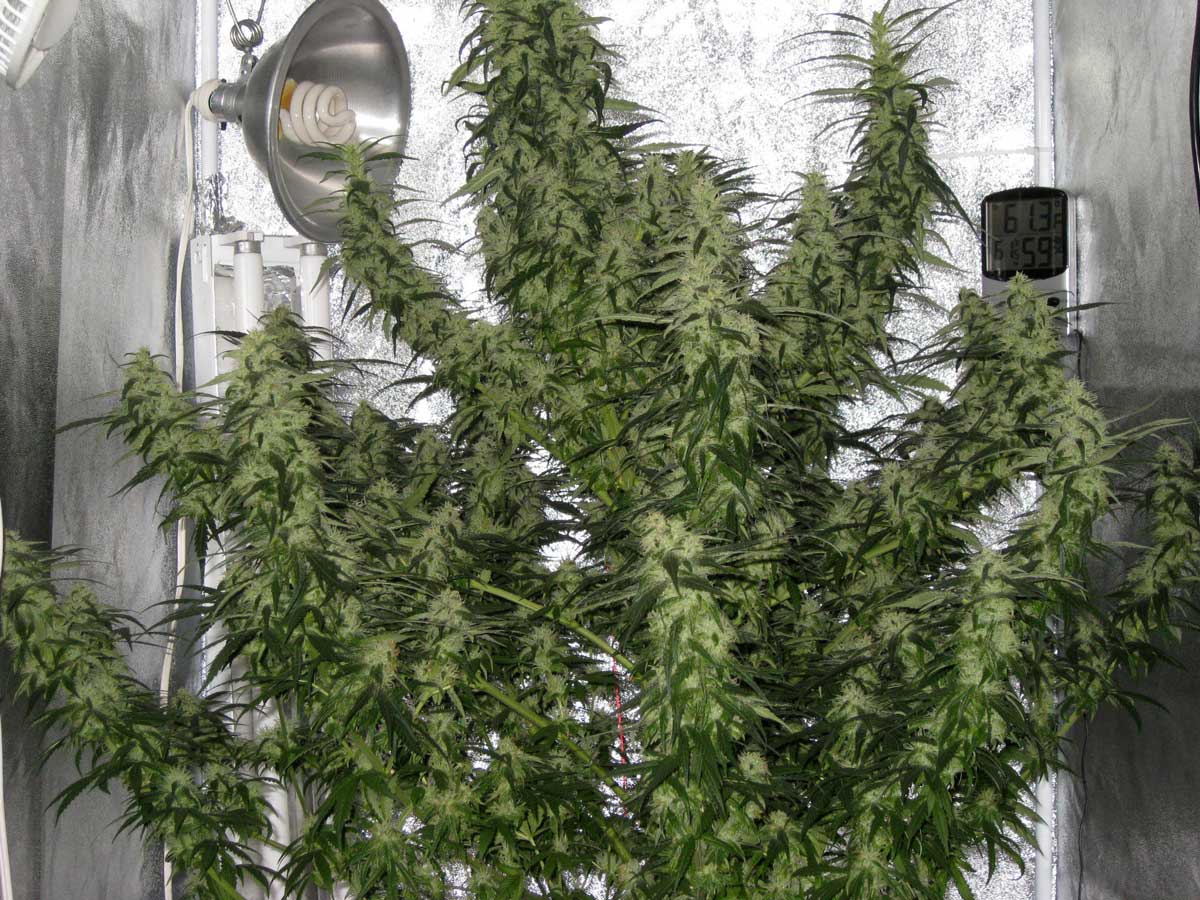
Growing auto-flowering plants? Use this defoliation tutorial instead.
In the wild, your plant will spend some amount of energy on buds, as well as some amount of energy making and maintaining leaves. However, if you defoliate your cannabis plants early in the flowering stage, you change the plant’s natural growing patterns.
Without as many leaves at the moment buds are first forming, your plants puts more energy into making colas, and the colas will be longer, thicker, and go down further into the plant.
Theories Why Bud-Based Marijuana Defoliation Works…
- Wind-pollinated plant – Cannabis plants are wind-pollinated, and therefore don’t fatten any buds that lack access to wind. Defoliation exposes more buds to a breeze.
- Buds get more direct light – Cannabis buds grow fatter when exposed to strong, direct light. Defoliation exposes buds to more light.
- Energy diverted to buds – A defoliated cannabis plant focuses on bud sites during the initial part of flowering. It simply doesn’t have leaves to put energy into!
Did You Know? There are other commercial crops, like cotton, which also need to be defoliated early in the flowering stage to produce the best quality and yields!
Whatever the reason, defoliation works to dramatically increase your cannabis yields and bud quality when you do it right!
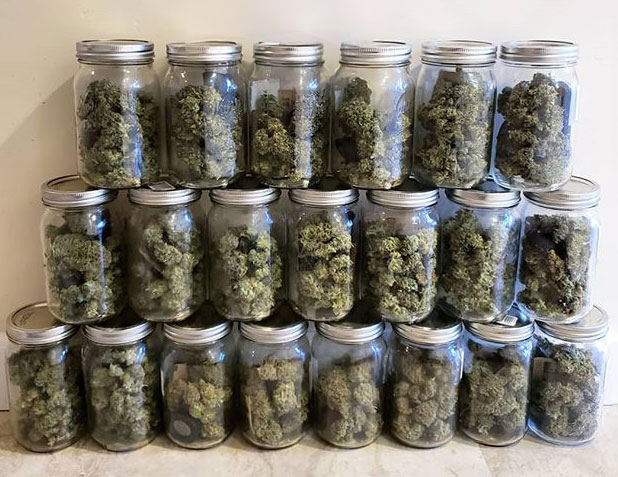
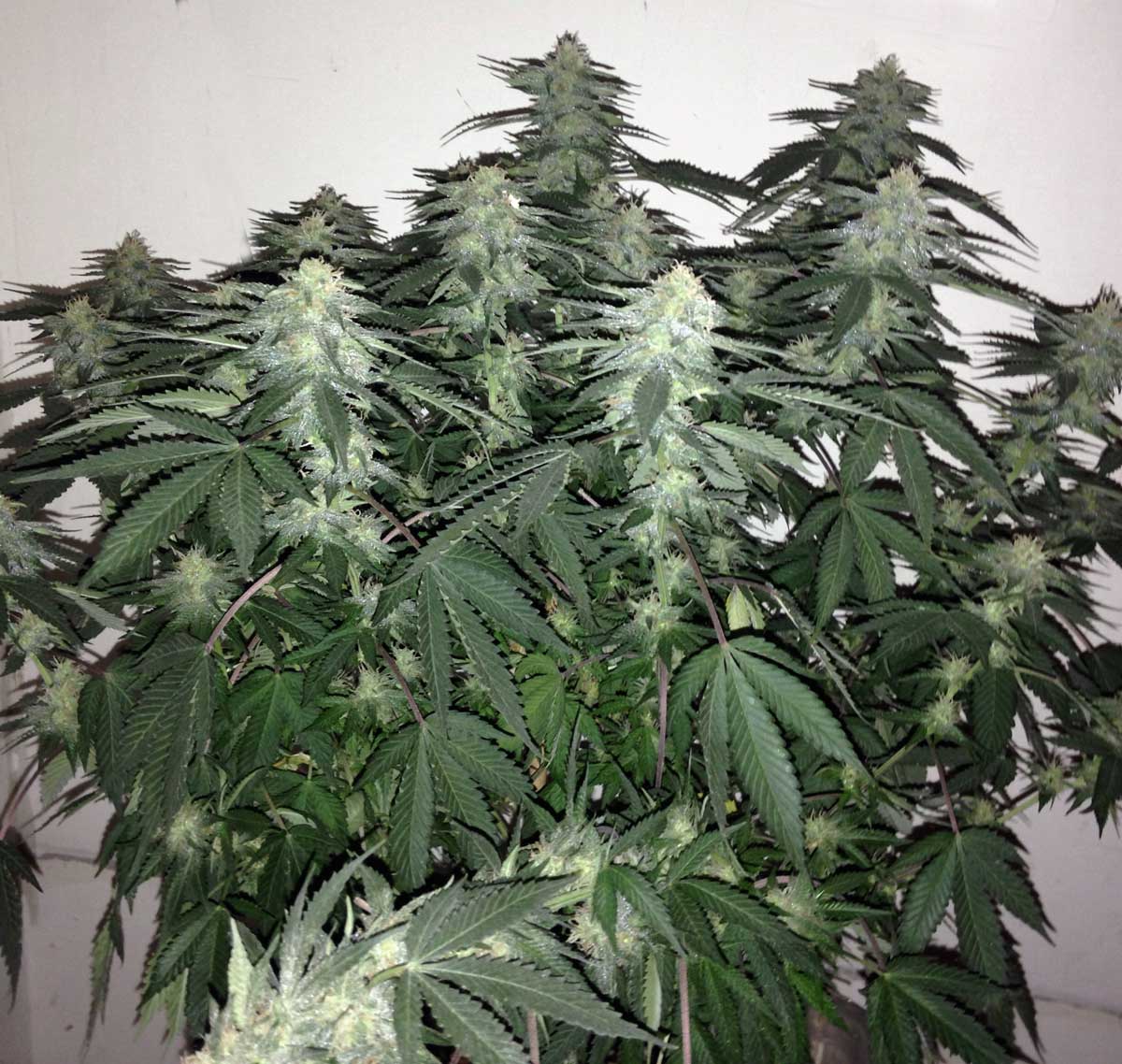
Only buds that get exposed to direct light ever get a good size. If your plant is very bushy like this one, you are losing out on potential yields because the hidden buds stay small. The buds would have been longer and bigger further down into the plant if it had been defoliated in the early flowering stage.
A non-defoliated plant – buds are smaller than they could be.
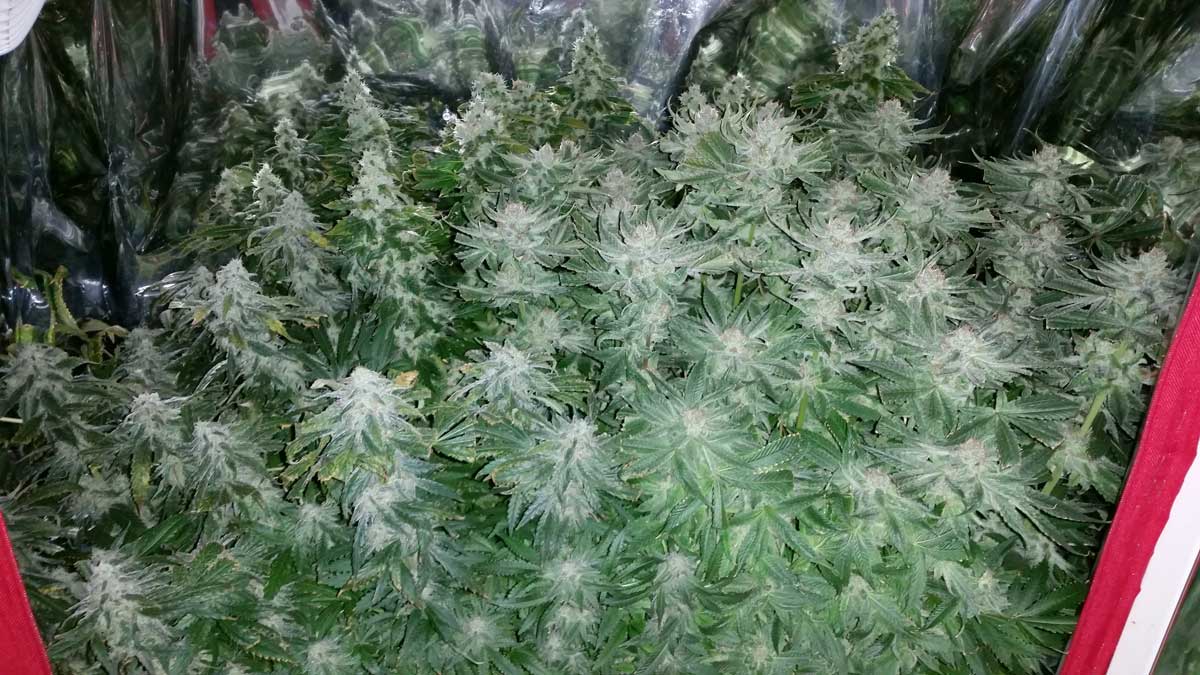
Here’s another example of cannabis plants that would have benefited from defoliation. Notice how short all the buds are. They end where the bushiness begins. If the grower had exposed the colas, they would have fattened much deeper into the plant!
A non-defoliated plant – buds are small and don’t go deep into the plant.
Many growers write in to tell us how defoliation was the secret sauce they needed to take their growing skills to the next level. In our growing forum we have some growers that are conducting defoliation and have taken the technique to new heights!
Ready to learn how to incorporate defoliation into your own cannabis garden?
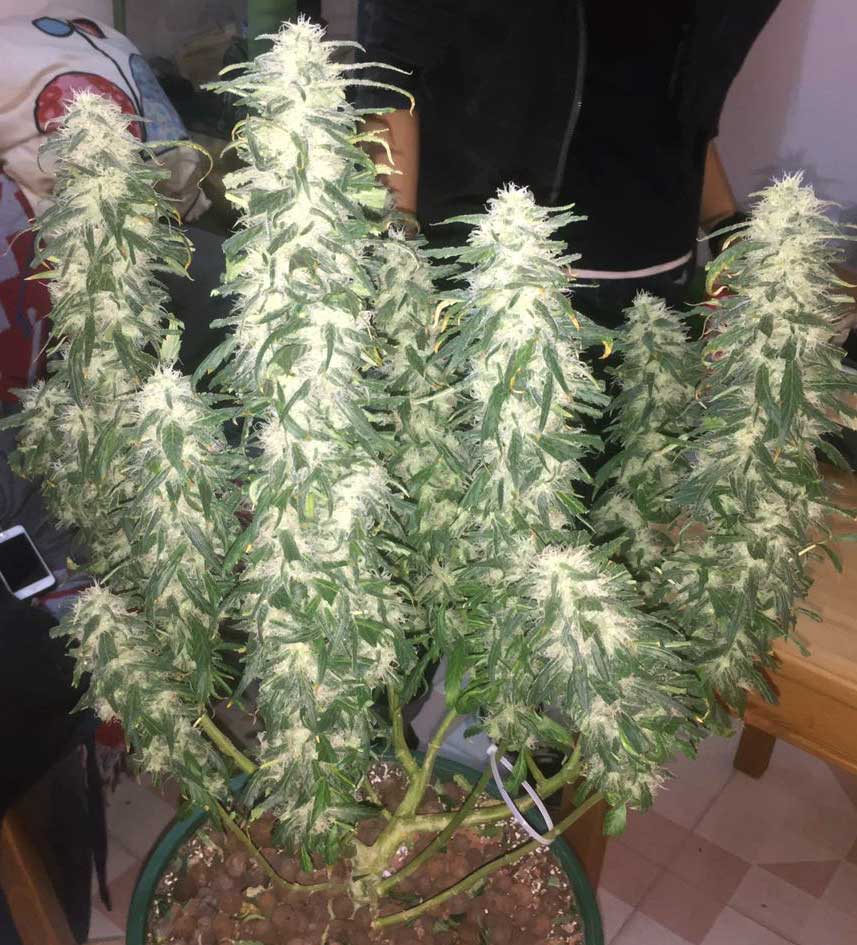 THC Bomb plant grown by Ricky (a first time defoliator!)
Step-by-Step: How to Defoliate Cannabis Plants to Increase Yields
It’s pretty well-accepted in the cannabis growing world that defoliation can increase yields in some situations, but what’s the “best” way to defoliate? That’s a common question without an easy answer.
The truth is that many growers have their own ideas about the best way to defoliate. If you ask 10 different growers, you could possibly get 10 different answers! And you’ll probably find at least one grower who claims it doesn’t work at all.
Today, I’ll share my own personal defoliation timeline and tactics which I’ve developed over the last several years.
Note: Some equatorial Sativa and Haze strains naturally grow tall and “leggy” with thin leaves and lots of exposed stem. These strains may never produce enough leaves to get bushy even in the best environment, and may look like they’ve naturally defoliated themselves. When this happens there’s no need to defoliate plants further. However, many (if not most) strains produce some amount of leafiness that needs to be removed for optimal growth indoors.
You may not need to defoliate if you see lots of stem and bud sites are already exposed. Some strains naturally grow leggy enough that they don’t need much, if any, defoliation to expose bud sites or increase air circulation!
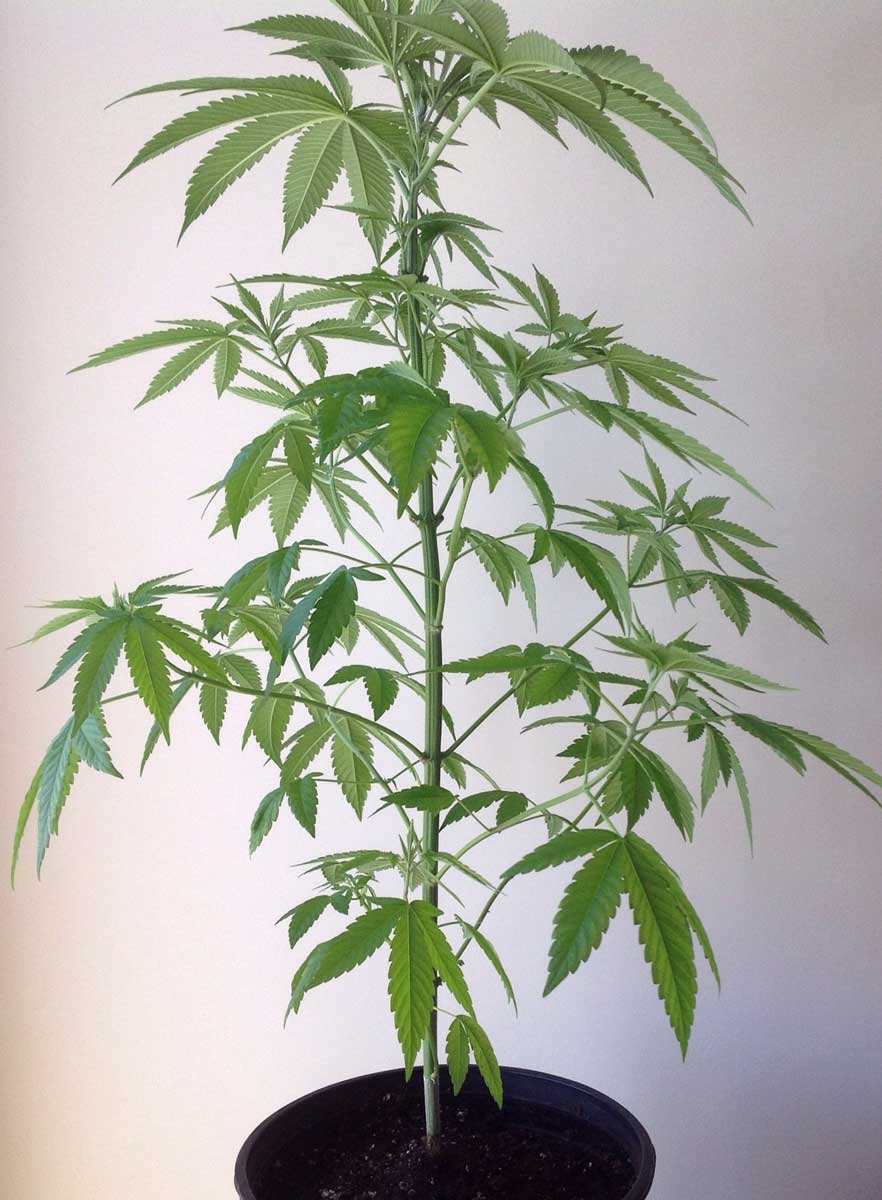
Step 1: Vegetative Stage Defoliation
I don’t remove leaves in the vegetative stage to the same extent I do in the flowering stage.
Most defoliation in the vegetative stage is used to thin out the plant if it starts getting really bushy. Making sure there’s always airflow through the middle and under the bottom of the plant will help plants grow better. Good airflow also prevents White Powdery Mold (WPM), a common problem when you have leaves laying on top of each other.
In my opinion, if you can’t see through the plant, and/or there’s no light getting through to the bottom, it’s too bushy for proper airflow!
These vegetative stage plants are too leafy! Notice how the floor is in shadow? They’re ready for a haircut!
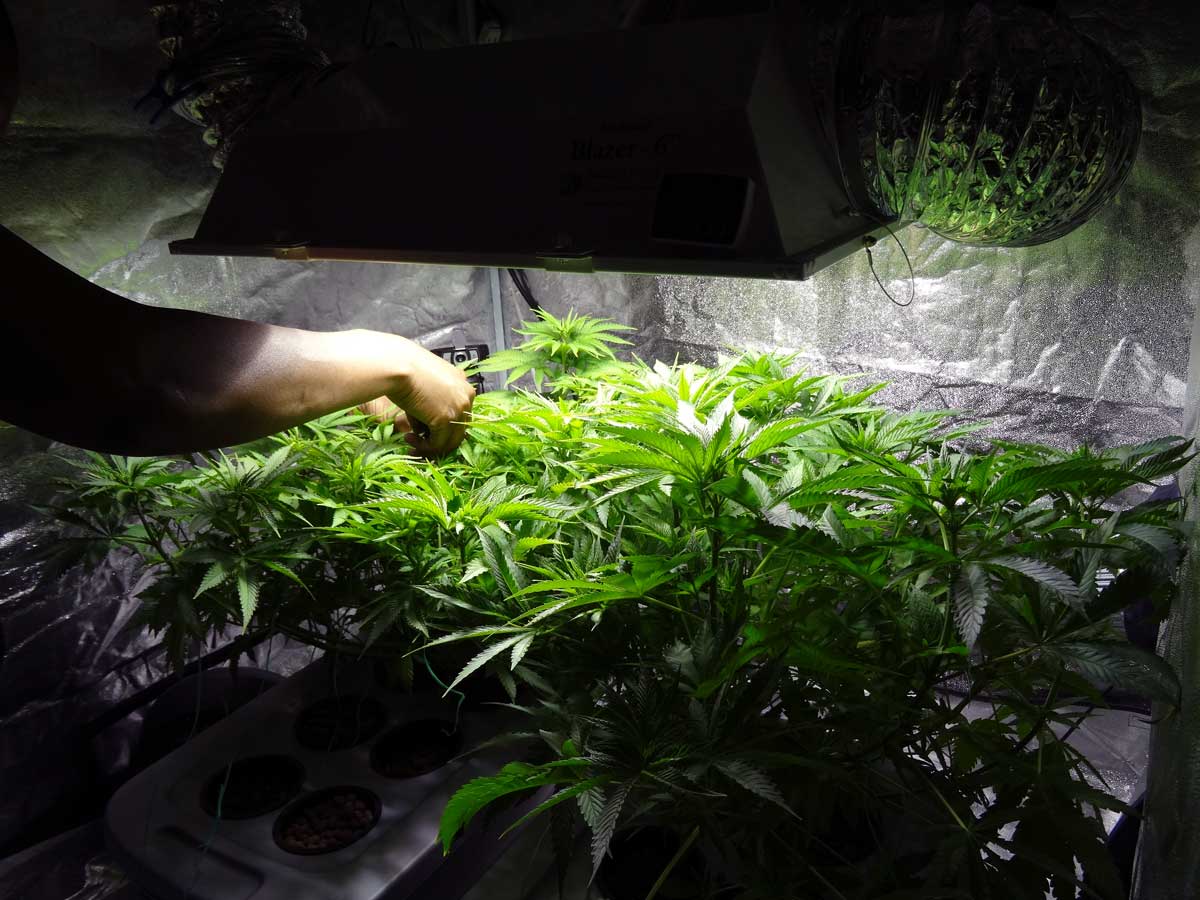
When it comes to plant training, the focus in the vegetative stage is on getting the shape of the plant correct (flat and wide like a table), and making sure there’s multiple main stems/colas under the grow light.
When I’m growing my own cannabis plants, I don’t start defoliating aggressively until I’m in the flowering stage.
Step 2: Flowering Stage Defoliation
Right before the switch to the flowering stage, I remove any leaves and tiny growth tips on the bottom parts of the plant that aren’t getting light anymore (sometimes called “lollipopping” the plant).
It is important to do right this before the switch to flowering so the plant is putting all its effort into the top bud sites instead of the lower bud sites that will never grow into big buds no matter what you do.
Some growers call the technique “lollipopping” because you’re making the bottom bare like a lollipop stick 🙂 Though some growers also remove bud sites while lollipopping, for you first grow, I recommend removing all the leaves below the line, but leaving the bud sites (growth tips at the base of each leaf) alone. This helps ensure you have as many places to make bud as possible. I’ve found that leaving extra bud sites doesn’t seem to reduce your yields as long as you’ve defoliated the plant properly, but removing too many bud sites definitely hurts your yields!
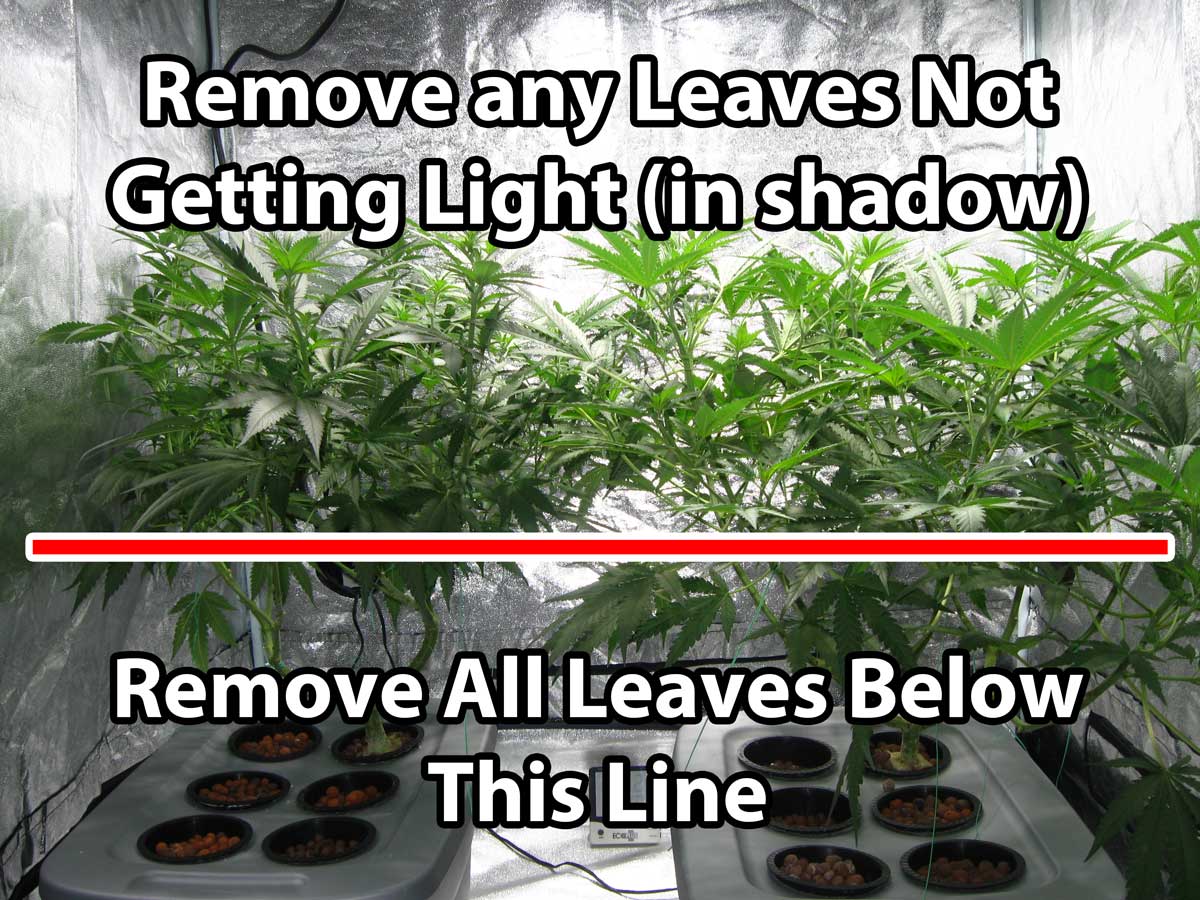
This grower stripped all the buds sites from the bottom of the plant while lollipopping, resulting in shortened colas. I’ve done this, too! His yield would have been bigger if he’d allowed those bud sites to continue further down on each stem!
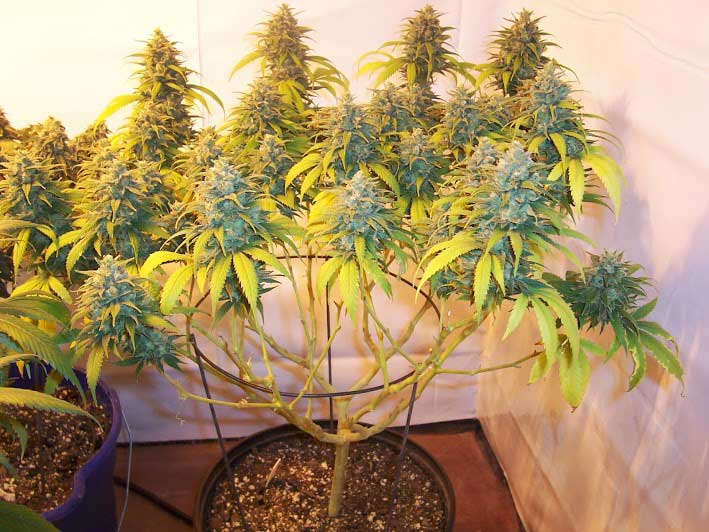
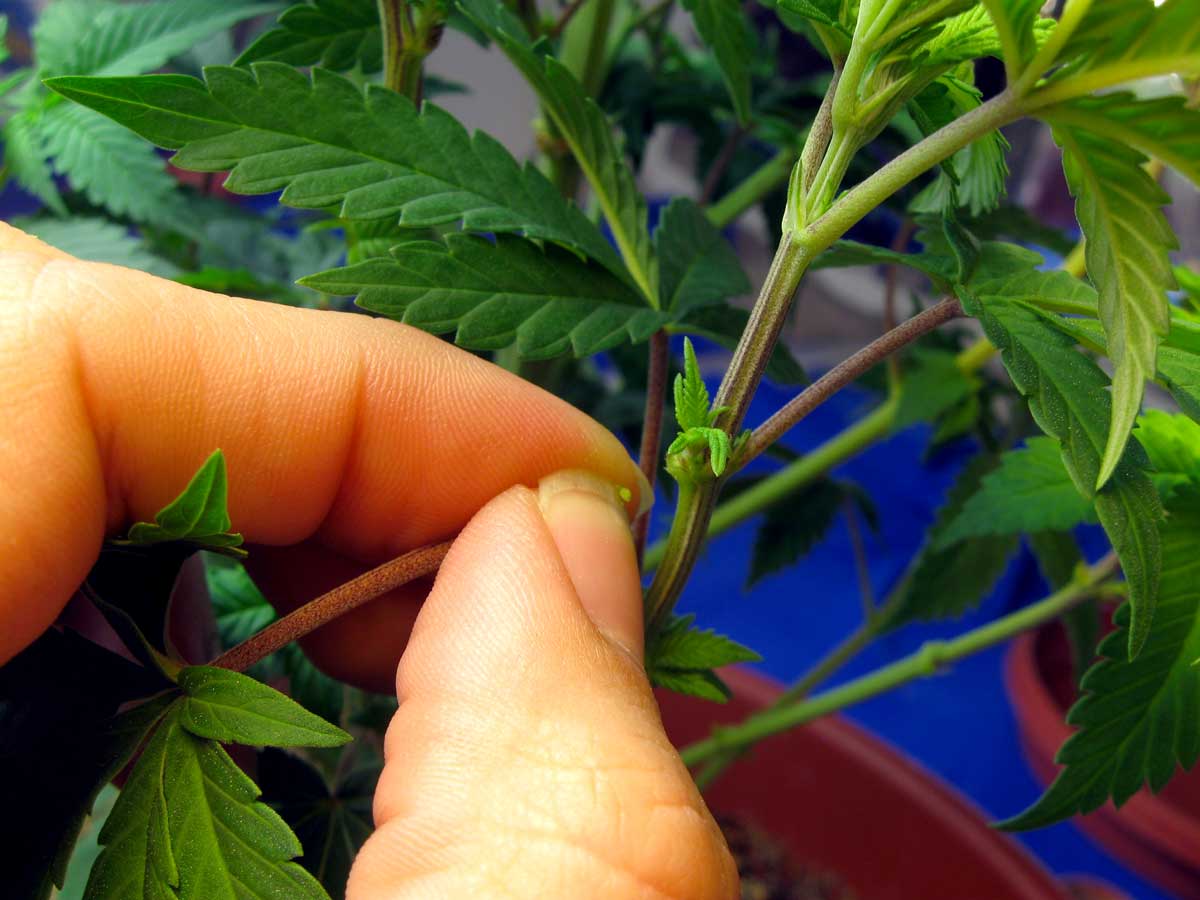
To prevent the problem with the plant above, avoid removing or damaging future bud sites whenever defoliating. It’s easy to accidentally damage bud sites when they’re just tiny pre-flowers like this one, so be extra careful when removing leaves!
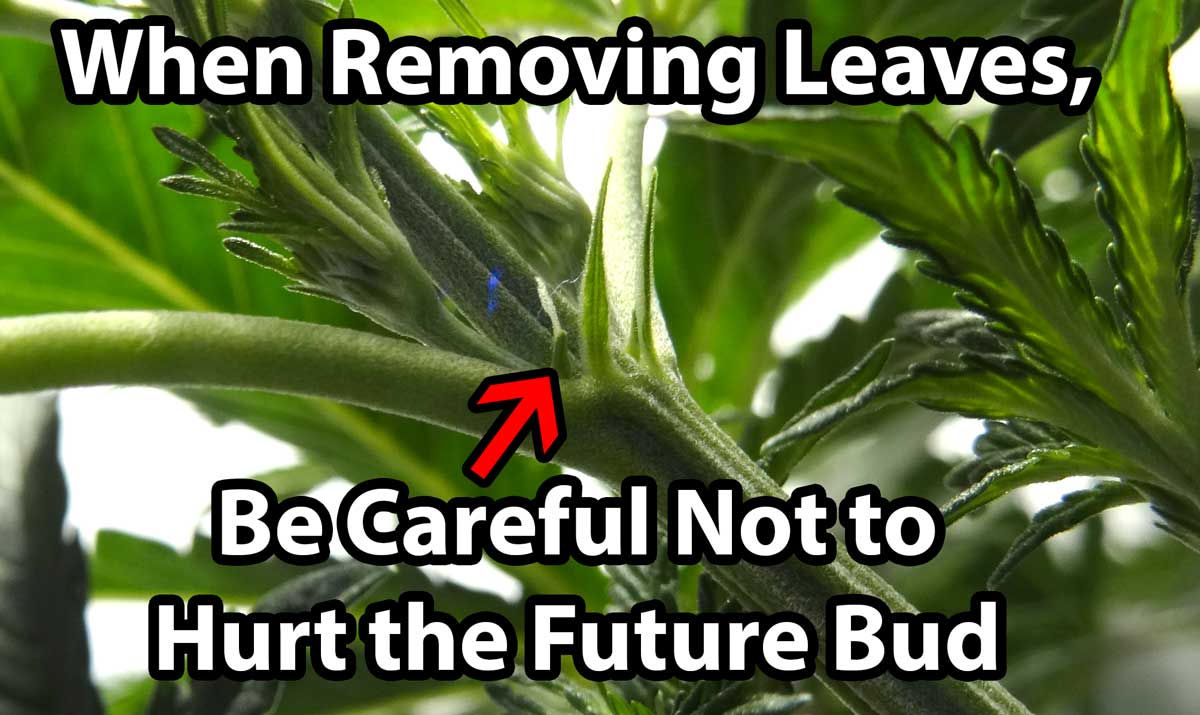
After you’ve stripped all the leaves from the bottom your plant, it’s time to remove most of the remaining biggest fan leaves (though you’re not going to completely strip the top part as much as before). You’ll be leaving any small fan leaves as well as the top few pairs of big fan leaves of each cola completely untouched. After this step, the plant will be almost all “bones” and bud sites, with few big fan leaves except at the top.
Flowering Defoliation #1 (Immediately Before Switch to 12/12)
Before Defoliation
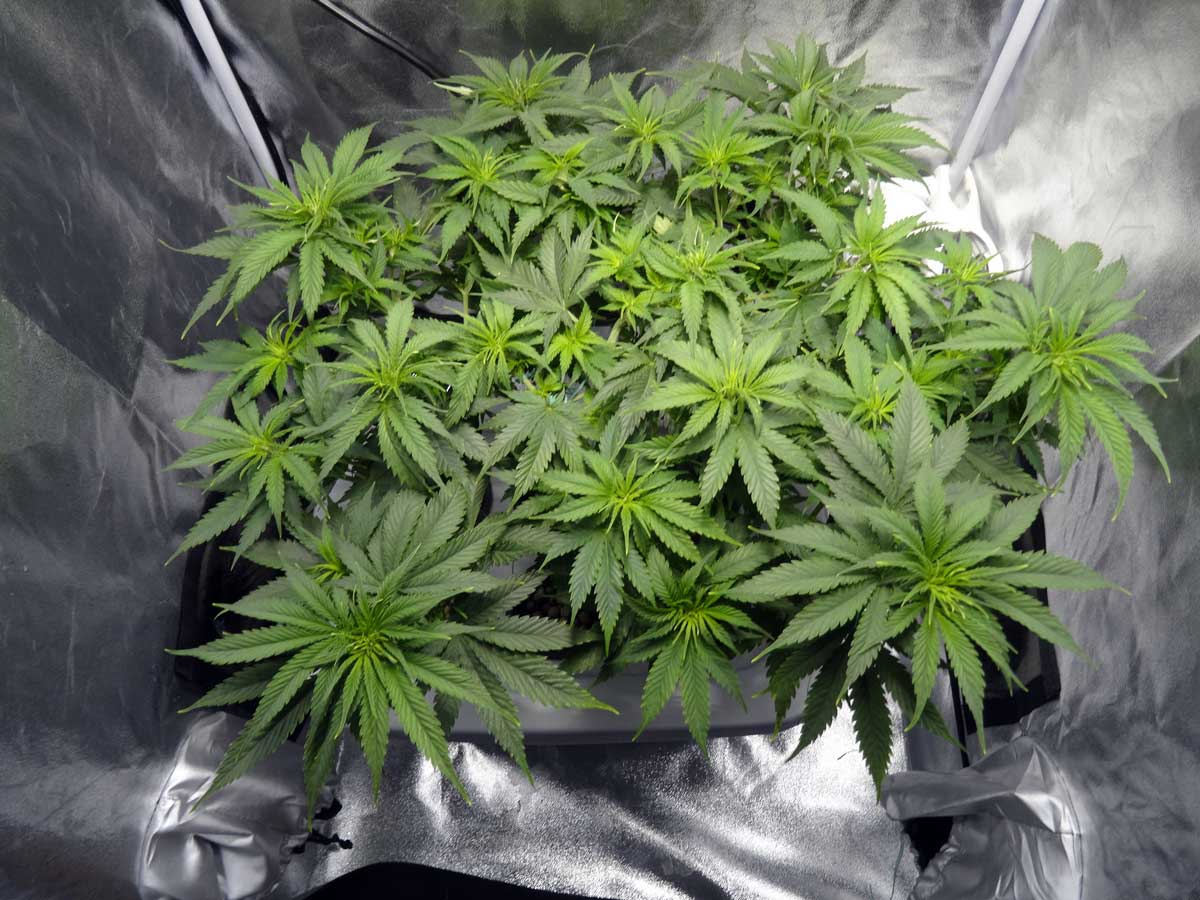
After Defoliation
I leave a few extra full size fan leaves at the top of each cola because I believe it helps power the growth of the colas during the flowering stretch so they get as long as possible. Make sure to remove only leaves during defoliation, but not bud sites! I have found after trying it both ways that removing bud sites while lollipopping/defoliating often hurts your yields!
Flowering Defoliation #2 (Last Major Defoliation) – Week 3 of Flowering Stage
This is what that plant looked like 3 weeks later. I didn’t remove any leaves in that time. The plant has gotten far taller due to the flowering stretch, and is completely covered in leaves again!
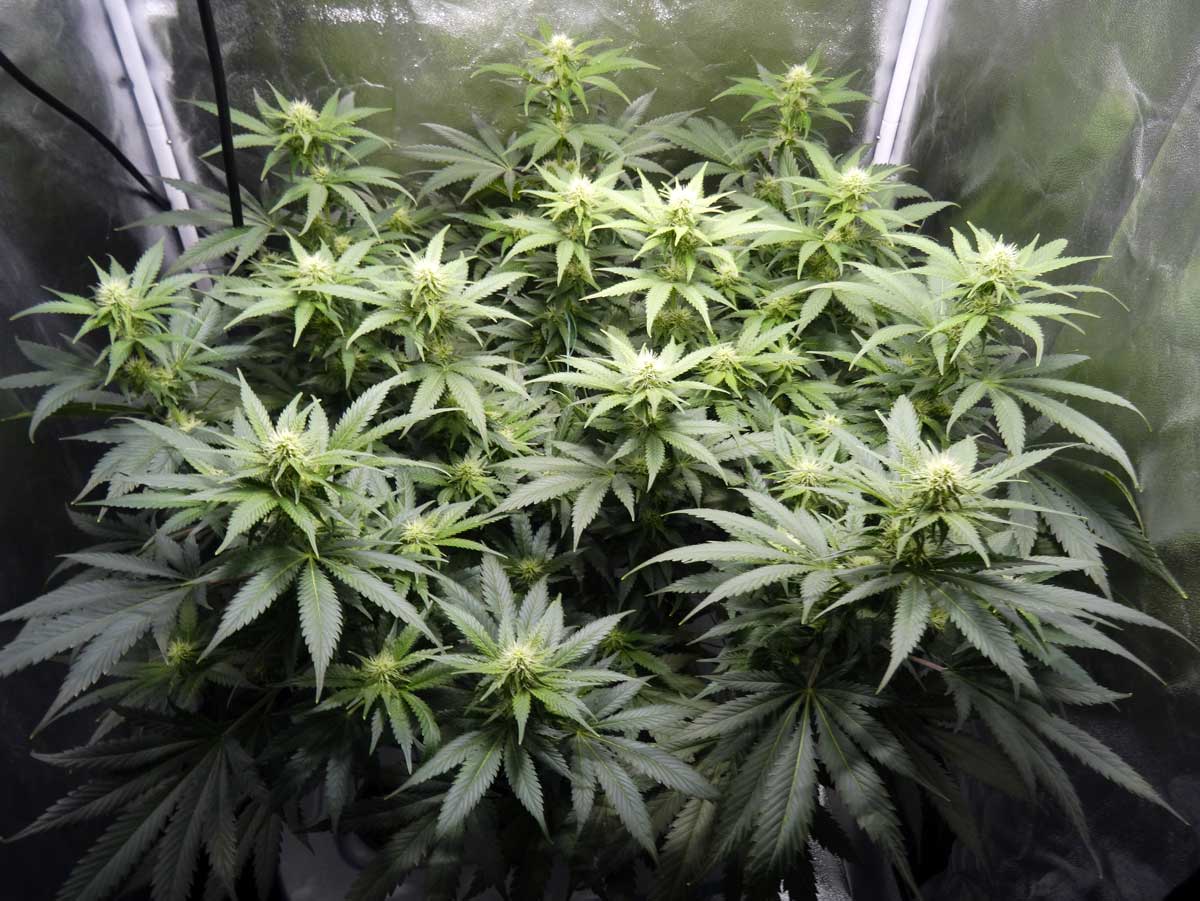
Usually by around week 3, a bunch of budlets have formed. At this point I remove all of the major fan leaves one last time. You’re forcing the plant to focus on the buds during this crucial phase of their development!
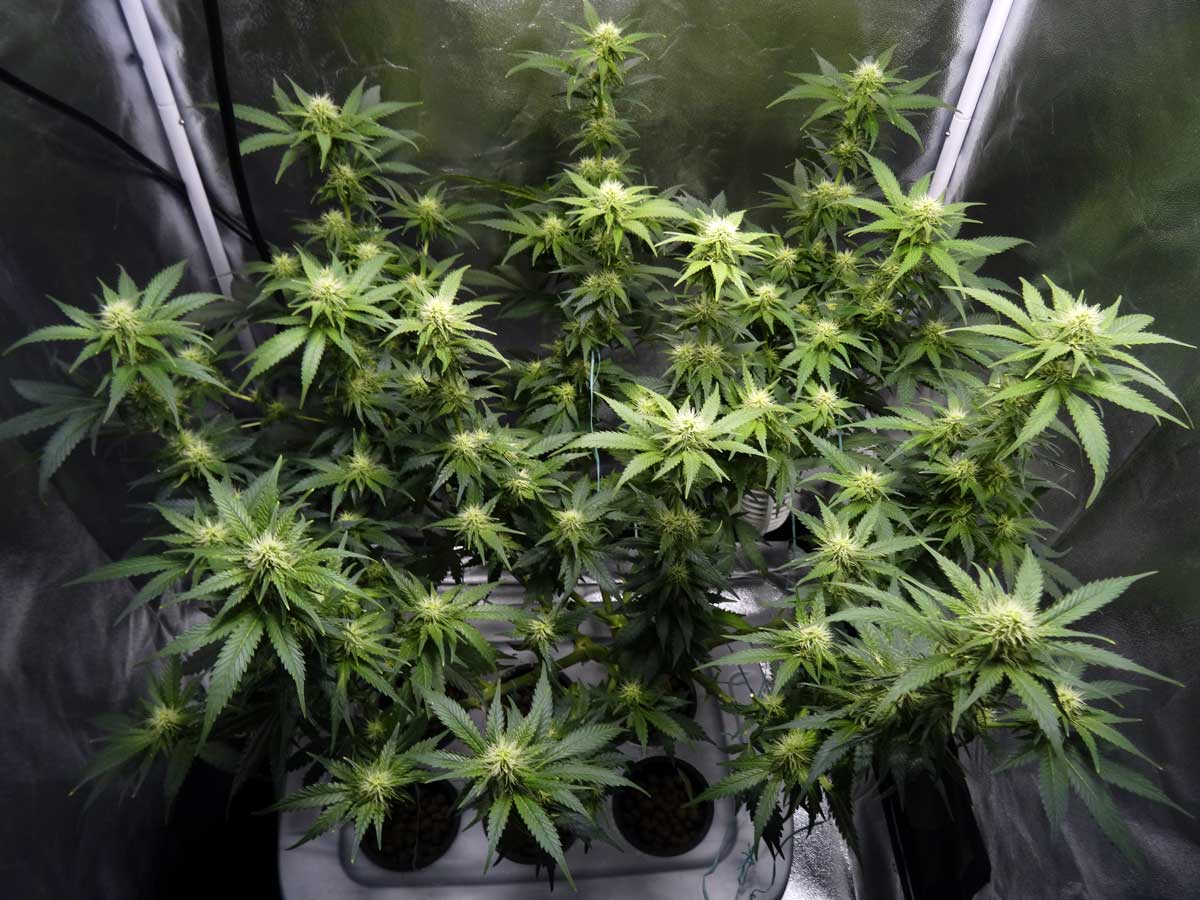
After that, I’m done with the majority of defoliation! From week 3 and on, I only remove leaves if they’re covering a bud site (and I can’t tuck the leaf away) or if the plant starts getting too bushy through the middle and bottom. Each leaf provides energy to the plant, and I cherish them… unless they get in the way! 🙂
Step 3: Harvest
Wait until buds have matured and appear ready to harvest. Then it’s go time!
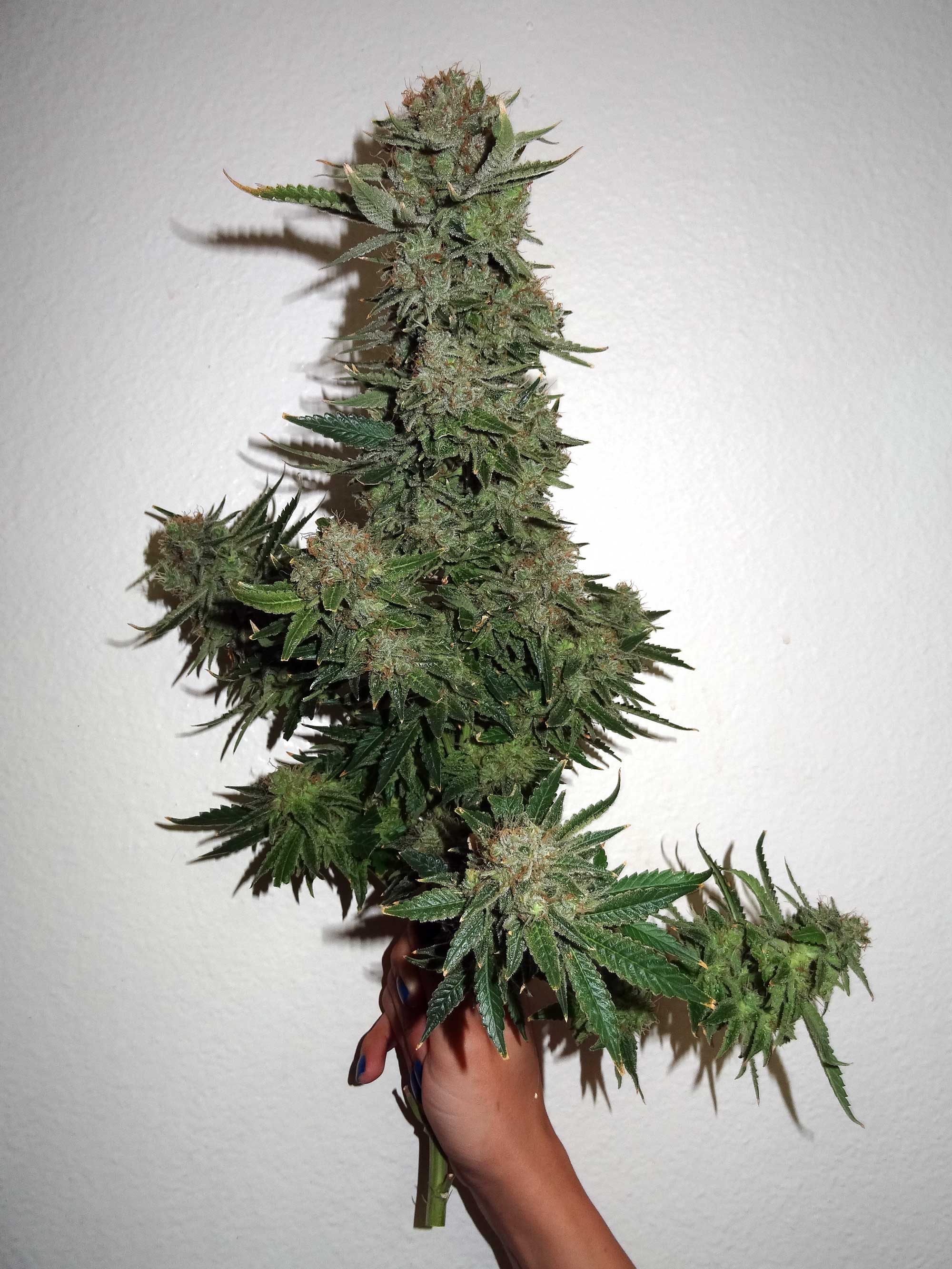
7 Weeks Later I Harvested This!
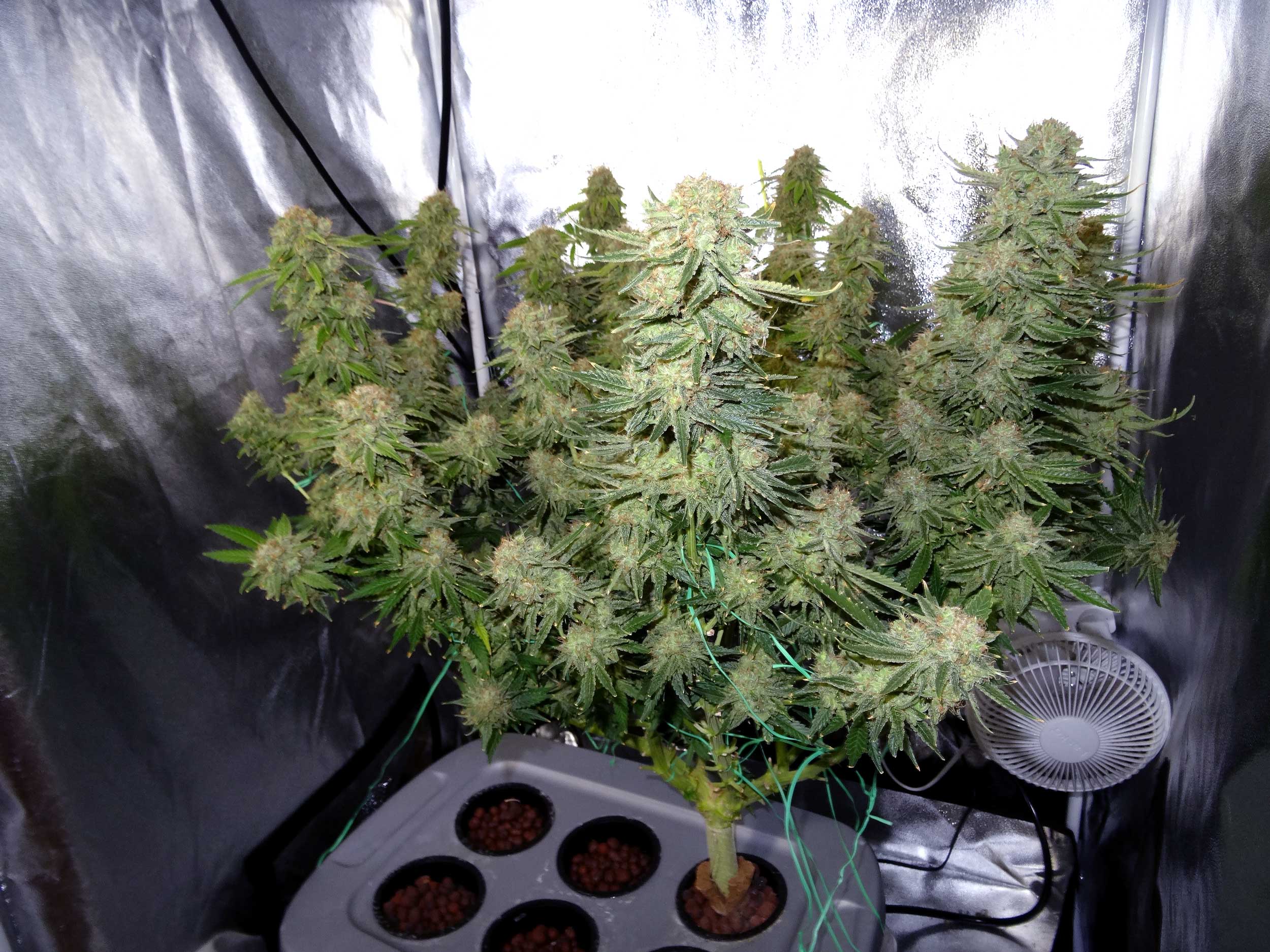
Each bud dwarfed my hands!
The above pictures featured a single plant but I’ve used the same technique successfully with dozens of cannabis plants in soil, coco coir, and hydro.
More Examples of Defoliated Cannabis Plants
Here are examples of other harvests where I utilized this defoliation technique.
Grown in coco coir
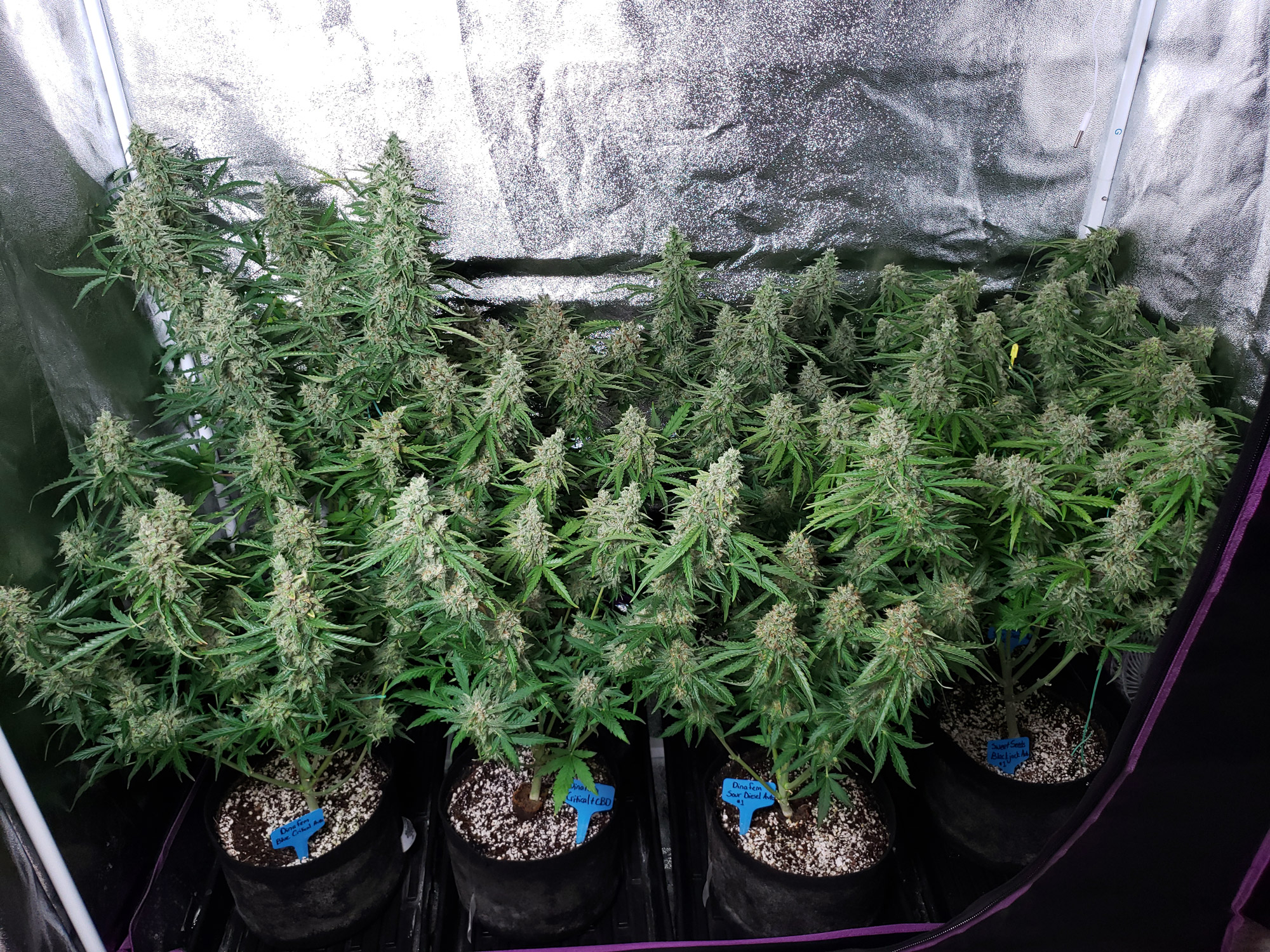
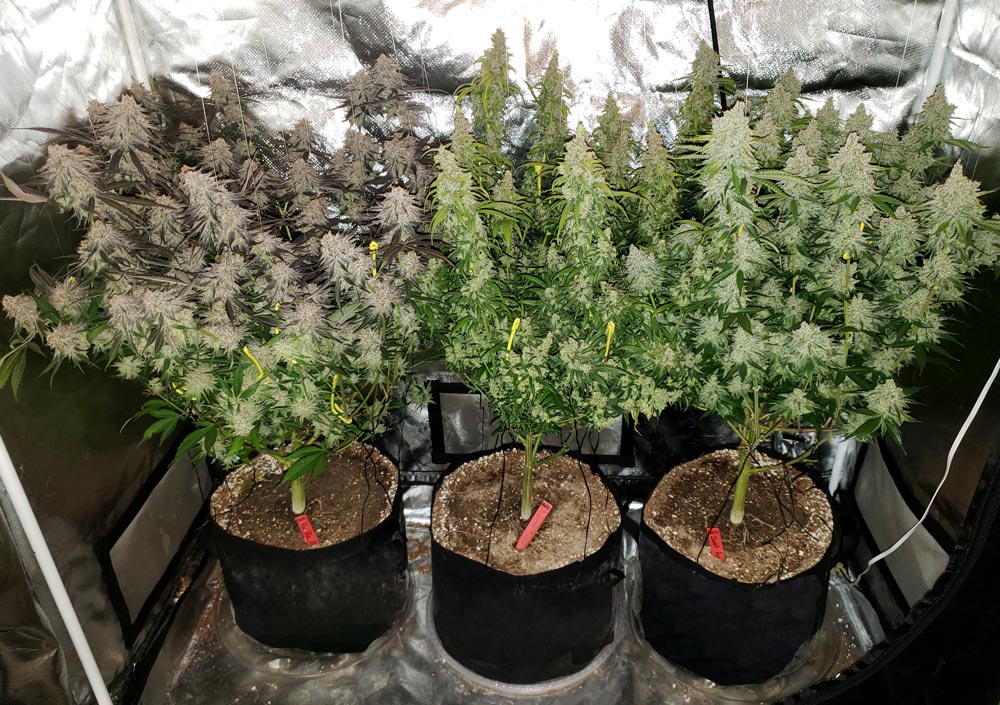
I probably could have defoliated these ones a bit more, but results were still great.

Grown in soil
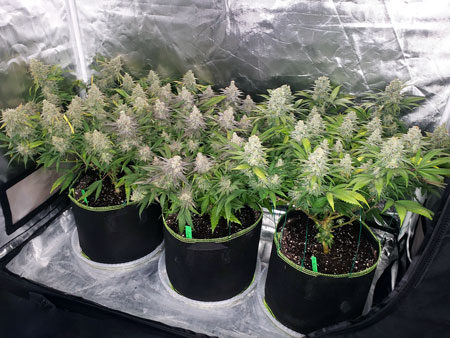
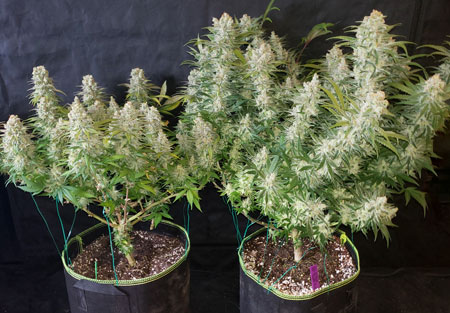
These are auto-flowering plants that were defoliated. Get instructions on how to use defoliation with autoflowering plants to increase yields. It’s pretty much the same, but in that defoliation tutorial I included some extra explanation on exactly when and how much to to defoliate considering you don’t have a specific day that you initiate 12/12 like with photoperiod plants.
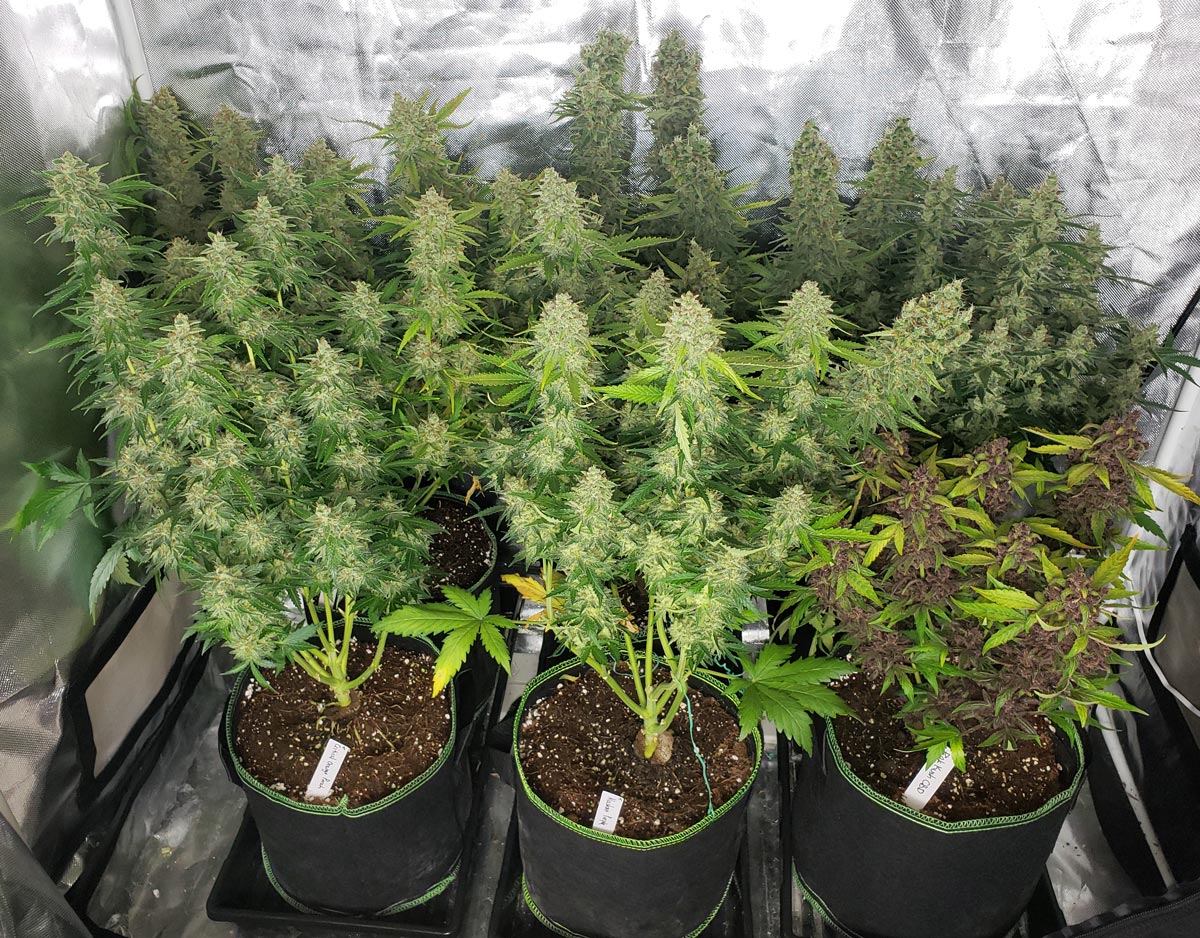
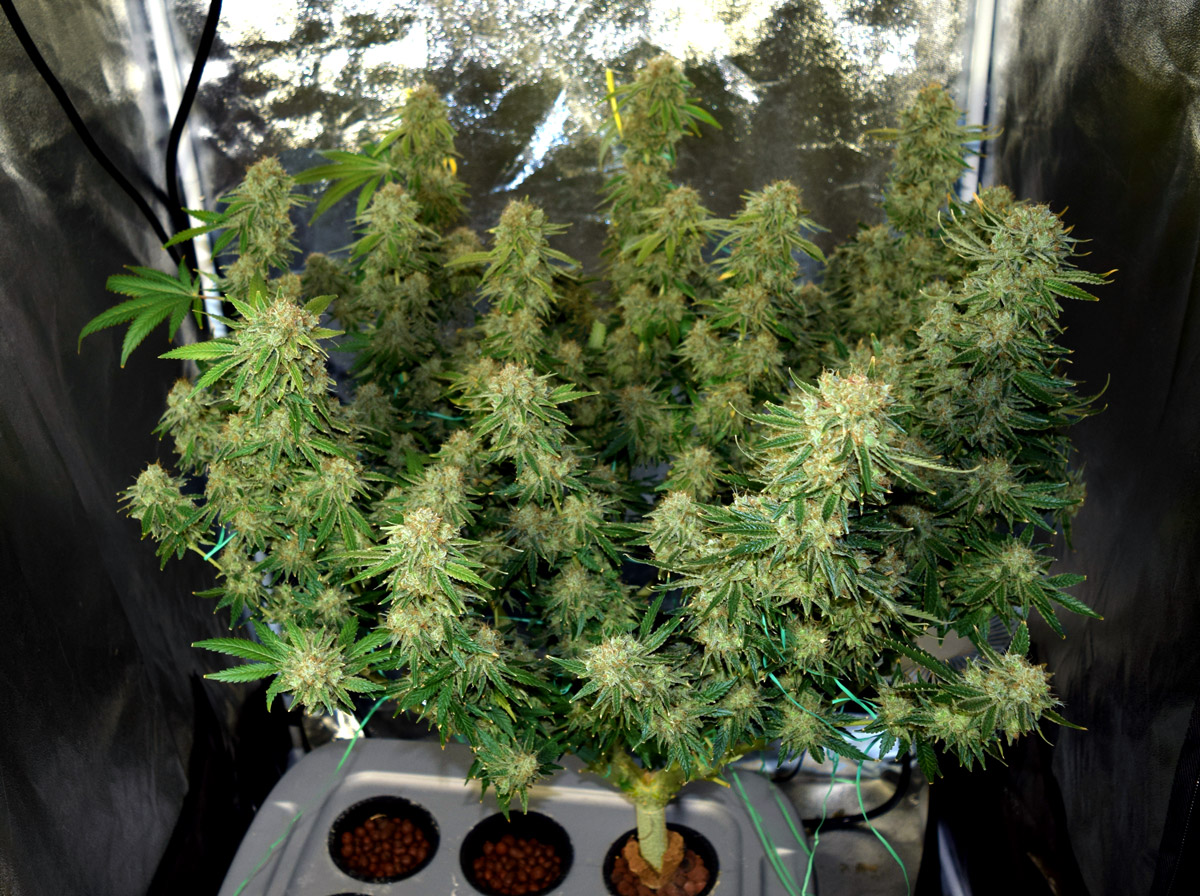
These two hydro plants also utilized the manifolding technique in addition to defoliation to increase bud size.

Bonus Tips for Successful Defoliation
- Always use nutrients alongside defoliation – Defoliation works best when you’re providing cannabis-friendly nutrients in the water. Supplementing with nutrients help the plant replace nutrients lost in the leaves. If you’re growing in a “just add water” super soil setup (where you’re not adding extra nutrients), it’s recommended to avoid much defoliation. If you remove leaves without adding more nutrients, it increases the chance the plant runs out of nutrients early, starving it of precious nutrition during bud formation.
- Light should hit the floor – Defoliation is most effective if the plant is so leafy that light isn’t making it through the plant. If the floor underneath is in shadow, that’s a sign that no air or light is getting through the plant. After defoliation, there should be some amount of light getting to the floor under the plant.
- Err on the side of taking fewer leaves – You can always take more leaves, but you can’t put them back. Especially as a beginner defoliator, it’s recommended to remove fewer leaves than you might think, and see how the plant responds. Even a little defoliation can make a significant difference to yields.
- Only defoliate healthy cannabis plants – You should never defoliate a plant that is sick or unhealthy. If a plant has nutrient deficiencies, or otherwise seems stressed, “tuck” leaves to expose buds instead.
- Tuck leaves to expose buds – The goal of tucking leaves is to ensure they don’t cover any buds from the grow light. If the plant is not particularly leafy, showing signs of stress, or you’re not adding nutrients in the water, you can still achieve a lot of the benefits of defoliation simply by tucking big fan leaves out of the way.
If you want to copy the results for yourself, refer to the following quick summary!
Nebula’s Bud-Based Defoliation Technique (Quick Summary)
So basically, my (personal) cannabis defoliation technique could be summed up like this:
Vegetative Stage
- Plant Training – Train plant(s) to grow into a generally flat and wide shape, so they fill your grow space like a table. This makes it so you have multiple colas located at the top of the plant and close to the light. Or choose a Sea of Green setup (growing many small plants) and skip the training!
- Defoliate the middle and bottom of your plant(s) whenever you can’t see light coming through them. When the middle is completely dark it means the plant is too bushy.
Right Before Switch to 12/12 – What about autoflowering strains?
- Do this step when plant is about half the final desired height (since it will about double in size after the switch to 12/12)
- Lollipop the plant (completely strip the lowest leaves on the plant that will never get light, leaving the bud sites intact)
- Remove big fan leaves on the upper part of the plant (making sure not to damage bud sites) until plant is not leafy. If you can easily see your plant’s stems it’s a good time to stop.
Week 3 After Switch to 12/12
- One Last Defoliation at Flowering Week 3 – Now that you’re three weeks into the flowering stage, do another major removal of just about all the fan leaves. Make sure to especially take any big leaves with long stems, or leaves that are covering bud sites! Again, avoid removing or damaging any developing buds!
After Week 3, I only defoliate huge fan leaves that can’t be tucked away. Otherwise I just wait until harvest and reap the rewards!
Defoliation is a technique, but it is also an art! The above instructions should get you started but cannabis plants are like big bonsai trees and you’ll eventually learn how to defoliate without hesitation. It’s fun to try to alter the growth patterns of cannabis plants and I encourage you to experiment with your own plants and develop your own particular defoliation style and rhythm!
Defoliation done right makes big, dense, potent marijuana buds at harvest!

Have you tried defoliation on your cannabis plants? Send us pictures!
You Might Be Interested in One of the Following Cannabis Plant Training Tutorials…
- Simplest Plant Training Guide Ever!
- Complete Plant Training Guide
- How Can I Train an Auto-Flowering Plant?
- 7 Unfortunate Plant Training Mistakes
Detailed Breakdown of Training Techniques
- Low Stress Training (LST) Tutorial
- Topping vs FIMing Tutorial
- LBH’s Famous ScrOG Tutorial
- Supercropping: Simple Secret to Bigger Yields
- Sea of Green (SoG) Tutorial
- 12-12 from Seed – Flowering Plants Early
- Nebula’s Manifold Tutorial
- How to Manifold Clones
- Alternate Defoliation Tutorial
- What is Re-Vegging / Monstercropping?
