
by Nebula Haze
What is the Cannabis “Sea of Green” (SoG) Technique?
“Sea of green” (SoG) is the idea of growing many small cannabis plants instead of just a few bigger plants. The two main advantages are faster harvests and the best yields (on average) for your setup. For the best Sea of Green results, choose matching 8-week marijuana strains that don’t grow particularly tall. For example, Baller’s Game, Green Crack, Great White, Runtz Muffin, Purple Queen, Dos Si Dos 33, and Blueberry x OG Kush.
“SoG” (Sea of Green) refers to growing a “sea” of many small marijuana plants.
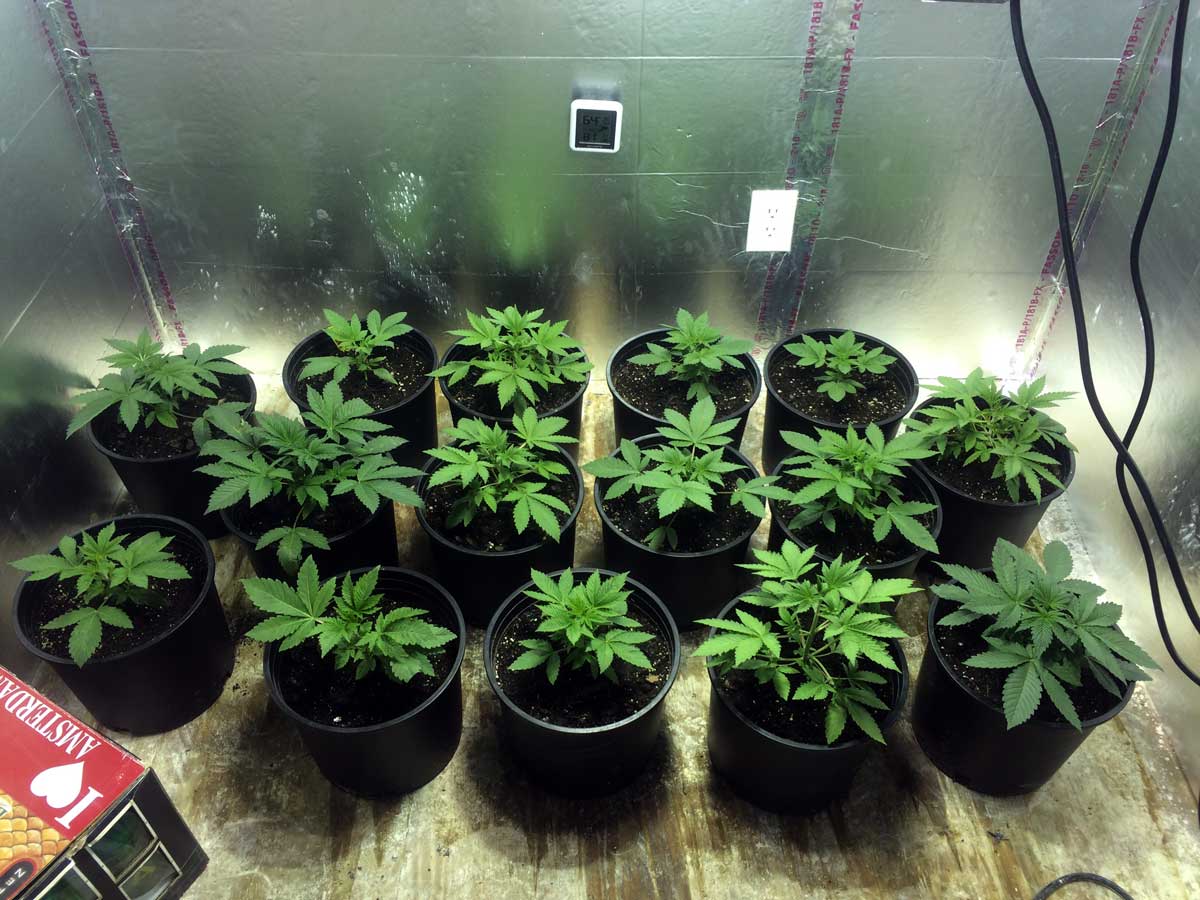
Each cannabis plant stays small, reducing total grow time. Yet plants still fill the space with buds, which is why the Sea of Green technique produces the upper limit for yields.
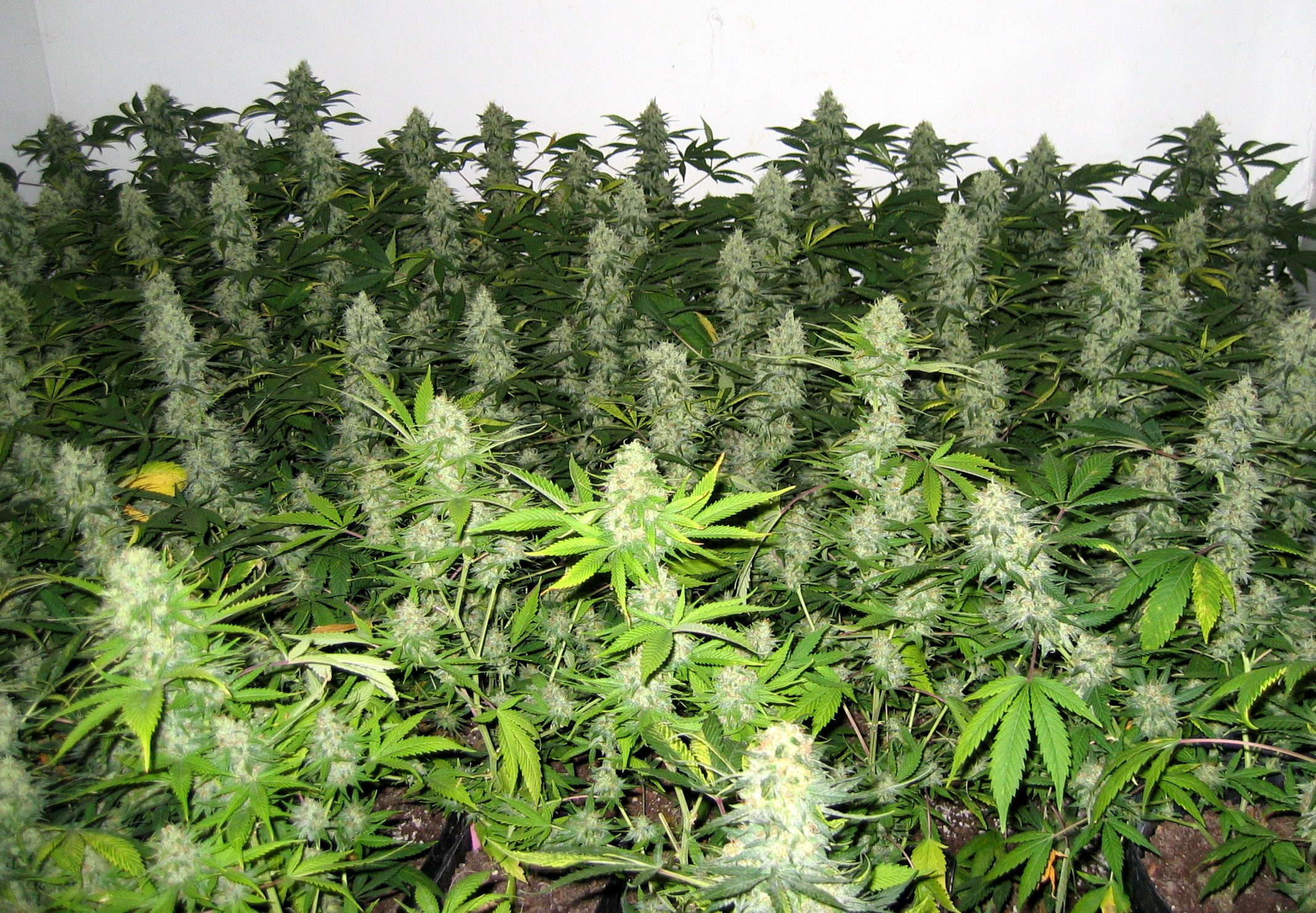
Each plant stays small, so it takes much less time to harvest. Yet with so many plants and bud sites, overall yields match that of bigger plants. In fact, on average, the Sea of Green technique produces the best cannabis yields for any particular grow light and environment.
These five auto-flowering plants started at the same time in this DWC setup. Without any training or special time schedules, they grew into this at harvest!
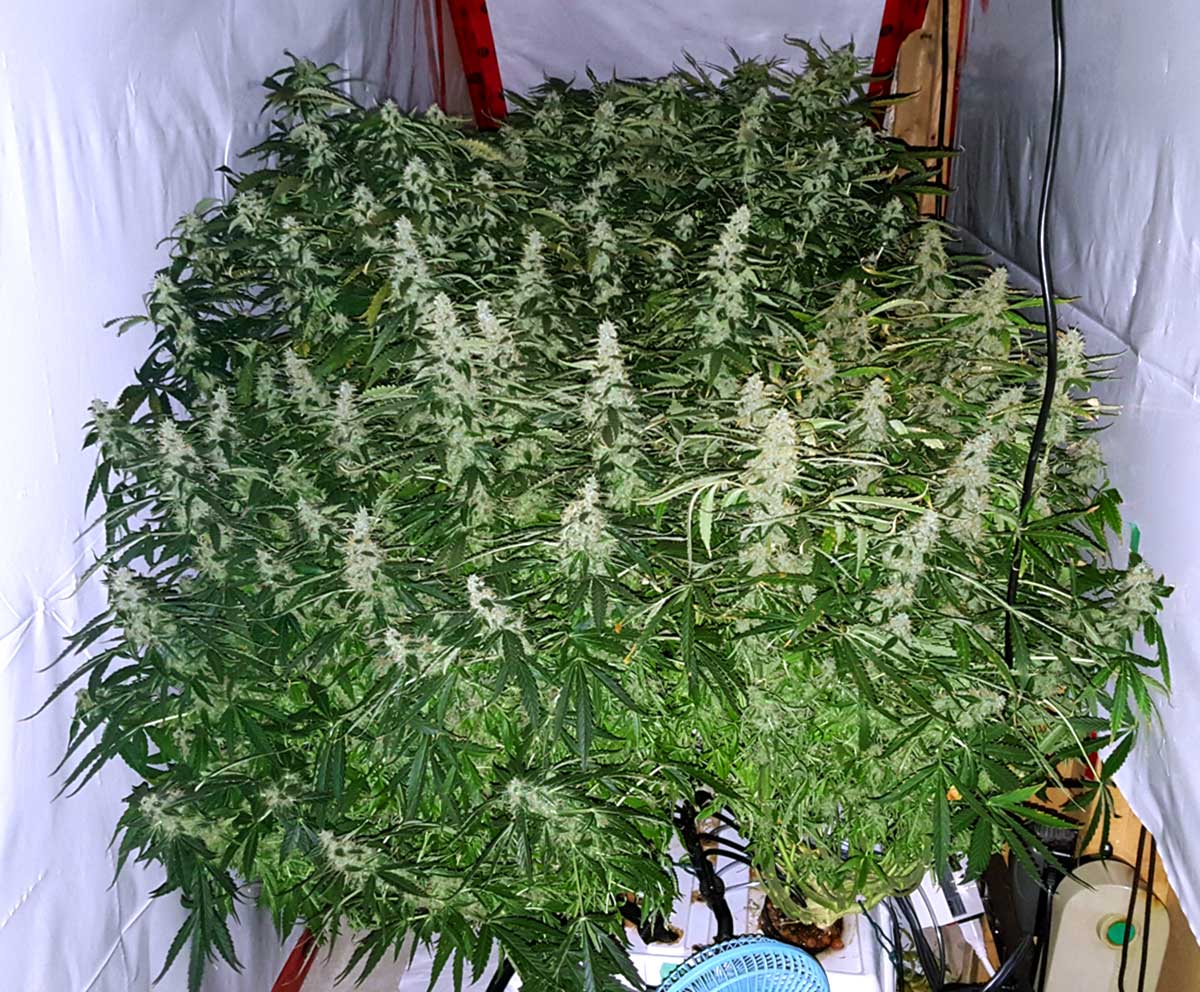
You often don’t need to do much plant training in an SoG setup, so you spend less time each week that would have gone into training if you wanted to achieve similar results with a bigger plant.
Note: To add another confusing term into the mix, ScrOG (Screen of Green) is something completely different, and involves using a screen to grow a flat canopy of buds. A lot of names for common cannabis growing techniques don’t necessarily seem all that well thought out 😉
Pros of Sea of Green
- Great yields – Grow a lot of big, dense buds. Top buds are the highest quality buds, and Sea of Green ensures almost every bud is a top bud.
- No training needed – You can just let the cannabis plants do their thing as they grow. No need for bending/tying down or other plant training.
- Fast time to harvest – Cut a few weeks off the length of each grow, since plants don’t need to get very big before they start making buds.
- Strain Variety – Sea of Green gives you the option to grow many different strains at once, even in a relatively small grow space.
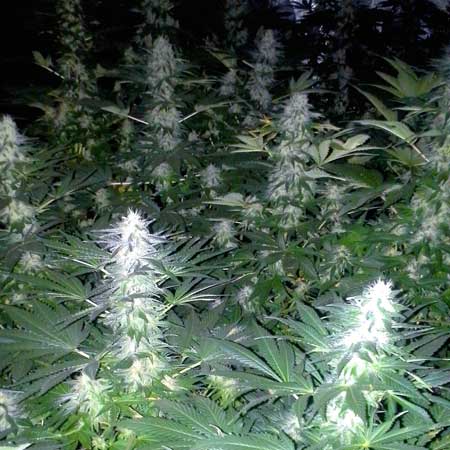
“Sea of Green” with many cannabis plants. One big bud per plant.
Cons of Sea of Green
- More time-consuming to care for more plants. Watering and accessing plants in the back can be tough!
- Need lots of plants – Not a good choice for growers with legal plant limits (check out this tutorial for that!)
- Plants are often crammed together, which increases your chance of mold or mildew. For example if humidity isn’t under control, there’s poor air circulation, or plants get too leafy.
- Some plants grow differently from others (taller, shorter, etc.) even if they’re the same strain. This can complicate things with a lot of plants, since you’re trying to keep the canopy as even as possible.
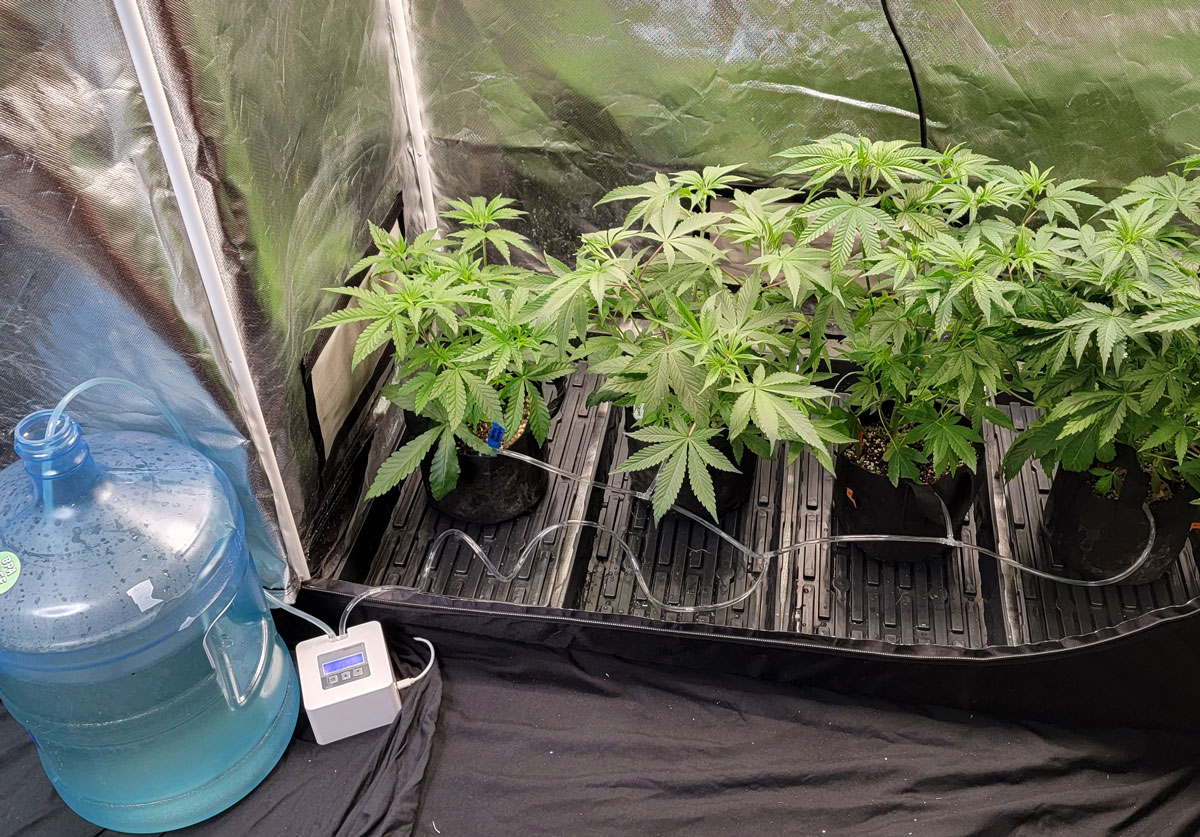
An automatic watering system can make it easier to water a lot of cannabis plants. (learn more!)
Comparison Between “Regular” and “Sea of Green” Growing (Pictures)
Let’s look at the difference in results between “regular” and “Sea of Green” cannabis growing. Here’s one example.
“Regular” Grow
Here’s a regular grow. The four cannabis plants in the picture blow produced a fantastic 13 oz of high-grade weed!
Four plants – 13 oz harvest
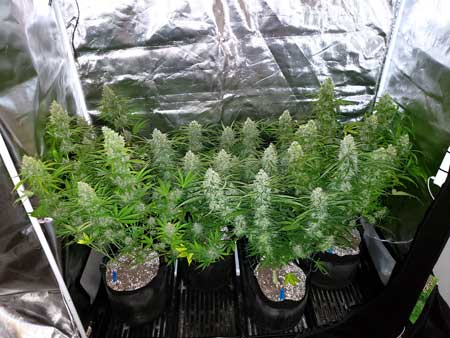
However, growing eight smaller plants in the same grow space produced even more weed in less time.
“Sea of Green” Grow
These eight cannabis plants spent half as much time in the vegetative stage, AND they had significantly higher yields (just over 17 oz)! That’s the bonus you get from growing a lot of smaller plants.
Eight plants – Over 17 oz harvest, faster.

How to Make Your Own Sea of Green
Supplies for an Effective Sea of Green:
- Seeds – Genetics are key to any outstanding cannabis grow. For a Sea of Green, it’s recommended to get 8-week photoperiod strains that don’t get too tall.
- For example, Baller’s Game, Green Crack, Great White, Runtz Muffin, Purple Queen, Dos Si Dos 33, and Blueberry x OG Kush.
- 2-gallon or 3-gallon fabric pots – Sea of Green requires lots of small/medium pots.
- (Optional) Automatic watering system – Can be helpful if you’re growing a lot of plants that are hard to reach. Learn more.
Learn about effective cannabis grow setups here.
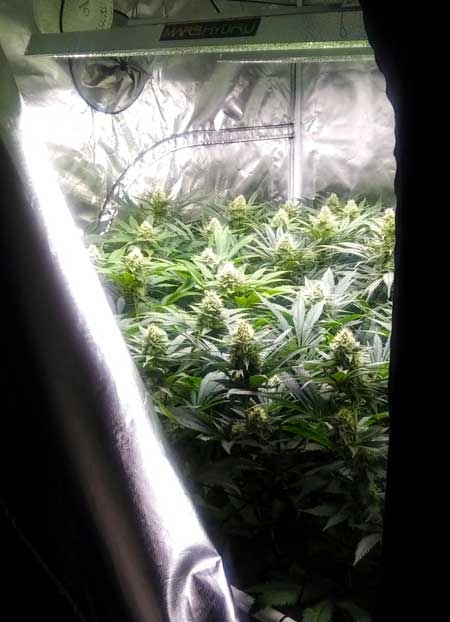
Sea of Green in Action – These cannabis plants by BH were grown under a Mars Hydro TSL-2000 LED grow light (more info).
For this grow style, growers usually switch to the flowering stage when plants are around 4-6 weeks old. Plants switched sooner than 4 weeks may not have enough time to get the most out of an SoG setup. Adding an extra week or two of veg, so each plant gets bigger can make a pretty big difference in yields too, so it’s about finding that balance between getting to harvest as quickly as possible versus harvesting a lot of bud.
Many growers also “top” their seedlings by removing the tips of seedlings when they have about 4-6 pairs of leaves. Topping can increase the number of buds sites, but if you have enough plants, you will have enough bud sites. It’s often easier to grow fewer plants, so for a grower with time concerns, you can get a lot of the benefits of Sea of Green with fewer plants by simply topping your seedlings and giving them an extra few days or a week in the vegetative stage.
For SoG, wait to switch to 12/12 until plants are this size or bigger (note: young plants like this can and will double or triple in height after the switch to 12/12).
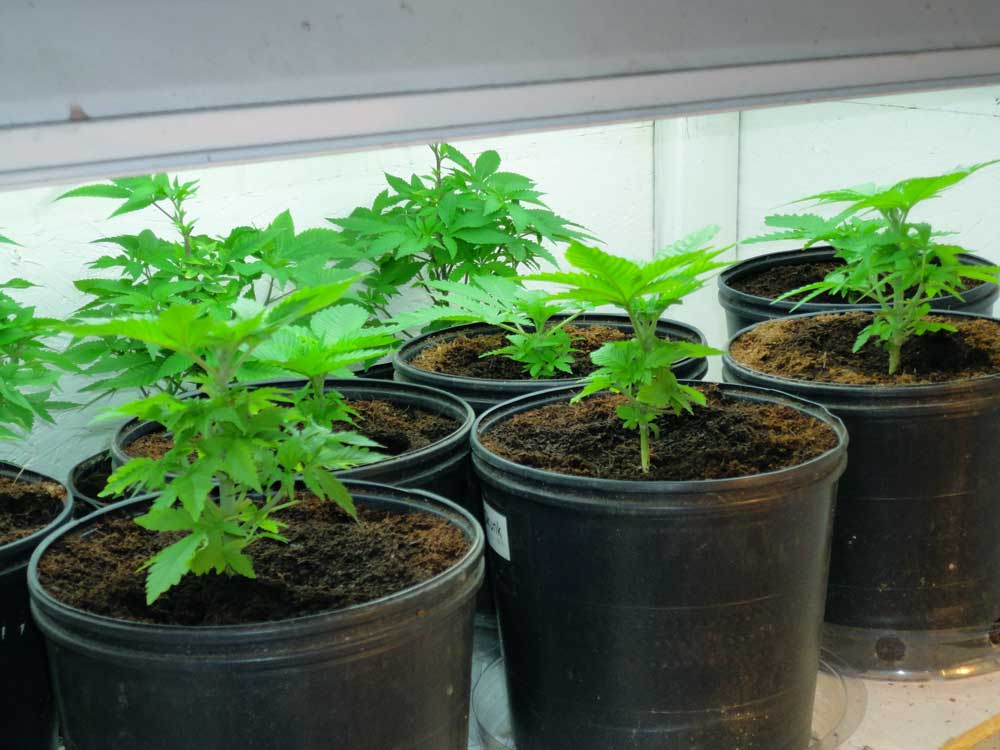
Before switch
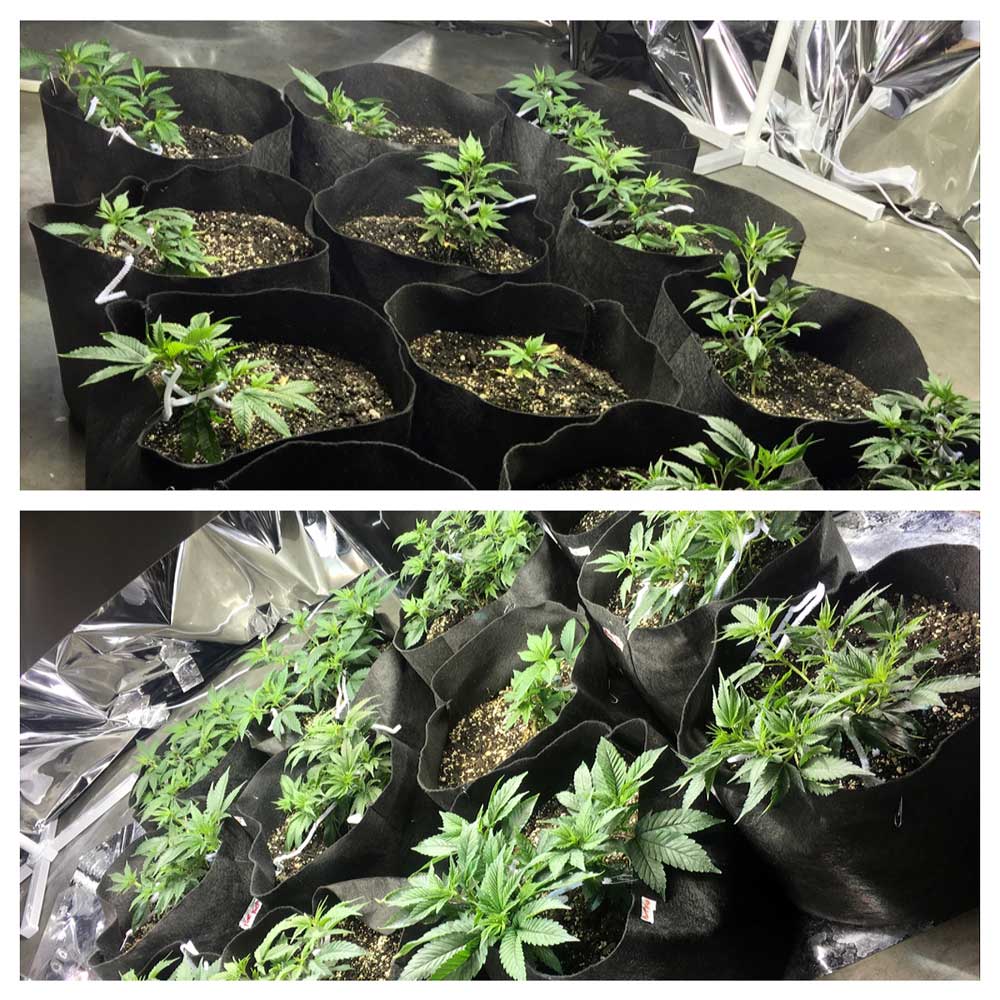
After the switch to 12/12, plants start stretching and getting bigger.
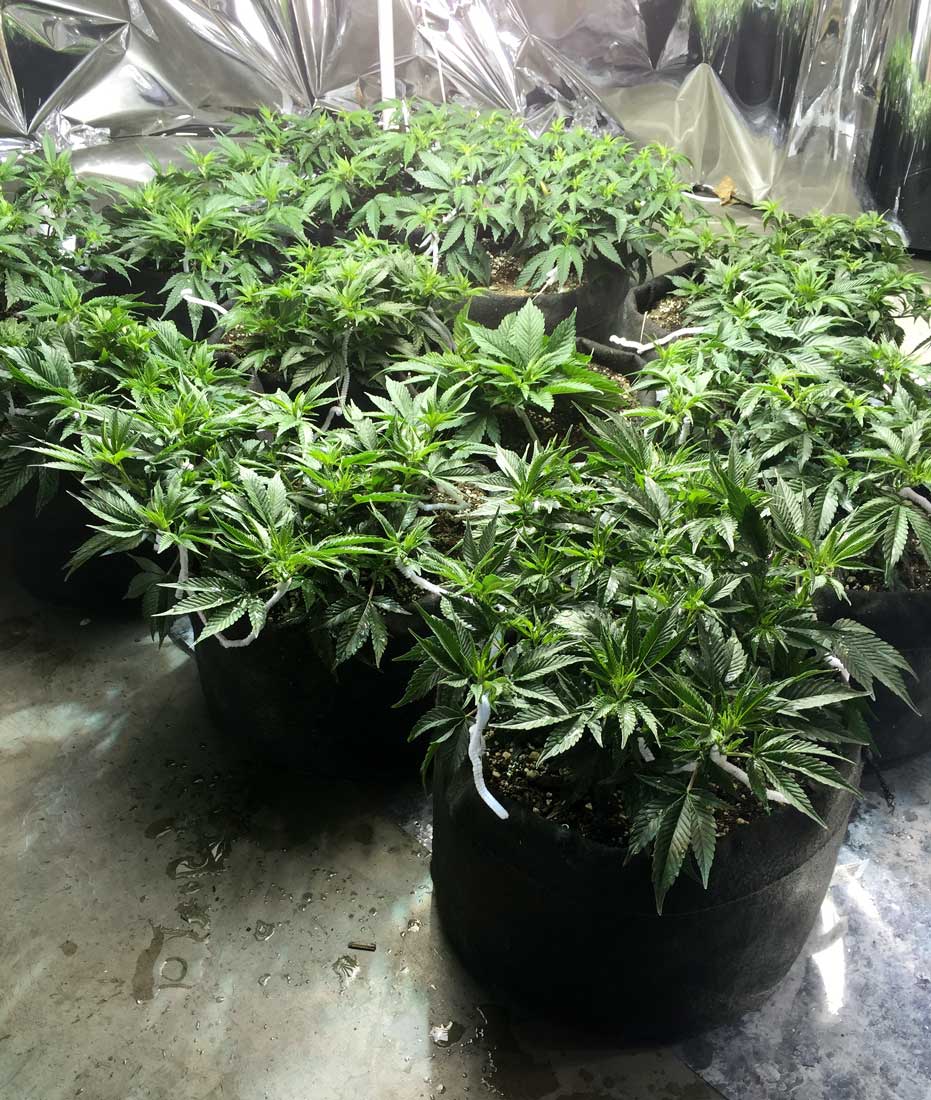
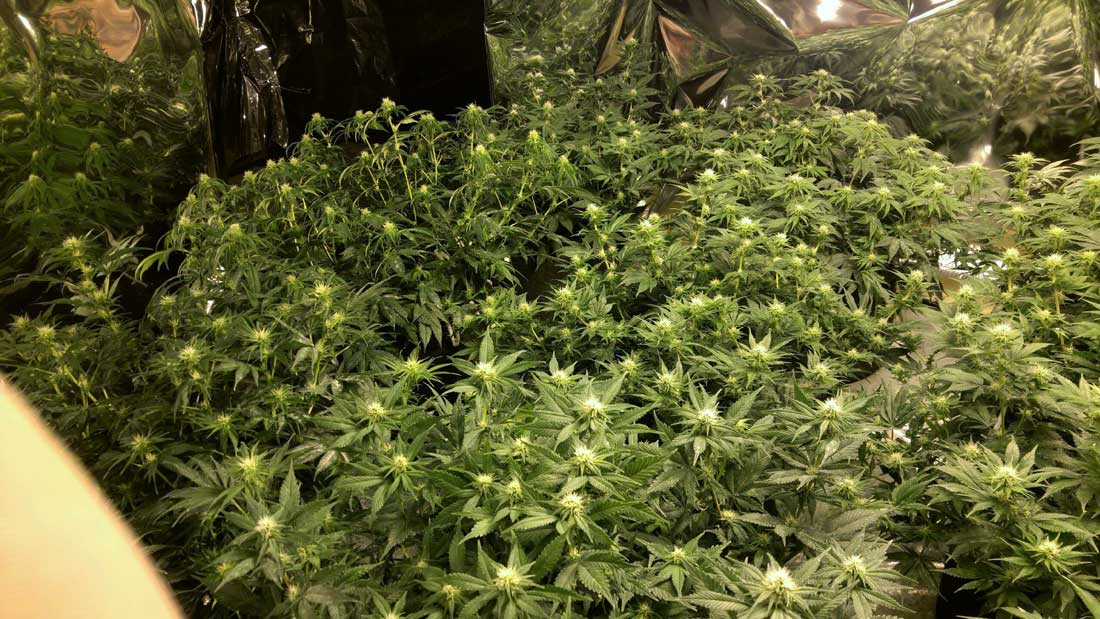
Here you can really see the SoG in action after all the plants start making buds. Even though each plant didn’t get very big, there are many, many bud sites! They completely fill the entire space!
Another Example of Sea of Green
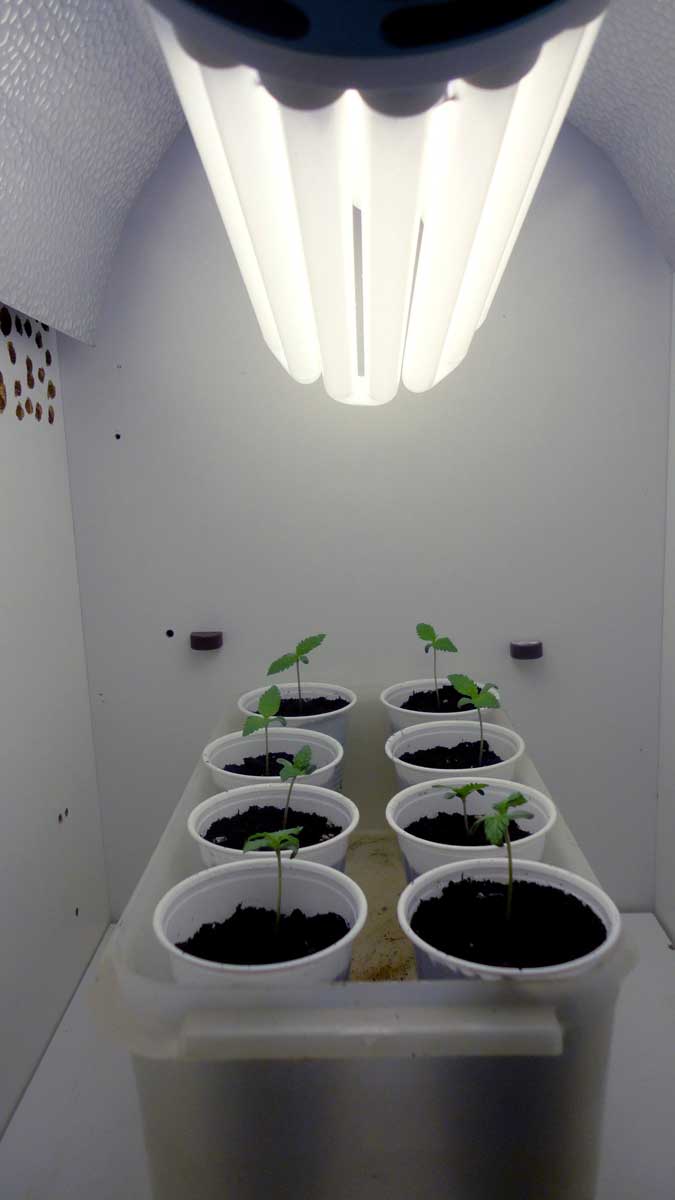
Here’s an example of SoG in action during the vegetative stage using those eight seedlings. Notice how quickly the whole space got filled up since there were so many plants. It went from empty to completely filled in about four weeks. By the last picture, all eight plants are already flowering. Each of those plants will be able to support a fat main cola in this setup, and it took less time than if the grower had tried to fill that space with just one plant.
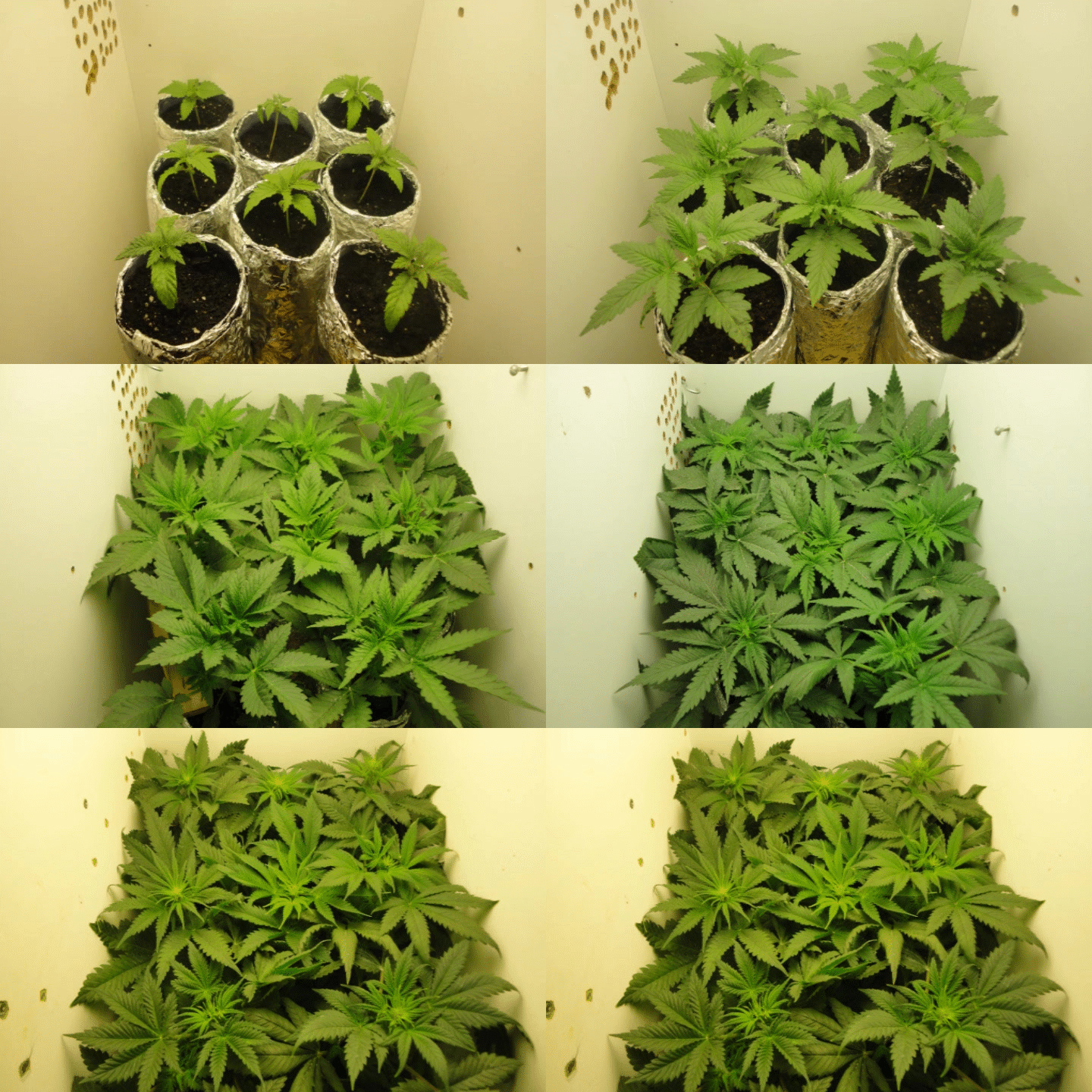
Thanks to grower “GIVE_ME_ATTENTION” for making this moving gif of an SoG in action!
When using SoG, it’s up to you to decide how many plants and how big you let them get before you switch to the flowering stage.
Some growers flip to flowering when plants are just a few weeks old and a few inches high. Other growers may wait a bit longer to achieve bigger plants. If in doubt, I recommend waiting an extra week for the best result 🙂
Another example of a small SoG setup
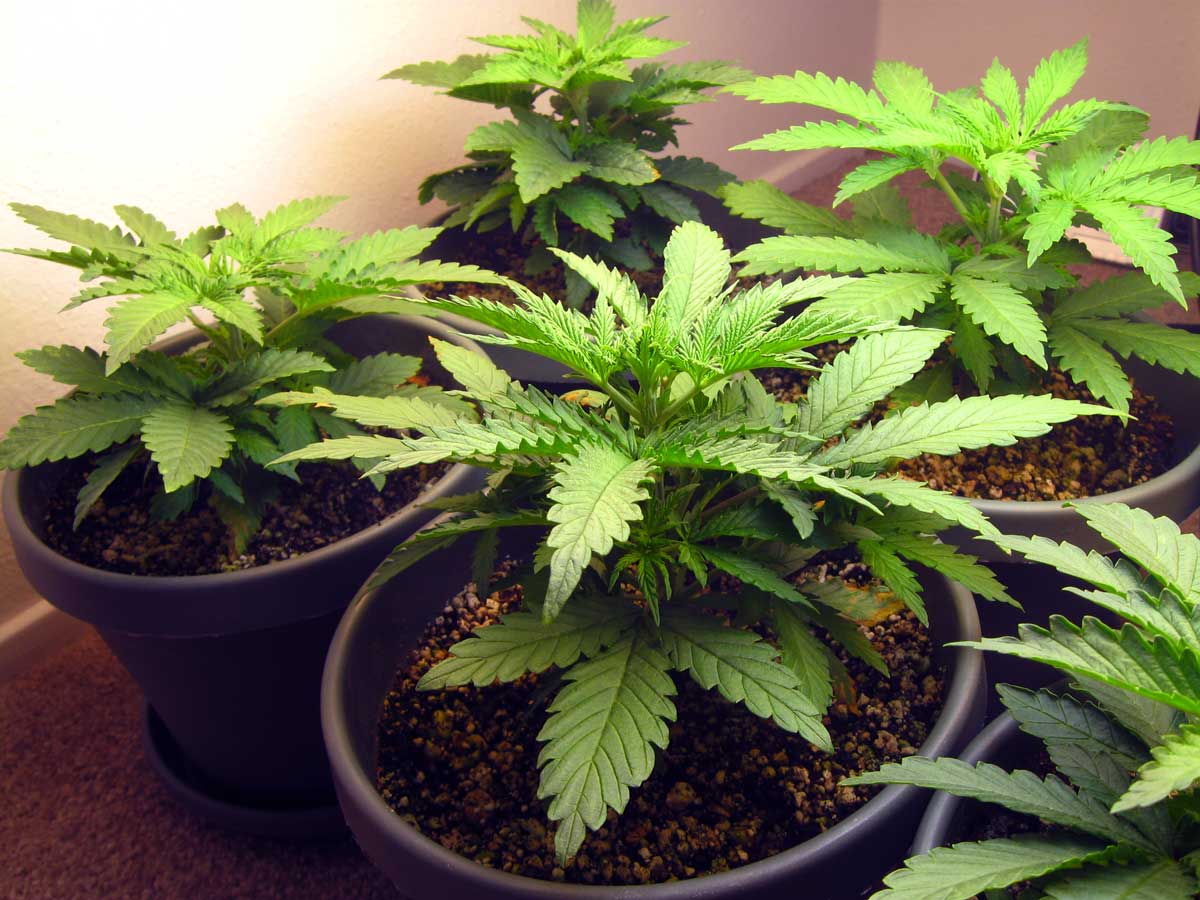
Flowering was initiated right after the above picture. Here are those same plants a little over a month later, after they’ve started making buds.
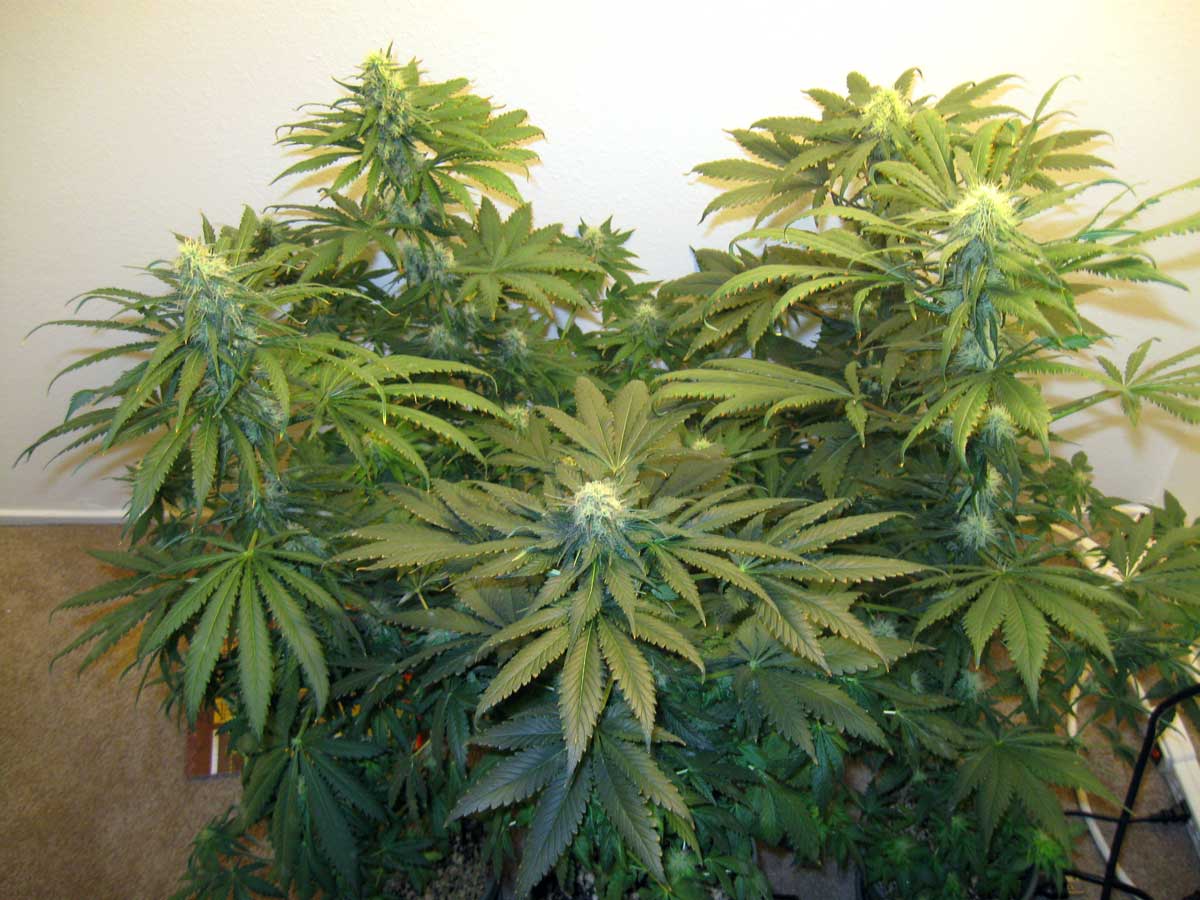
Notice how much taller the plants are at this stage. In an SoG setup, make sure you don’t underestimate how much your plants will stretch after being switched to the flowering stage! Sativa strains and very young plants that switch to flowering are well-known for stretching a lot!
SoG is how you achieve plants that look like the one below at harvest (why was this plant defoliated?)
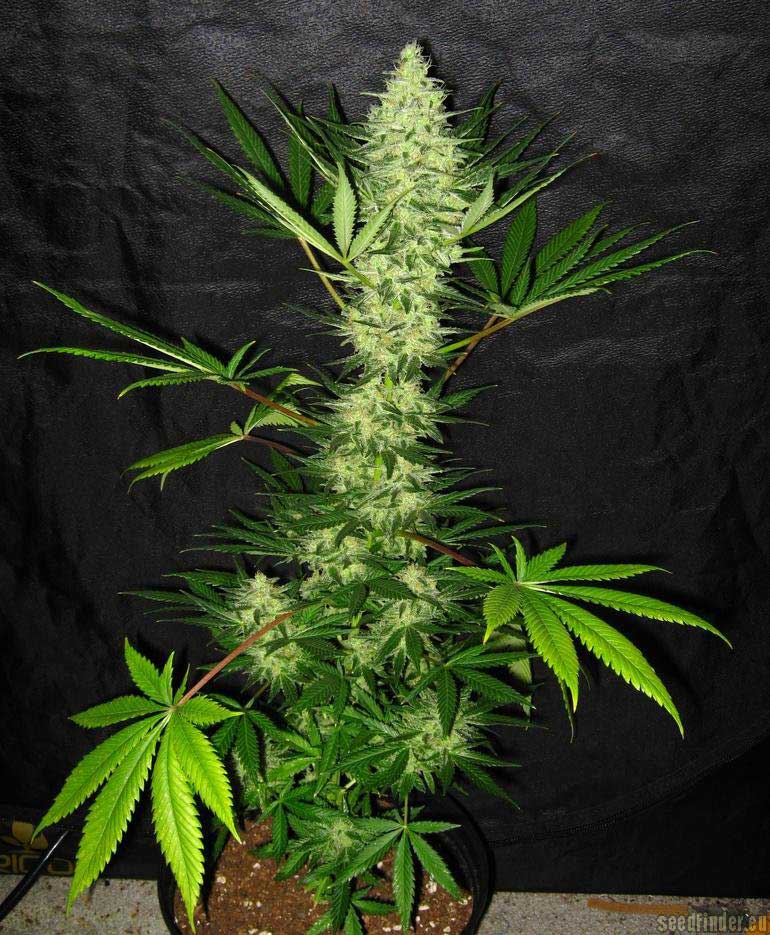
SoG setups are sometimes popular with those growing many auto-flowering strains since these strains cannot be trained with most of the traditional plant training methods.
In some parts of the world, SoG isn’t as popular as other training techniques because growers have legal limits on how many cannabis plants they can have at any one time. SoG uses a lot of small plants instead of training fewer big plants to fit your space so, if you have plant limits, this is not the best use of your space.
But for those who can grow as many cannabis plants as they want, SoG may be a fast choice to get an even canopy and a lot of buds with very little plant training!
Learn about other plant training techniques.
