by Nebula Haze
Like many flowering plants, there are two phases of life for marijuana. Note: The scientific name for the marijuana plant is “cannabis”.
First, a cannabis plant goes through a phase of vegetative growth, producing mainly stems and leaves.
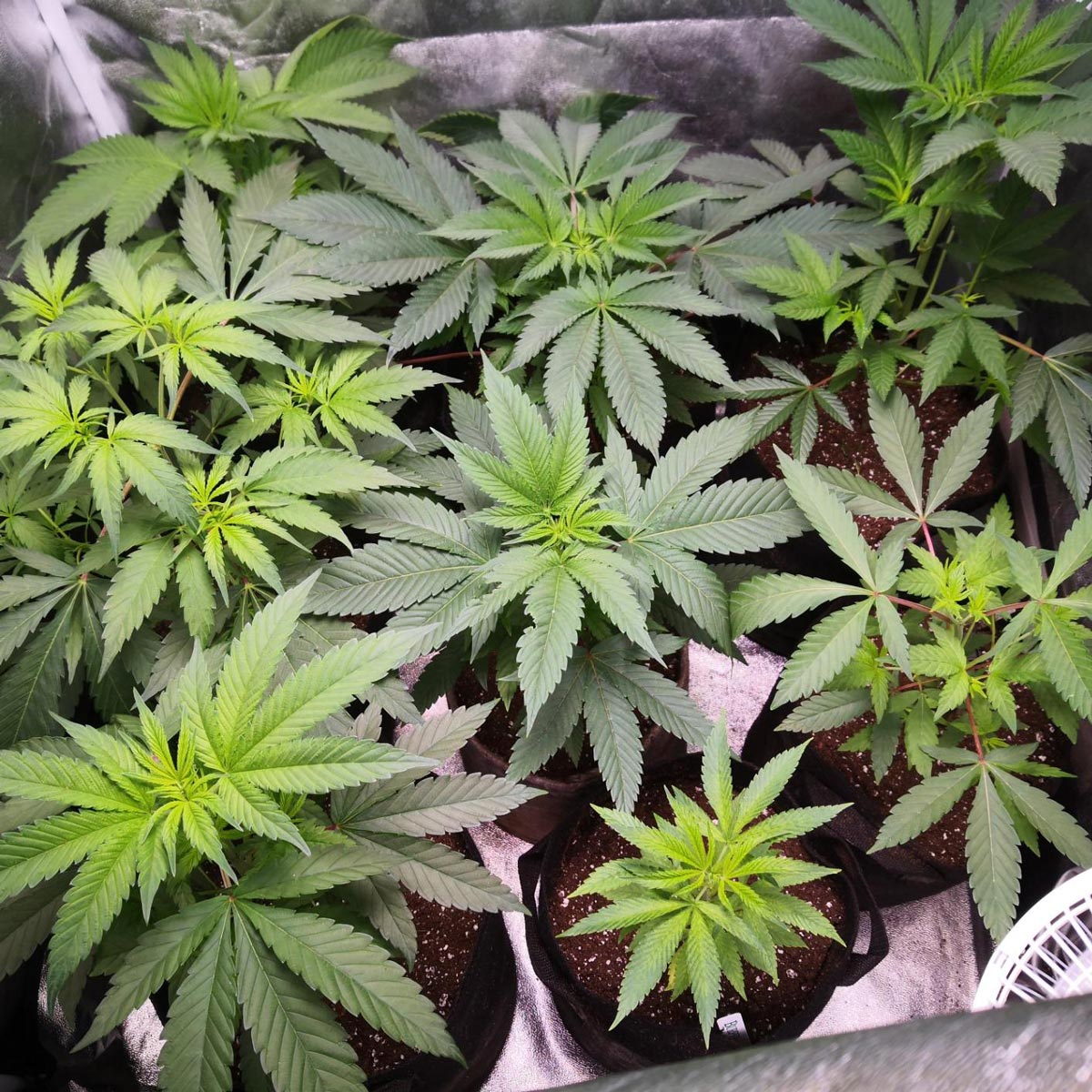
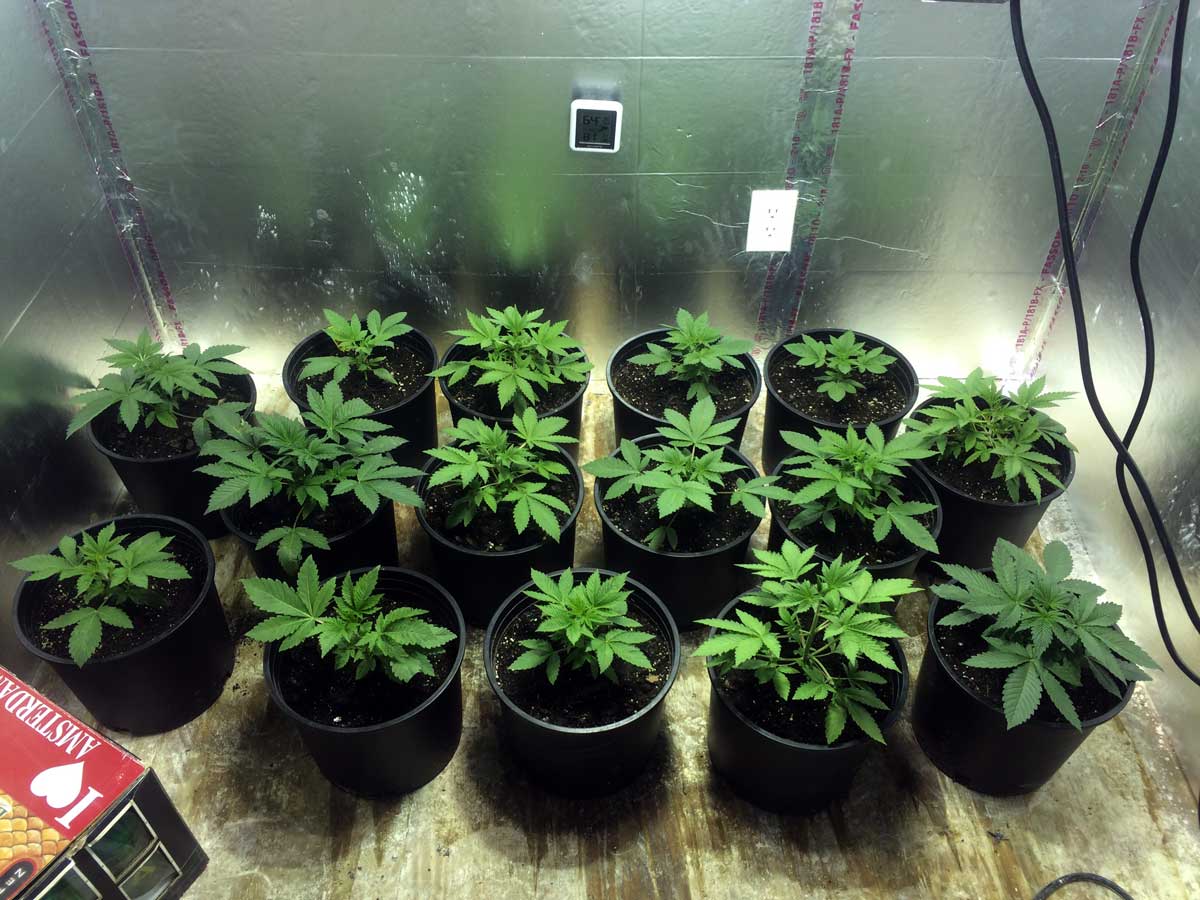
Cannabis plants in the vegetative stage look like this. All leaves, no buds.
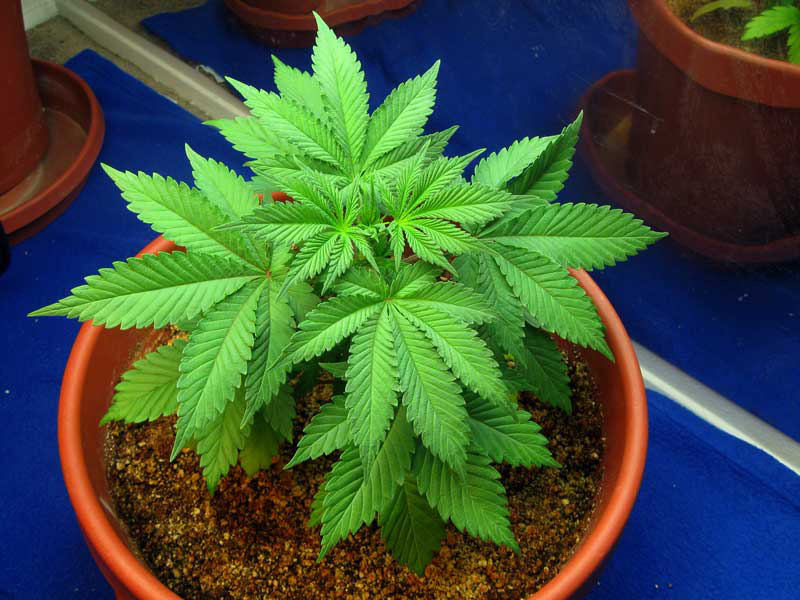
Second, the plant goes through a flowering phase of growth where it begins to produce the organs (flowers) needed for sexual reproduction. This is when your plant starts growing “buds”. These buds are what most growers want, but you have to make it through the vegetative stage first!
Did you know? “Buds” are the flowers of a female cannabis plant.
It’s a bit like how many animals are first non-sexual “youngsters” focused on growth, then become “adults” in order to sexually reproduce. In fact, before a cannabis plant “hits puberty,” you usually can’t tell by looking if the plant is going to be a male or a female!
For the vegetative stage, male and female plants look almost identical.

Today, I will cover everything you need to know about the first stage of cannabis growth, including:
- What Happens During the Vegetative Stage?
- How Long Does the Vegetative Stage Last?
- Tips and Hints: How to Avoid Common Vegetative Stage Problems
I shed light on everything you need to know about the marijuana flowering stage here.
What happens during the Vegetative Stage?
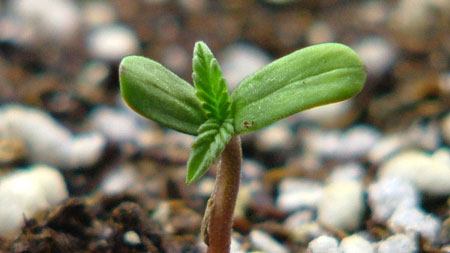
Many home growers start with seeds. After your cannabis seedling grows the first set of “real” cannabis leaves (the initial set of leaves are smooth, pictured below), the plant is pretty much officially in the vegetative stage of growth.
A seedling’s first leaves are smooth. After that, new leaves have serrated edges like “real” cannabis leaves.

Did you know? The smooth first set of leaves are called “cotyledon” leaves. These leaves were already fully formed within the shell. Germination just lets them free. That’s why they don’t look like the leaves a cannabis seedling grows later.
A happy, healthy cannabis seedling a day after germination.
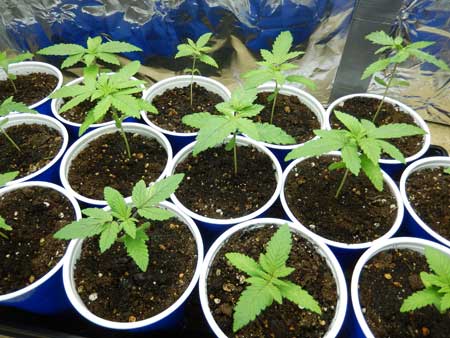
Here are 10 day old cannabis seedlings.
Learn how to care for cannabis seedlings so they grow fast (mainly just water them on the right schedule).
If you started with clones as opposed to seeds, your plant is generally considered in the vegetative stage once you see new leaves start growing.
During the entire Vegetative Stage, your plant will grow big and tall, but won’t produce flowers or buds.
Plants keep growing more and more leaves in the vegetative stage.

Quick fact: Cannabis is considered an “annual” plant. In the wild, each new cannabis seedling goes through his or her entire life cycle and produces seeds over the course of one year. That means wild cannabis plants die naturally when winter comes, making room for the next year’s seedlings.
How long does the vegetative stage last?
As the gardener, you actually have a lot of control over how long the vegetative stage lasts. At least for standard photoperiod strains.
As the grower, you control how long the vegetative stage lasts (except auto-flowering strains). You can keep plants small or let them grow big.
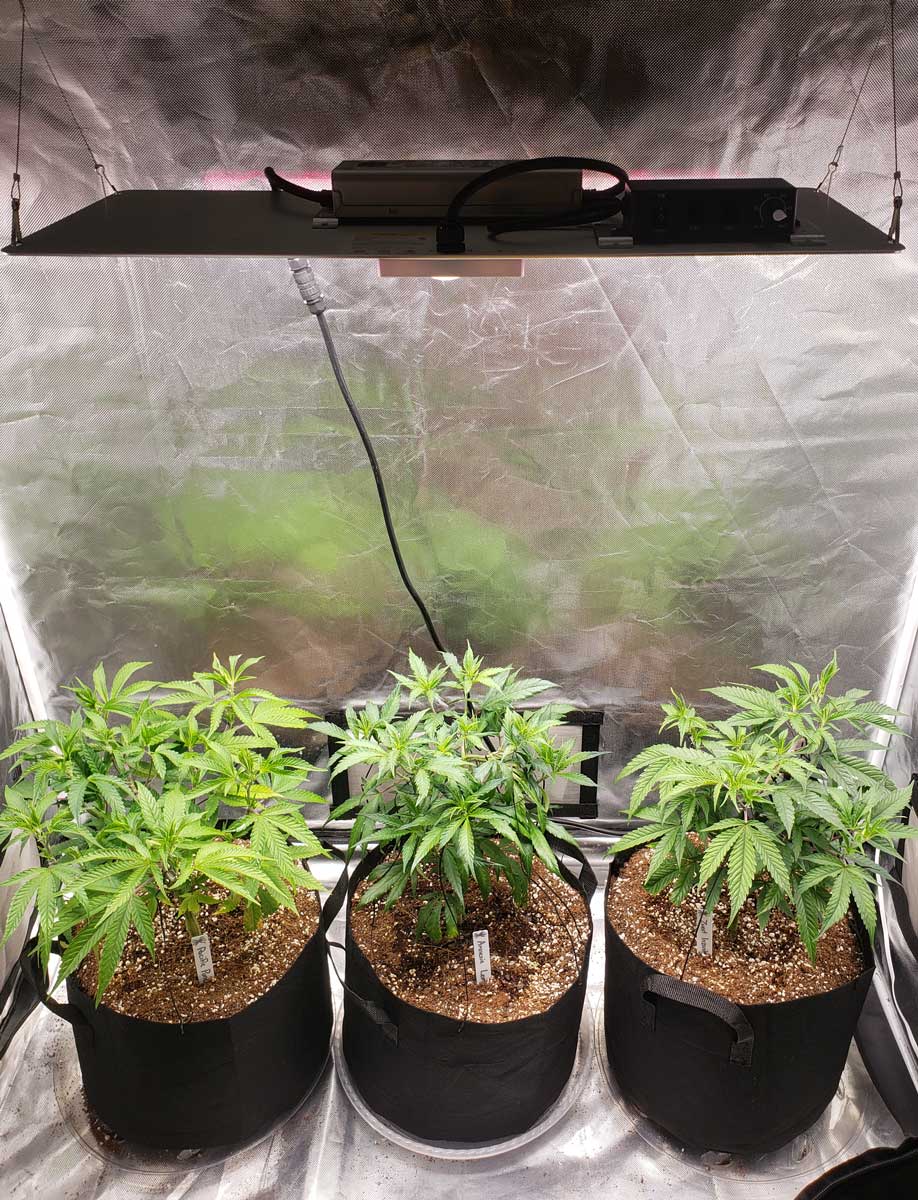
This is because a photoperiod cannabis plant relies on environmental factors to know when to switch to flowering.
Environmental factors “tell” a cannabis plant to either stay in the vegetative stage or start flowering, and these factors are easy to control.
The main thing cannabis “pays attention to” is the length of light and continuous dark periods it receives each day. Long days keep plants in the vegetative stage, while long nights initiate cannabis plants to to start flowering.
Long days keep plants in the vegetative stage. Indoors, give plants 18+ hours of light per day.

This makes sense, if you consider that in the wild, a cannabis plant will need some way to know that winter is coming.
For photoperiod strains of cannabis, the plants “notice” the days are getting shorter. In response, they start flowering to make sure seeds get made before winter comes.
When growing cannabis outdoors, you have less control over the length of the vegetative stage since you can’t control the sun and how long it shines each day.
Most outdoor growers choose to plant their seeds or clones in the spring, allowing the plant to naturally go through its life cycle and start flowering as the days shorten and winter approaches.
One of the convenient aspects of growing cannabis indoors is that the light and dark periods experienced by your plants are easy to control. Indoors, you are the master of when lights go on and off.
As long as you ensure that your indoor plants get 18-24 hours of light each day, they stay in the vegetative phase of growth essentially forever. This gives you ultimate power over how long the vegetative stage lasts, and therefore how big your plants get before they start making buds.
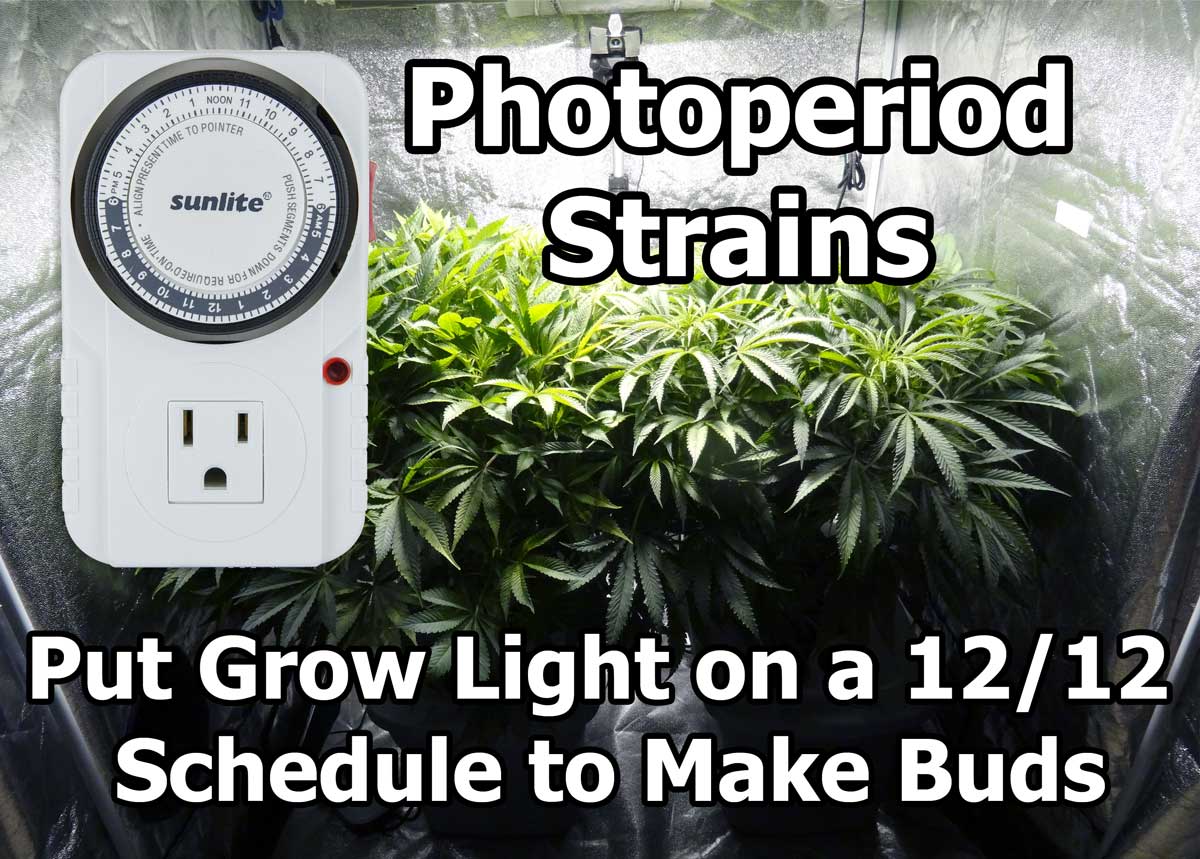
Most indoor growers invest in an electrical timer to turn their lights on and off automatically.
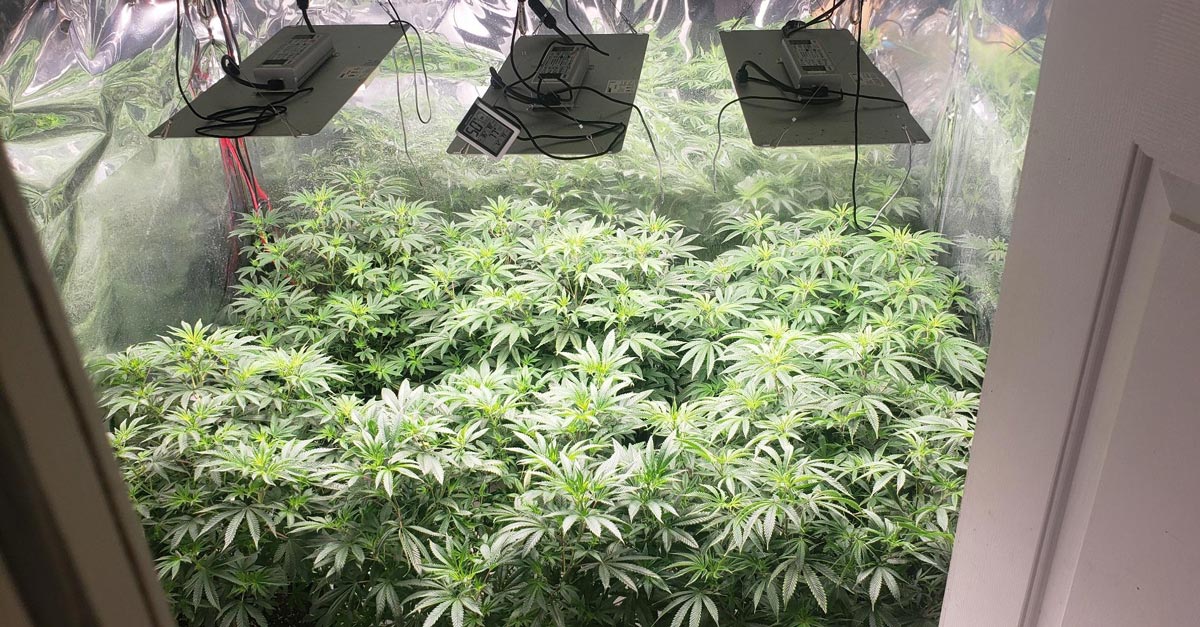
Use an electrical timer to put grow lights on a 12/12 light schedule to trigger flowering.
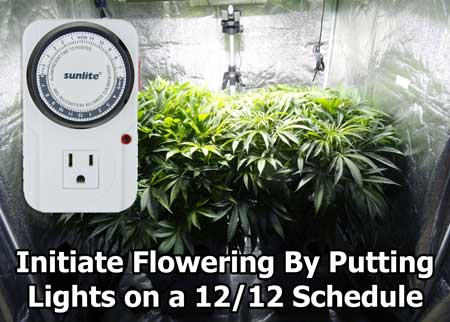
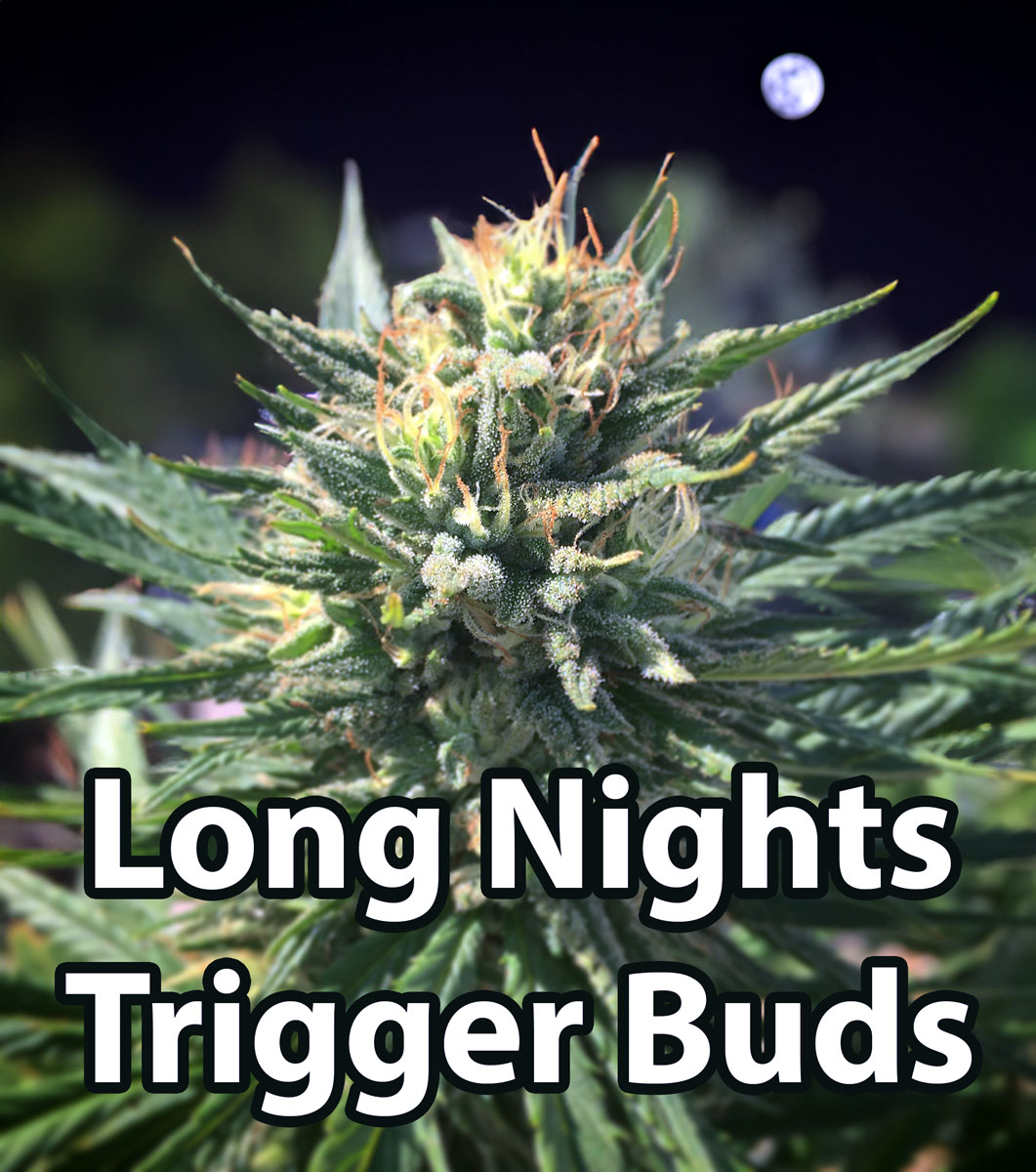
In order to “tell” your plant to change over to the flowering stage, you change their light schedule to give them at least 12 hours of uninterrupted darkness each night. For your cannabis plant shorter days and longer nights is the signal to start flowering.
Long nights trigger flowering in photoperiod cannabis by “telling” the plant to start making buds.
Auto-flowering Strains Are Different
A notable exception to these principles are “auto-flowering” cannabis plants, derived from the non-psychoactive Ruderalis strain of cannabis, pictured here.
Auto-flowering strains are descended from non-psychoactive Ruderalis variety of cannabis, which automatically make buds.
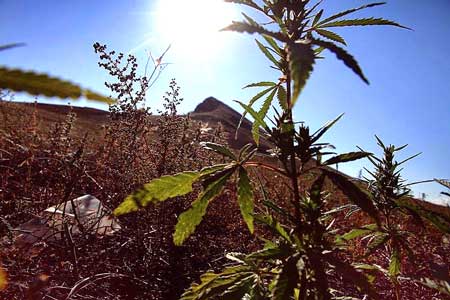
Auto-flowering strains always start from seed. Here are some of my favorite auto-flowering strains. These special strains run on an internal clock that tells them when to start flowering. They don’t care about light period. For auto-flowering cannabis plants, you do not have any real control over how long the plant stays in the vegetative stage, it just naturally switches over to flowering after a certain amount of time.
If you didn’t particularly get an “auto” or “auto-flowering” seed from a seed bank, chances are your seeds are the ‘regular’ kind of cannabis that’s controlled by light periods, as discussed here. This light period sensitive strains are listed as “photoperiod” strains.
Therefore, the answer to how long should you keep your plants in the vegetative stage will vary with how big you want your final plants to be.
If you are trying to keep your plants smaller, you will keep them in the vegetative stage for a shorter amount of time. If you want a bigger final plant, you will need to invest more time letting the plant gain size in the vegetative stage before switching to flowering.
The time spent in the vegetative stage (which you control) determines the final height and size of the plant.
When growing cannabis indoors, a good rule of thumb is to change your plant over to the flowering stage once it reaches half the final height you desire. This is especially crucial when you’re a new grower or growing an unknown strain.
That bears repeating.
Change your vegetative plants to the flowering stage when they’ve reached half the final desired height.
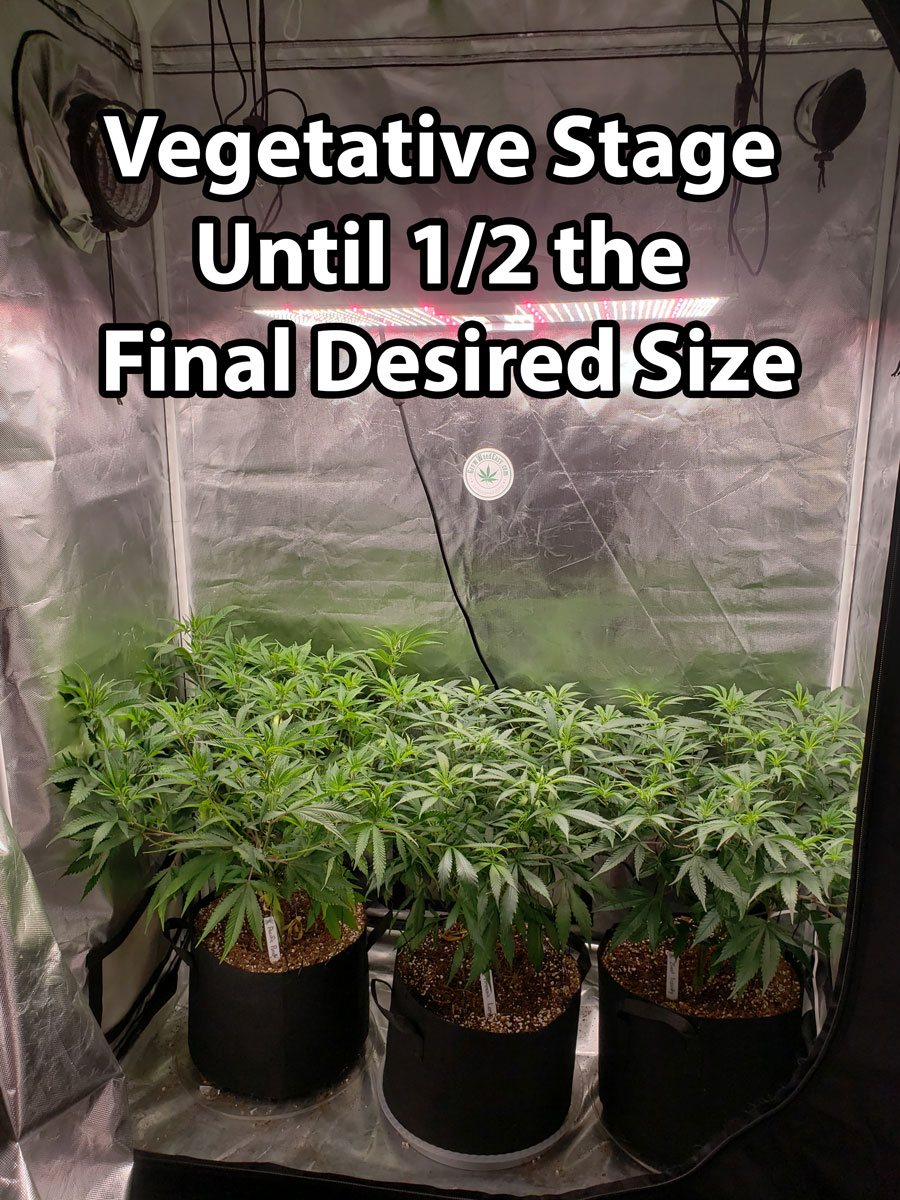
As I mentioned before, you tell a cannabis plant to start flowering by changing your light schedule to give them 12 hours of darkness a day.
Depending on the strain and growing conditions, it’s not uncommon for cannabis plants to double in height after they’ve first switched over to the flowering stage.
Some growers turn their plants over to flowering when they’re barely more than a seedling, while others will wait until the plant is much larger.
It all depends on how big you want your final plant to be.
Learn about the various growth control methods you can use to control exactly how your plant grows during the vegetative stage, so you’re perfectly prepped to get huge yields from the flowering stage.
Next, what do growers need to look out for during the Vegetative stage?
Cannabis-Specific Tips and Hints: Vegetative Stage
How to Avoid Common Problems
The Vegetative Stage is the most forgiving stage in your cannabis plant’s life. Vegetative plants bounce back quickly from problems.
Your vegetating plants should be showing rapid healthy growth. If not, make sure you fix things now or your plants may become a disaster during the less-forgiving Flowering Stage.
Just the Right Amount of Light
If your cannabis plants seem green and relatively healthy, but just seem to be growing slowly, there’s a strong chance you need to increase the intensity of the light.
Another sign of light starvation is if you notice that your plants are growing taller at a much faster rate than they are growing branches and leaves. If you see your plant is ‘stretching’ upwards, the solution is to increase the light intensity.
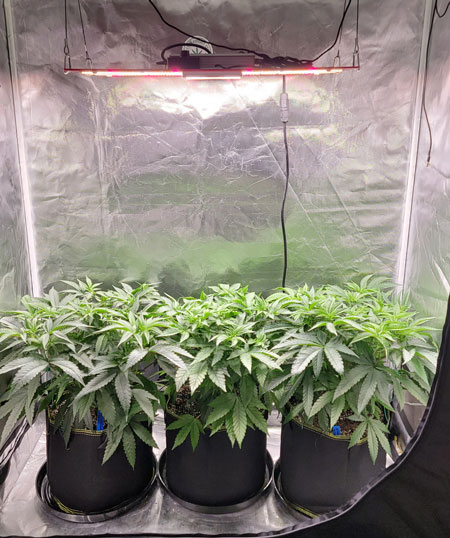
Plants that get the right amount of light grow healthy and bushy. I love this Spider Farmer SF-2000 LED grow light (my review).
“Stretchy” tall plants usually need more light.
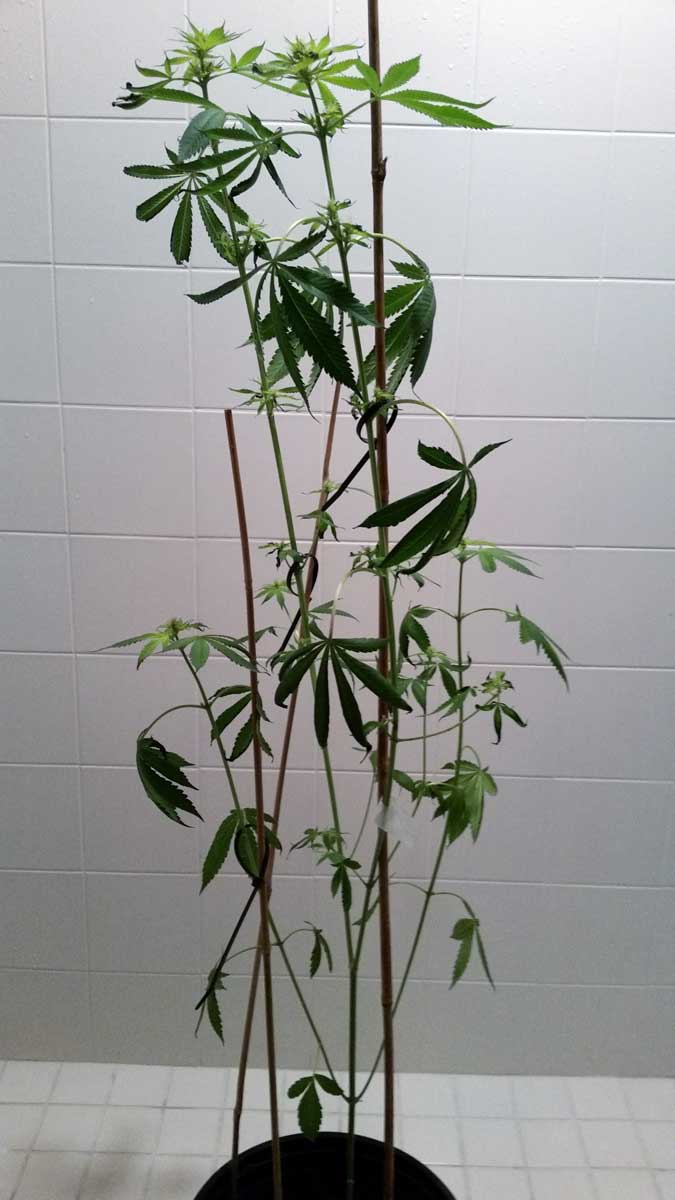
2 Ways to Increase Intensity of Light
- Move lights closer (watch plants closely at first).
- Upgrade to a stronger grow light.
Plants with stress only on the top leaves (light burn) often need less light.
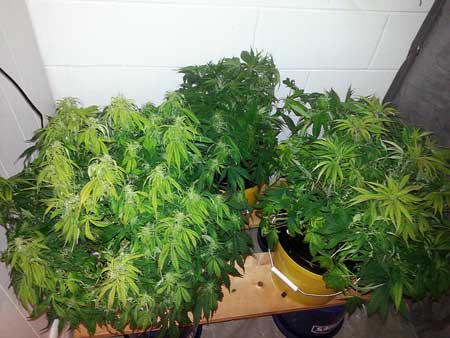
3 Ways to Lower the Intensity of Light
- Move grow light further away
- Reduce light power (some grow lights let you dial down the intensity)
- Downsize to a smaller grow light
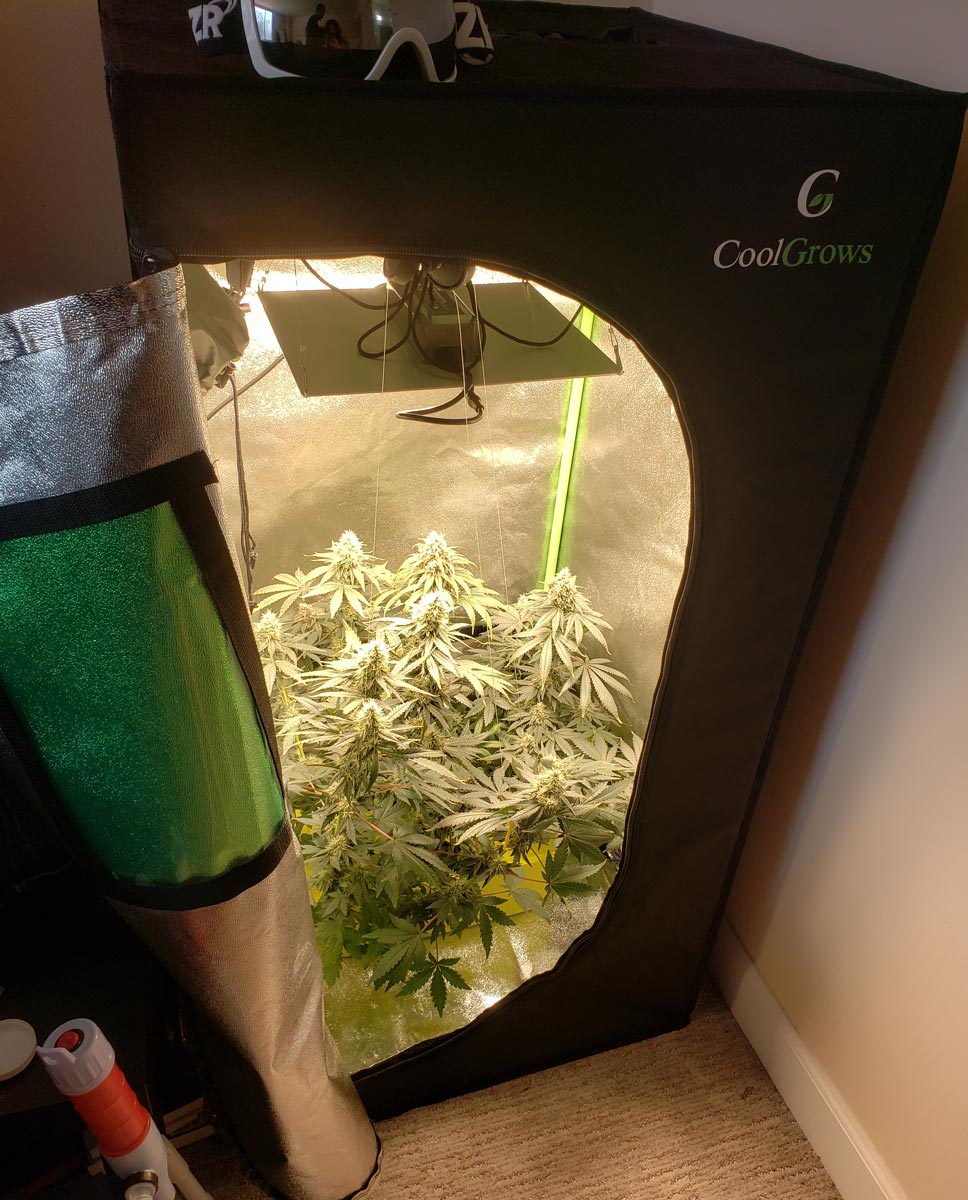
Small grow lights can produce a surprising amount of weed when used correctly.
Root Health Is Crucial For Healthy Growth
Root health is incredibly important if you want to get fast healthy growth. Your watering schedule is crucial and an incorrect watering schedule can kill your plants.
Drooping is the most common symptom of over-watering or under-watering. Learn how to water seedlings.
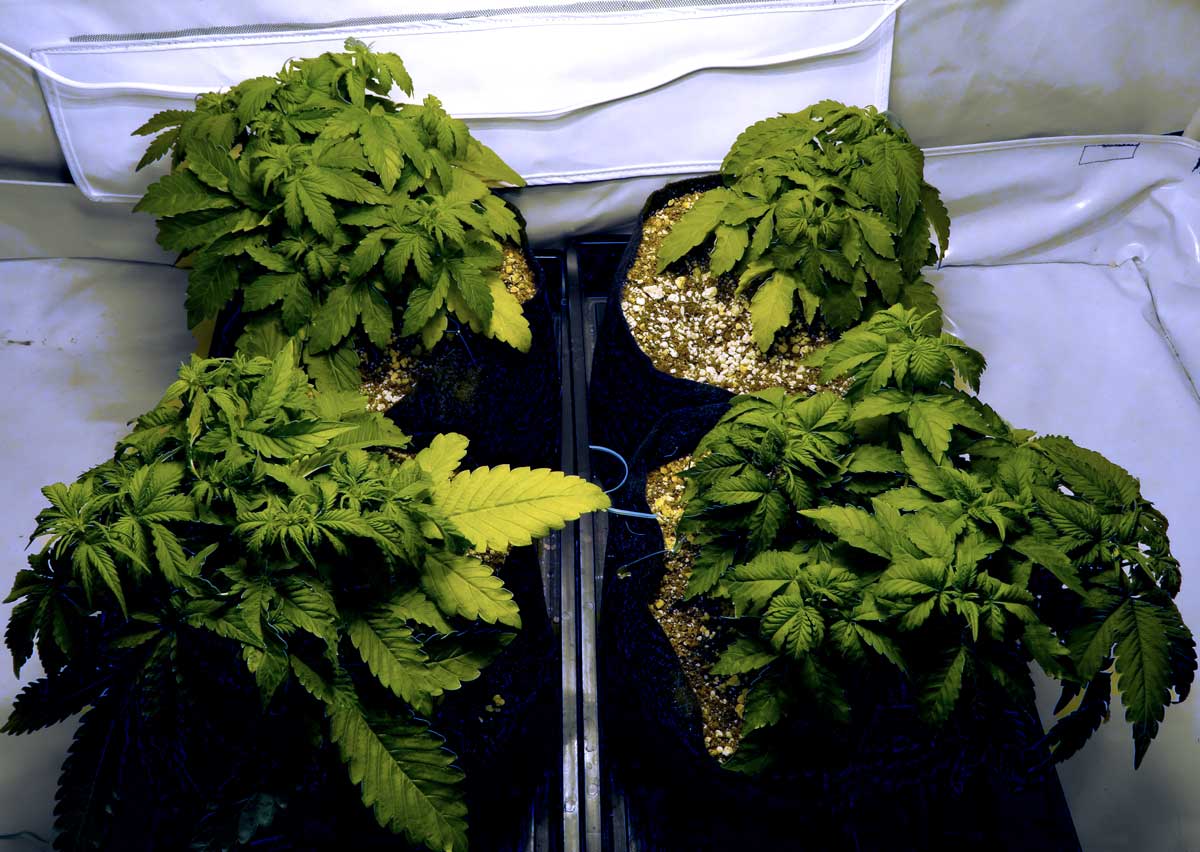
Over-watered cannabis plants droop and grow slowly.
When your once-healthy plants are drooping no matter what you do with your watering schedule, and you’re giving them enough light, it’s often a sign these plants have root problems. Root problems often come with a musty smell near the roots.
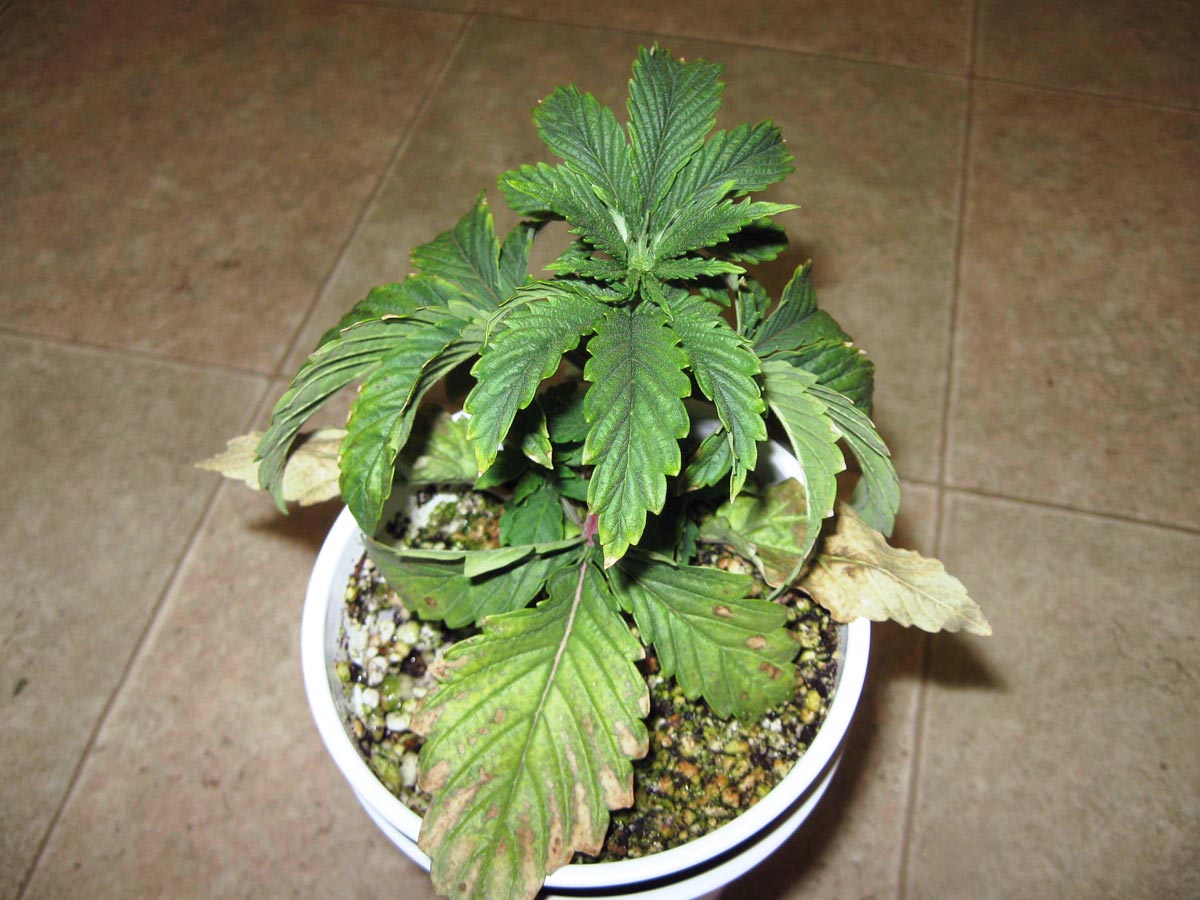
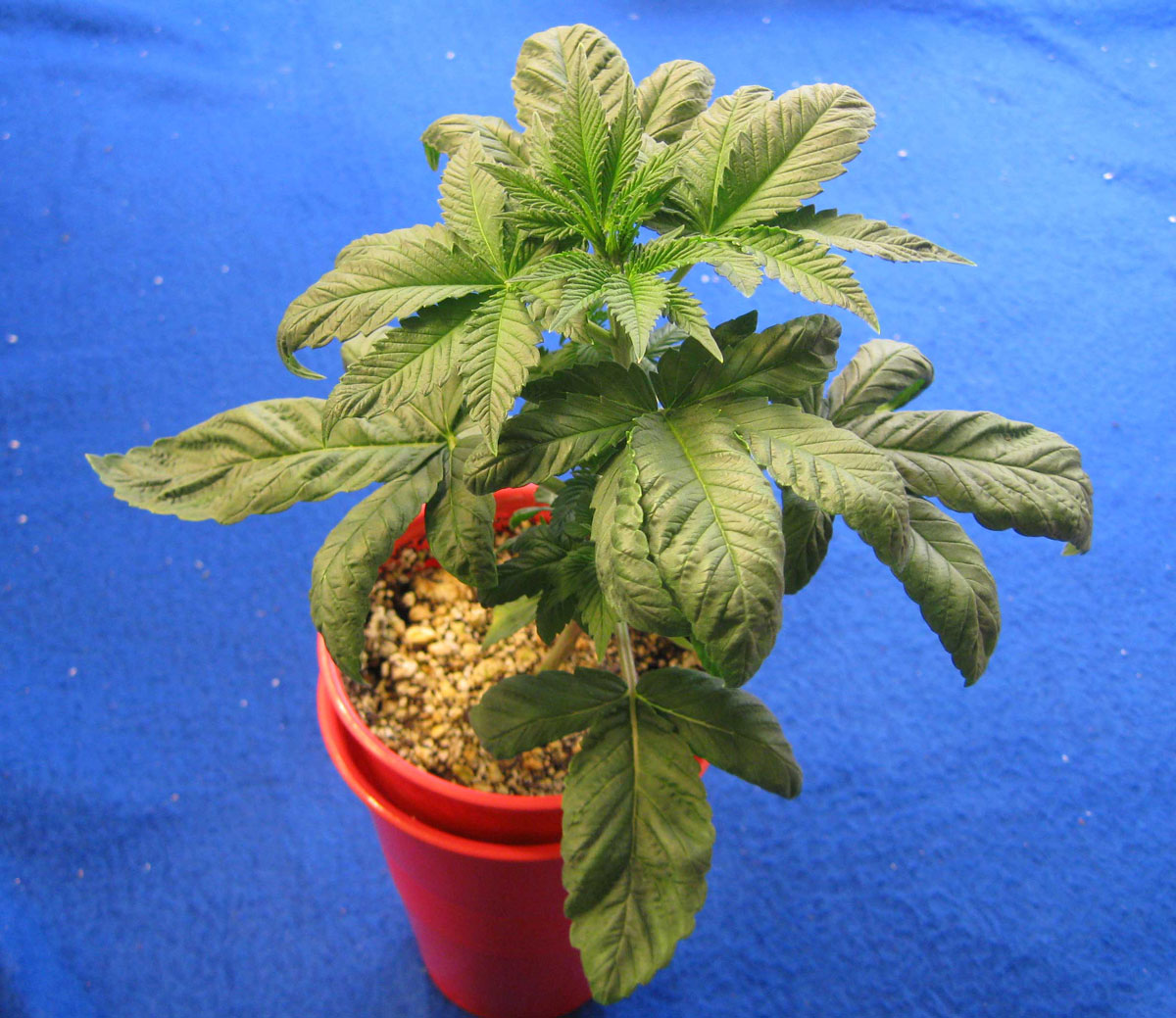
In addition to droopiness, root problems may also rear their ugly head with malformed, discolored or wrinkled leaves.
I’ve found that many “unexplainable” cannabis issues are often the result of overwatering or root problems. Overwatering can even cause nutrient deficiencies!
Root problems can cause unusual symptoms.
How to Water Cannabis Correctly
Cannabis loves well-draining soil or potting mix, hates mud. Seedlings only need a little water at a time.
For seedlings, give water in a small circle around the base of the plant.
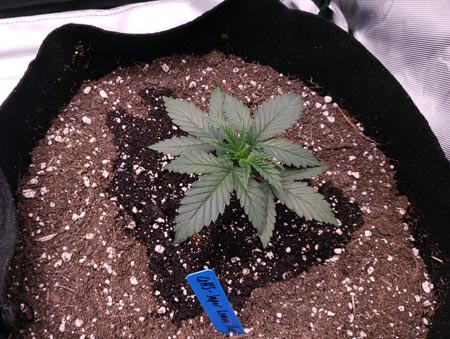
Here’s a full tutorial on how to water cannabis seedlings perfectly every time.
But after your plants are bigger, here’s what to do:
- Every time you water your plants, keep adding more water until about 20% extra runoff water comes out the bottom.
- Don’t water plants again until the top inch (to the first knuckle of your index finger) of growing medium is dry.
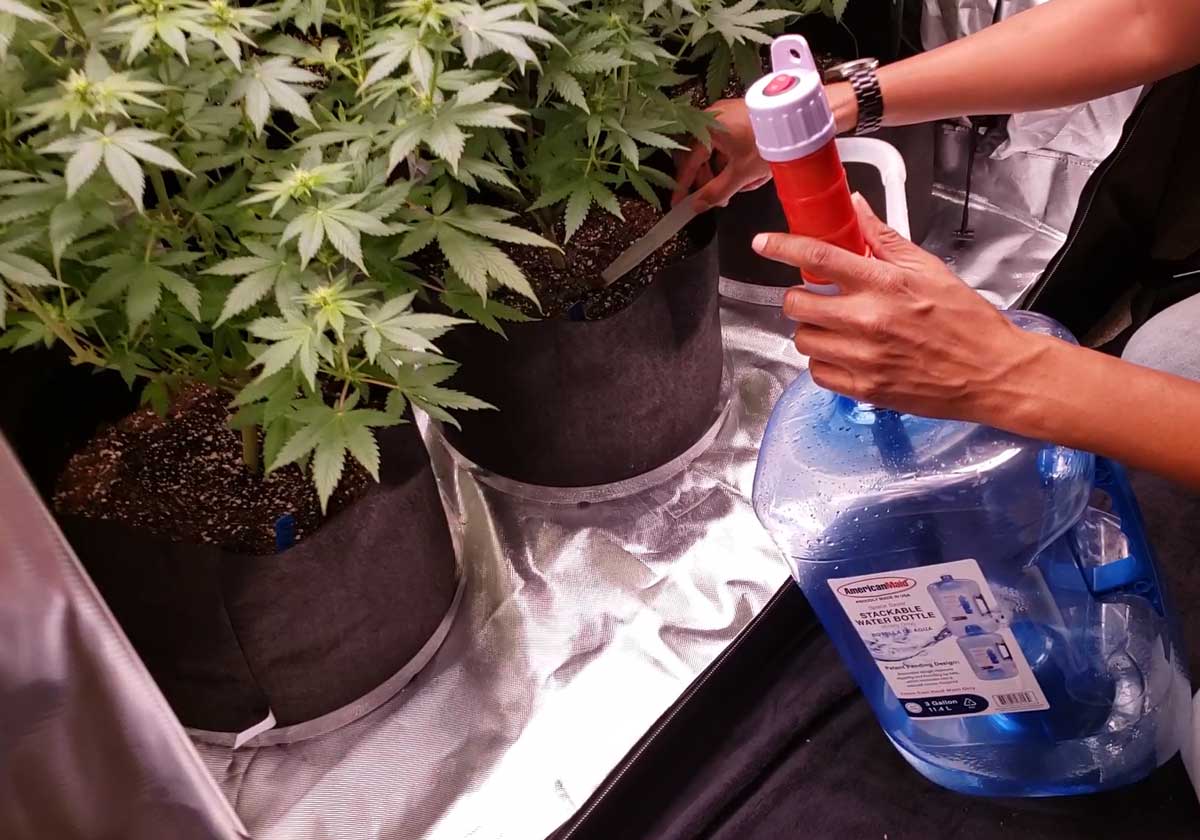
Read the complete watering cannabis tutorial.
If you’re growing cannabis directly in water, other measures are needed to make sure your plant’s roots stay healthy. For example, the water must be oxygenated to give roots the oxygen they need, and you should use a proven root supplement like Hydroguard to prevent root rot.
Learn about growing cannabis directly in water.
Nutrients and pH of the Roots
With all nutrient systems that you’re trying out for the first time, I highly suggest starting at half the recommended nutrient levels when growing weed. That’s because many nutrient companies recommend too much nutrients for most cannabis plants.
If you’re not sure which nutrient system to get, Dyna-Gro Grow and Bloom gives you a simple cannabis-friendly nutrient system that works great for growing cannabis when used at half strength. Here’s how to use Dyna-Gro with cannabis plants.
Learn about great nutrients for cannabis plants.
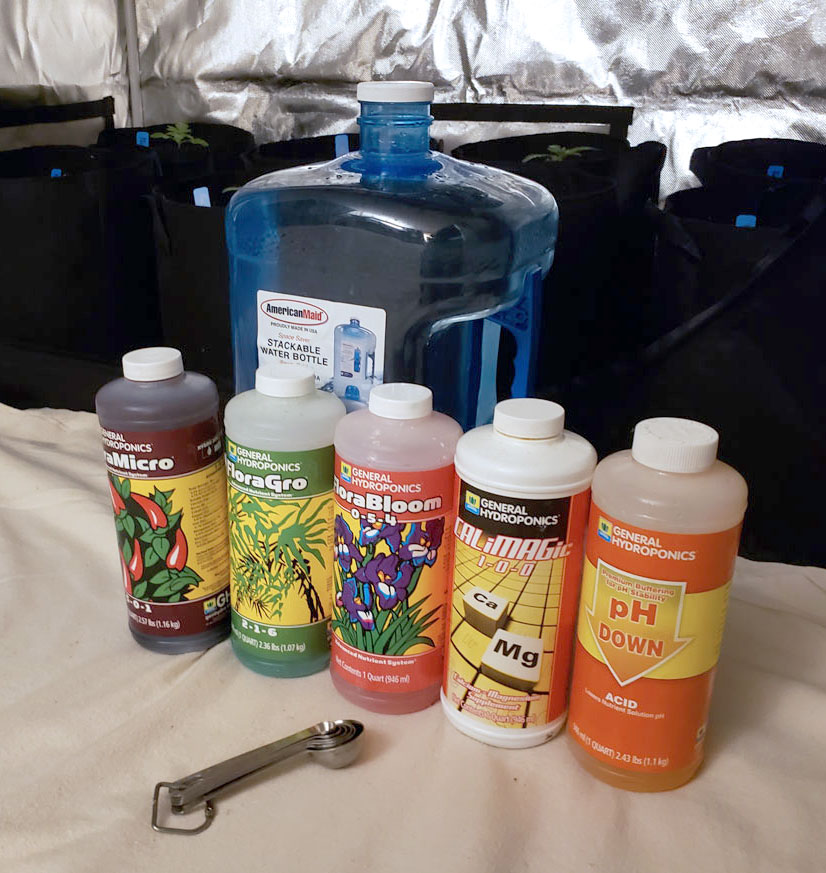
No matter what nutrients you’re using, never increase the concentration of nutrient unless you see signs of nutrient deficiencies and have already ruled out pH problems.
(Wait… what about pH? Learn what you need to know about pH here.)
With nutrients, I’ve found over and over that I get the best cannabis yields when I lean towards the side of “too little” instead of “too much” nutrients. Often, what appears to be nutrient deficiencies end up being pH problems.
This is why I always start nutrients at half strength when growing with new nutrient system, unless I’m given a custom cannabis schedule, and only move up when I see deficiencies and have ruled out pH as the culprit.
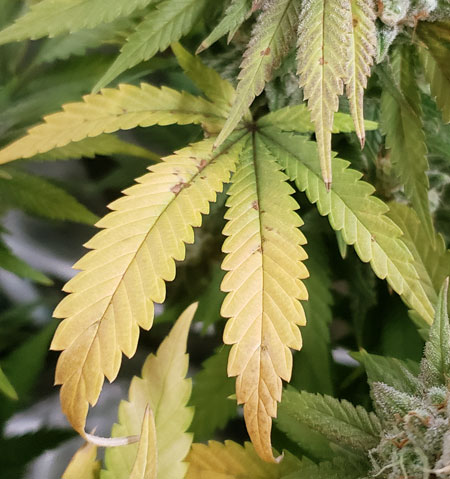
Often a “nutrient deficiency” is actually a pH problem. The yellowing and spots here are caused by incorrect pH, not too little nutrients.
Watch Your Humidity
Avoid letting the humidity get too high or low in the vegetative stage, especially when plants are young seedlings or clones. This helps your plant live a stress-free, healthy life.
Extra dry (especially when combined with hot) conditions can cause plants in the vegetative stage to seem extra finicky. When it’s too dry, your plants will generally have more problems and need more care. In fact, in dry areas, cannabis growers often think you they nutrient problems, yet just raising the humidity in the grow room to the 40-60% range clears the problems right up. You can increase humidity of your grow room with a humidifier.
On the other hand, cannabis plants don’t drink much water and tend to grow slowly when the humidity is above 60%. High humidity levels are extra bad for plants that are growing buds, as we discuss in our tutorial about bud rot. You can reduce the humidity of your cannabis grow space with a dehumidifier.
After you’ve mastered the basics of growing cannabis, this is something to consider. I’ve found that you can get cannabis plants to grow faster and healthier during the vegetative stage by maintaining around 50% humidity if possible.
Humidity in the 40-60% range makes vegetative cannabis plants happy.

Summary: The Cannabis Vegetative Stage
Here’s what you need to remember about the vegetative stage.
Vegetative Stage Basics
- The vegetative stage of life begins after a cannabis seedling develops its first set of true leaves.
- During the vegetative stage, cannabis plants only grow stems and leaves. They do not produce buds.
For Photoperiod Strains:
- The length of the vegetative stage is controlled by you, the grower.
- You keep photoperiod plants in the vegetative stage by giving 18-24 hours of light per day.
- Keep plants in the vegetative stage until they’re about 1/2 the final desired height, then initiate the flowering stage.
- Trigger the flowering stage by giving plants a 12/12 light schedule (12 hours of uninterrupted darkness each day).
Learn about cannabis photoperiod strains.
For Auto-flowering Strains:
- Auto-flowering strains switch to the flowering stage based on time, not light schedules.
- Most auto-flowering plants automatically start flowering when they’re 4-6 weeks old (depending on strain) from germination.
Learn about growing cannabis auto-flowering strains.
Common Vegetative Stage Issues and Tips:
- Light – Give the right amount of light to prevent slow growth or stretching.
- Watering – Avoid over-watering or under-watering for healthy roots.
- Nutrients – Use good cannabis nutrients. Start with half the recommended dose and watch how plants react.
- pH – Keep an eye on soil pH to prevent nutrient deficiencies.
- Humidity – Keep humidity levels between 40-60% for optimal vegetative growth.
Key Takeaways:
- Proper amounts of light, water, nutrients, and humidity in the vegetative stage sets the foundation for a successful flowering stage.
- Understand and control these factors to prevent common problems and promote healthy, happy cannabis plants.
About the Author: Nebula Haze
In response to the need for more tutorials aimed at new growers, Nebula co-founded GrowWeedEasy.com in 2008 with fellow grower Sirius Fourside.
Since then, Nebula has published hundreds of growing articles in print and online, teaches online cannabis cultivation courses, runs a weekly growing newsletter, and continues to dedicate herself to serving the needs of the cannabis growing community.
“My mission is to show other cannabis growers how easy and fun it can be to grow pounds of killer weed out of your closet.” ~Nebula