
by Nebula Haze
Cannabis nutrient deficiencies are the worst. Well, maybe not the worst, but I feel a twinge of pain when I check on my plants (all hopeful and excited) only to see yellowing, brown spots, unhealthy leaves, or other plant problems. Talk about a bummer way to start a day.
Certain strains are resistant to deficiencies, like Blue Dream, Wedding Cake, and Wedding Cheesecake Autoflower, but this tutorial teaches you how to keep any cannabis plant happy and green.
This cannabis plant was pristine just a few days before this picture. What caused the nutrient deficiency?
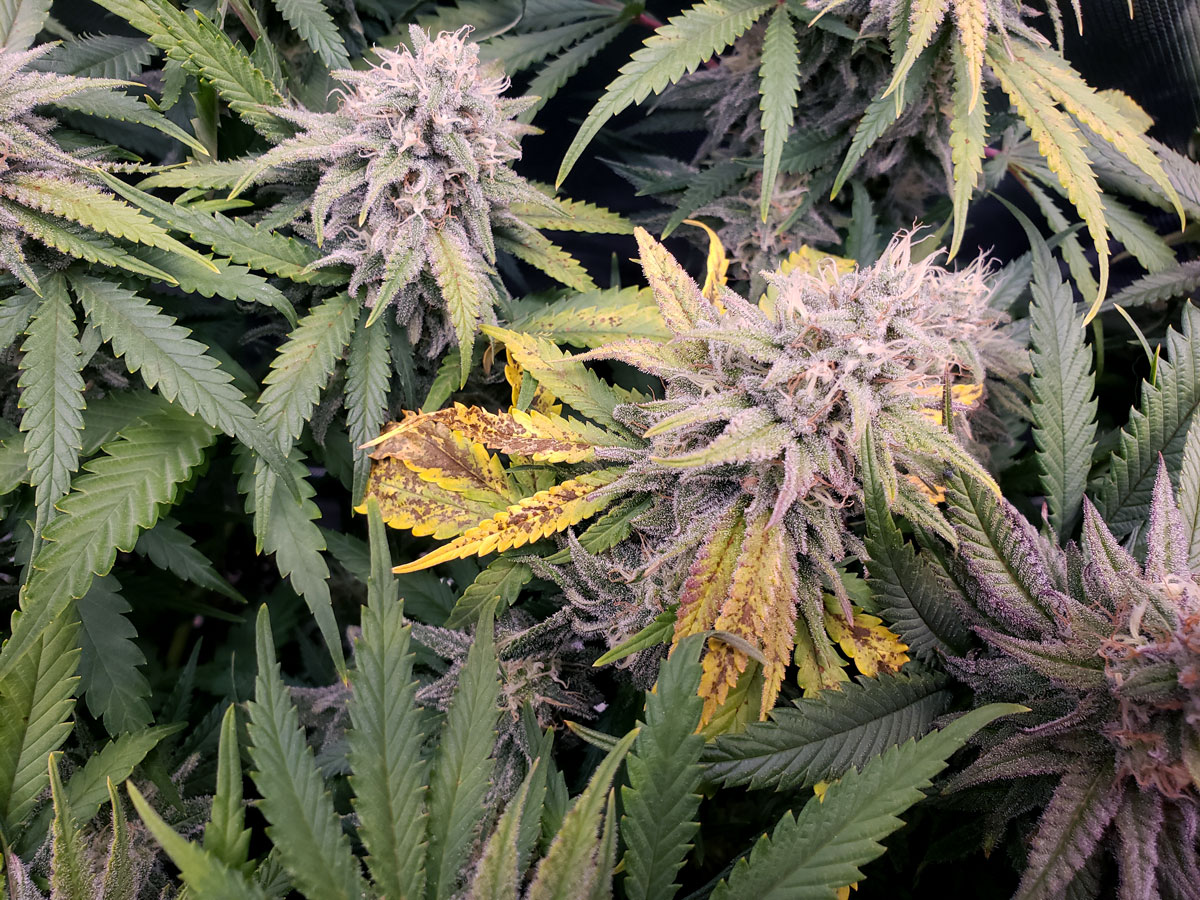
Discolored cannabis leaves can be the results of watering problems, environmental problems, bugs, and more, but today’s article is going to address the most common and the most misunderstood cannabis problem: the nutrient deficiency caused by pH.
There are many reasons cannabis leaves get what appear to be nutrient deficiencies:
- Not enough nutrients – The plant used up all the nutrients in the soil or just isn’t getting enough. This is a nutrient deficiency in the purest sense.
- Too many nutrients or supplements – It may seem counterintuitive but nutrient overload causes burnt tips and dark green leaves that are sometimes mistaken for a deficiency.
- Mixing non-compatible nutrients or supplements – Always try to get all nutrients and supplements from the same company to reduce the chance of interactions
- Watering problems – Most commonly overwatering but sometimes underwatering. Seedlings are especially prone.
- Heat or cold – Extreme heat or cold can cause symptoms that look just like nutrient deficiencies (learn more about temperature and cannabis)
- Too much light – When a grow light is too close, it causes light stress, which is often mistaken for a nutrient deficiency.
- High or low pH (acidity) at the roots <– Today’s article!
High or Low PH is the Cause of Most Nutrient Deficiencies
Cannabis plants need a slightly acidic root environment in order to absorb nutrients properly. PH measures acidity, and pH being too high or low is the most common cause of mystery cannabis nutrient deficiencies.
What is root acidity and how does it affect nutrient deficiencies? The “acidity” of your soil is determined by the “pH”, which measures the concentration of hydrogen ions. You measure pH by testing the water with pH drops from a kit or using a digital pH pen. The pH (level of hydrogen ions) physically changes the chemical structure of your nutrients, and some forms are more available to plant roots than others.
Growers have learned through experimentation that cannabis plants grow green and healthy when the roots get a slightly acidic pH that’s a bit under 7 pH. Pure water has a pH of about 7 and is considered neutral.
When giving nutrients to your cannabis plants, measuring and adjusting the pH prevents nutrient deficiencies (full instructions below).
Incorrect pH is the #1 cause of cannabis nutrient deficiencies. These symptoms were the result of too-low pH at the roots.
If you see a nutrient deficiency, the first thing to check is pH.
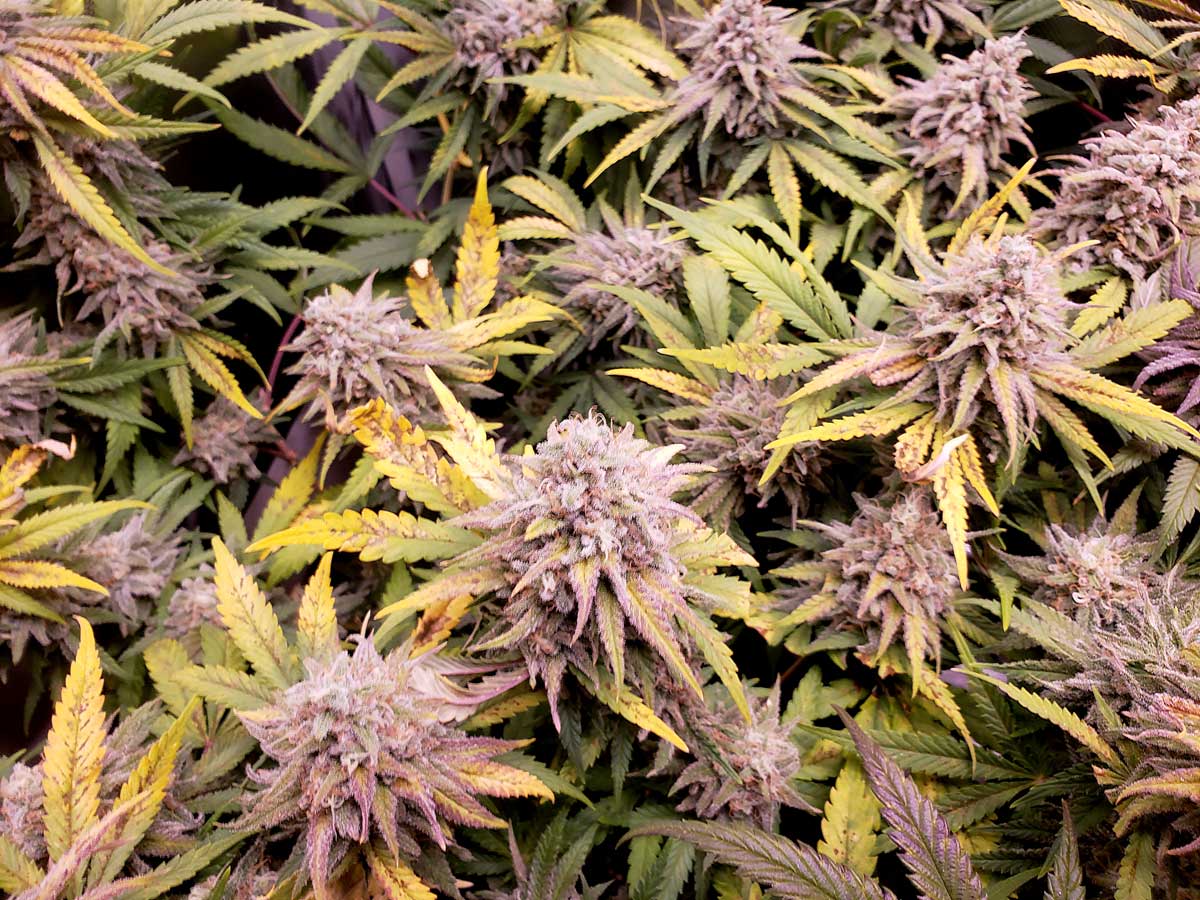
What pH do cannabis roots like? Cannabis plant roots in soil absorb nutrients best within the 6-7 pH range while plants grown in soilless setups like hydroponics or in coco coir prefer it a bit lower to between 5.5-6.5 pH. In soil, I’ve found 6.3-6.8 pH seems to work best to prevent nutrient deficiencies. In coco/hydro I tend to see the fewest deficiencies when I aim keep the pH between 6.0-6.3. In general, aim for the middle of the range for the best results.
- Soil: 6-7 pH (aim for the middle)
- Coco or Hydro: 5.5-6.5 pH (aim for the middle)
I’m going to give you some examples of plants that are known to have suffered from either high or low pH. Note that the designation of “high” or “low” pH is just a general rule of thumb. Any of these symptoms can also be caused by other issues such as watering or drainage problems.
Also, deficiencies can affect each other in weird ways within the plant. A high pH root environment that causes a phosphorus deficiency can cascade into other deficiencies including a calcium deficiency, even though that is typically the result of low pH.
If you ignore pH issues for too long, multiple nutrient deficiencies can join forces and cause a wild variety of leaf symptoms, including curling, full leaves dying, various spots or burnt patches, and more.
PH deficiencies often start causing strange symptoms if you ignore them too long.
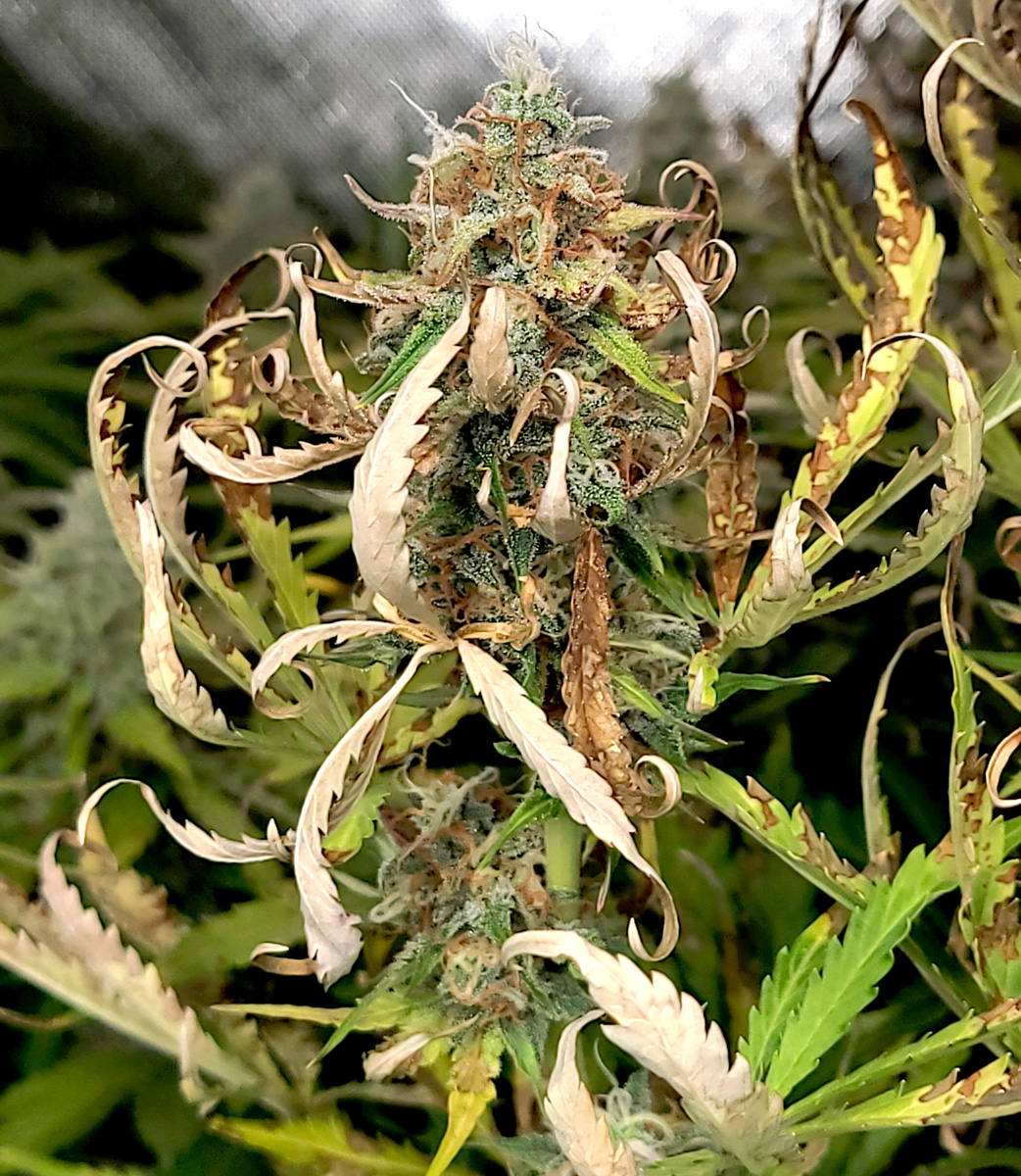
In general, if you see any of these issues, you should check the pH before making any adjustments. You don’t want to adjust the pH if you don’t know what you’re starting with! These are just general guidelines.
Low pH Examples
Most Common Symptoms
- Brown splotches on leaves, especially leaves in direct light (Calcium deficiency)
- Red, purple, or pink coloring on leaves and stems (especially if you also see spots or yellowing)
- Random leaves that become brownish-yellow (sometimes with a red-brown tint). These leaves won’t fall off on their own and feel “stuck” if you try to pull them off.
Note: This is different from a nitrogen deficiency which means your plant needs higher levels of nutrients overall and is almost never caused by pH. A nitrogen deficiency causes lower leaves to turn yellow and fall off on their own (if you pull yellow nitrogen-deficient leaves they fall right off). More info on that with pictures in the next section.
These upper yellow leaves with brown spots were caused by too-low pH. When leaves are this yellow but still “stuck on”, the cause is likely incorrect pH.
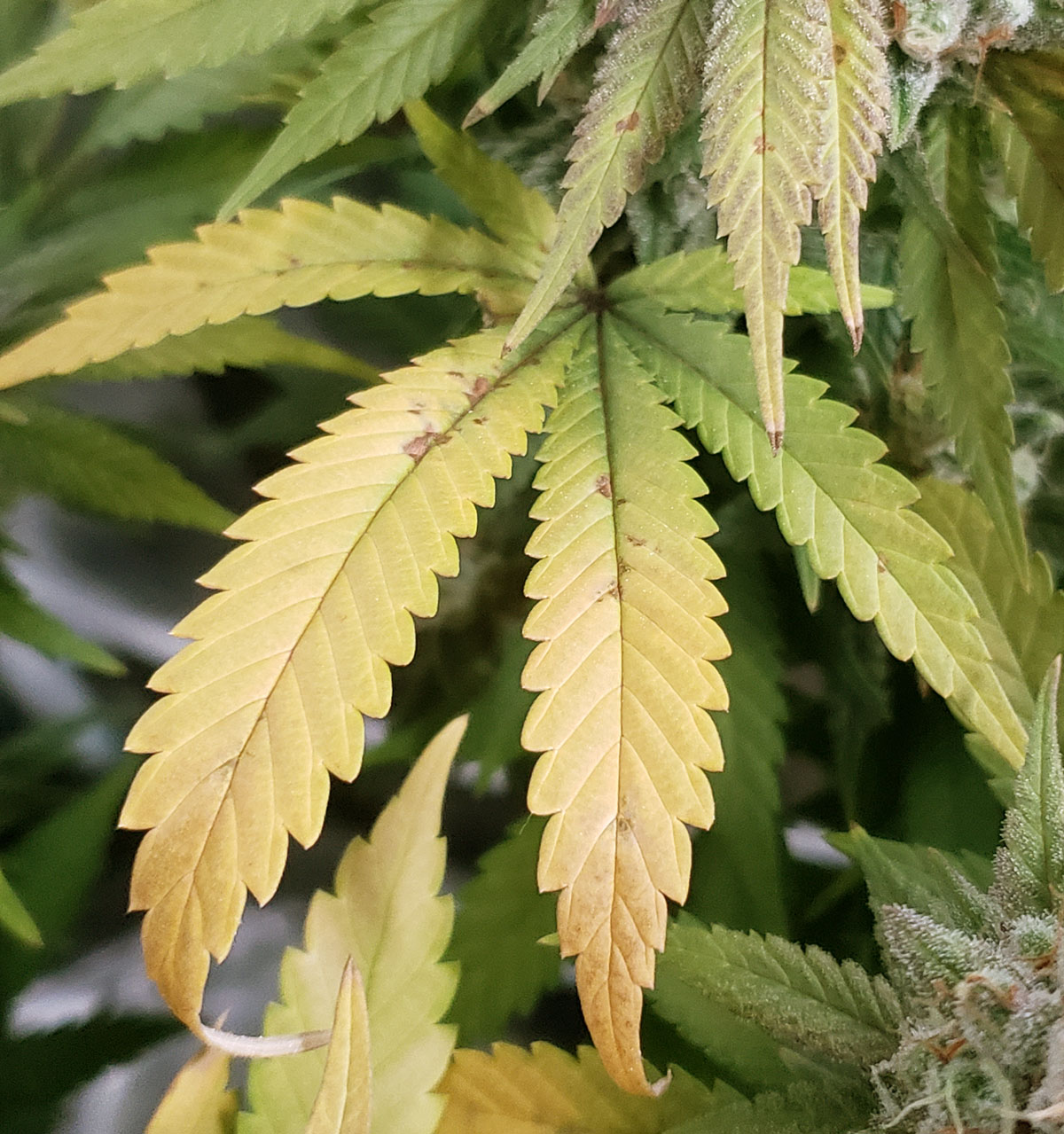
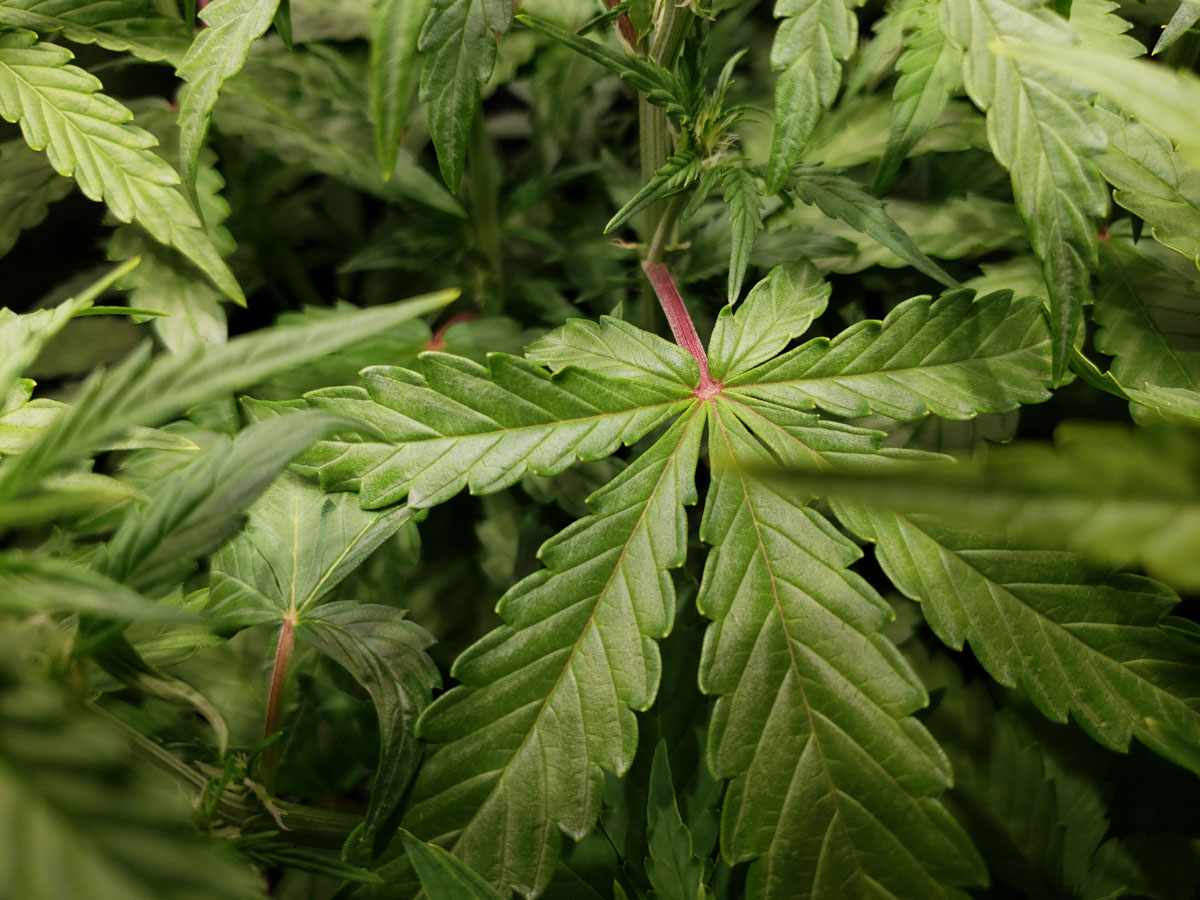
Another picture from the same plant. Luckily, as long as nutrient deficiencies don’t get too bad, your plant will still make excellent buds (though the yields, bud appearance, and bud density may be affected). Notice the bright red coloring of the leaf stems on the right. Red, pink, and purple coloring are often associated with low pH.
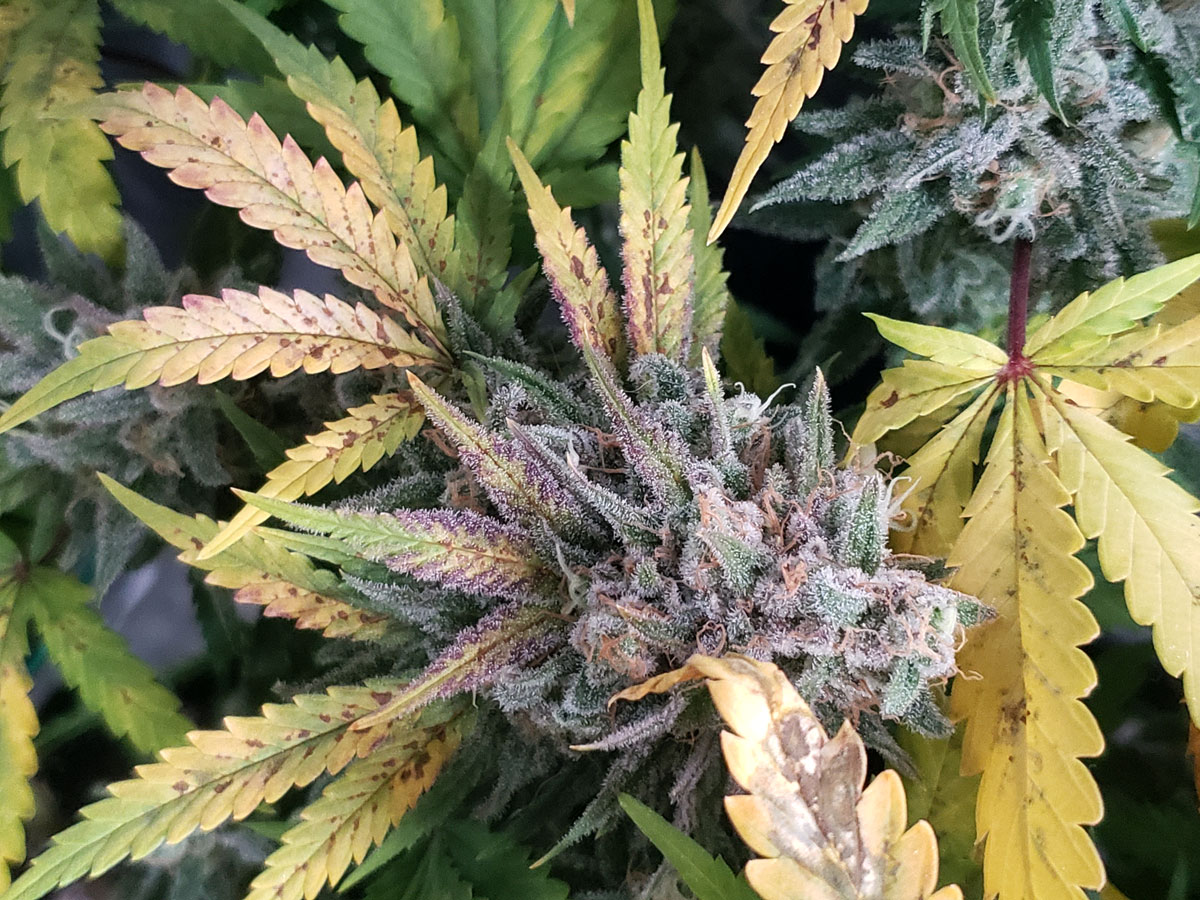 Leaves may get brown splotches and start drying up.
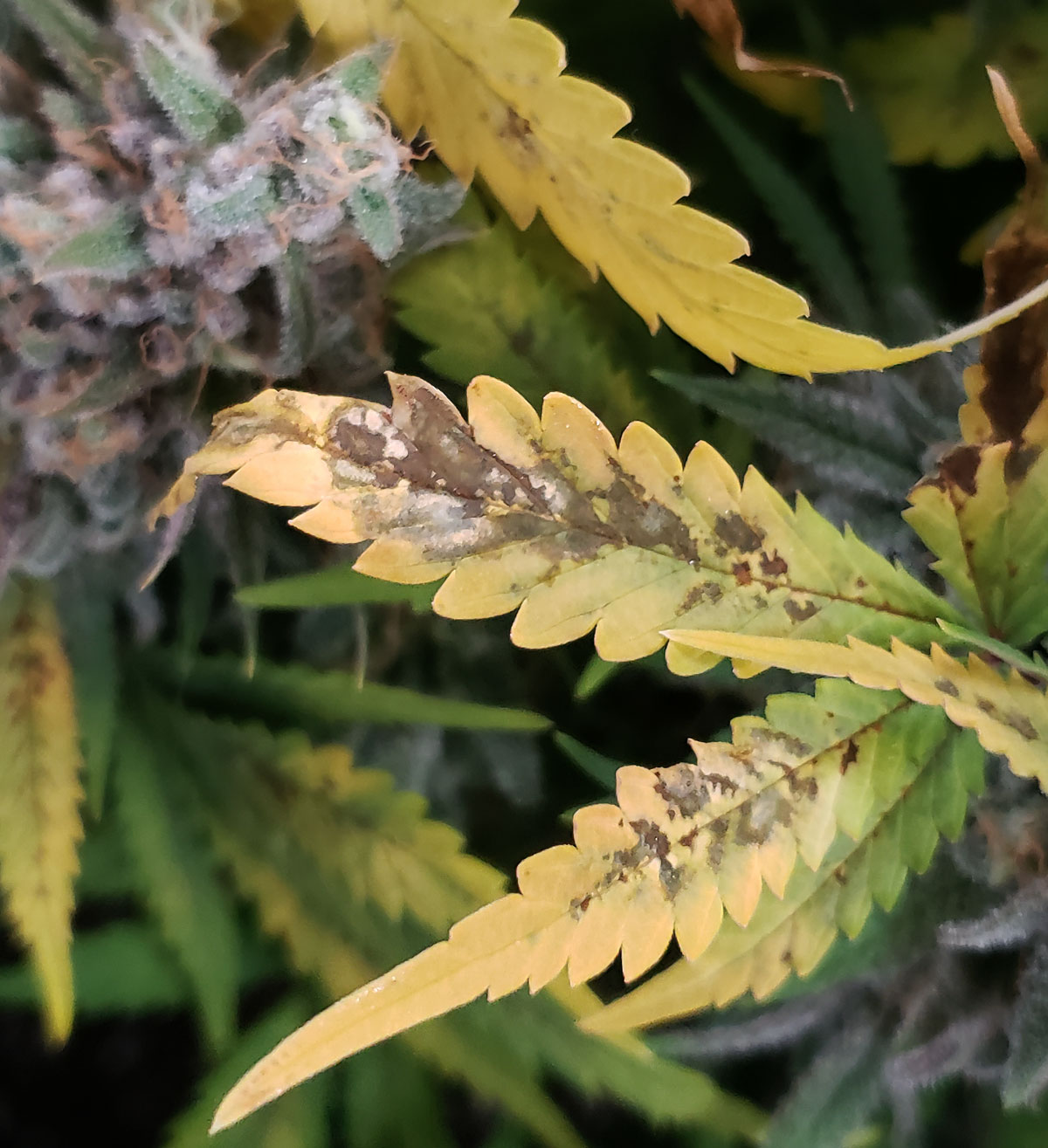
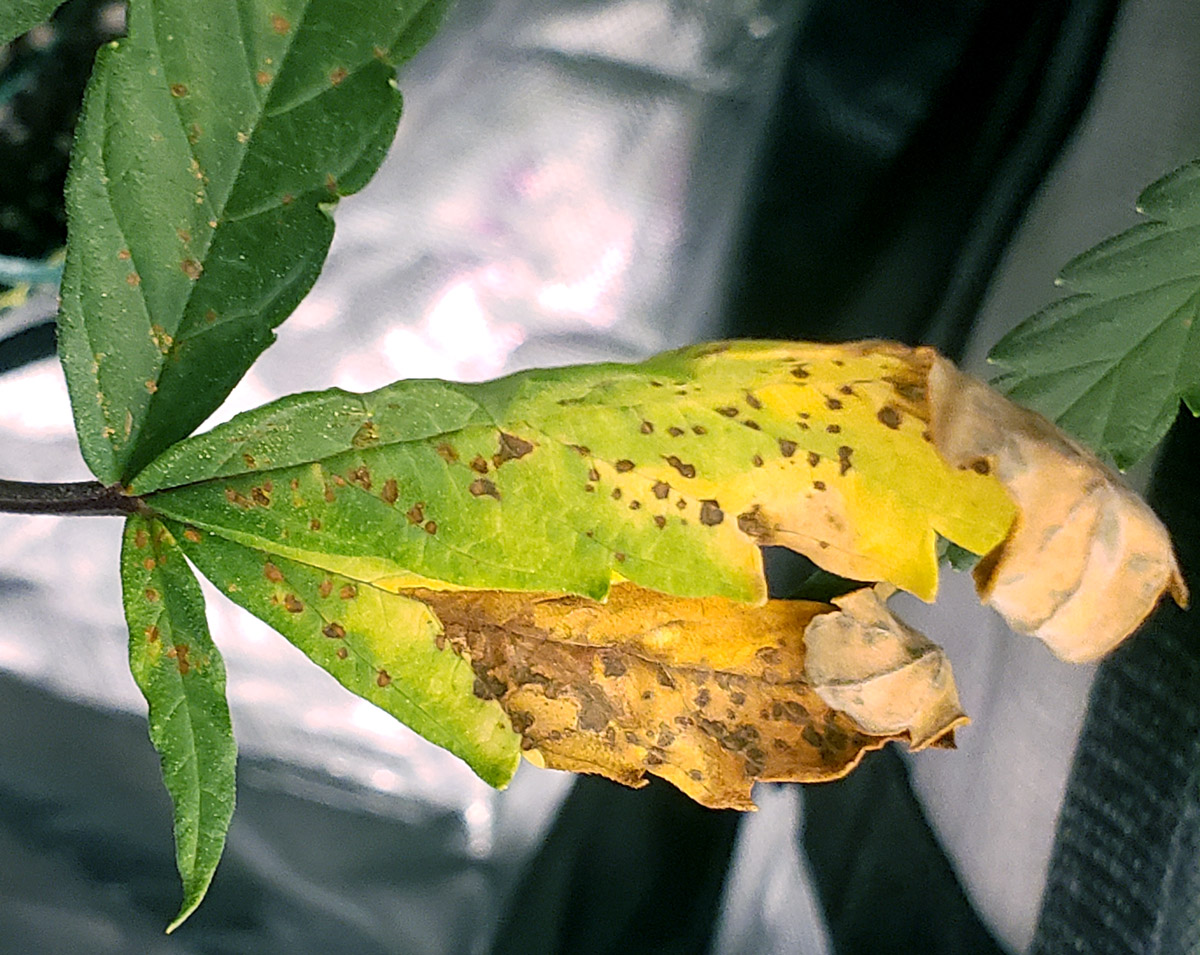
Brown markings are a common symptom of low pH, often appearing on the leaves in direct light.
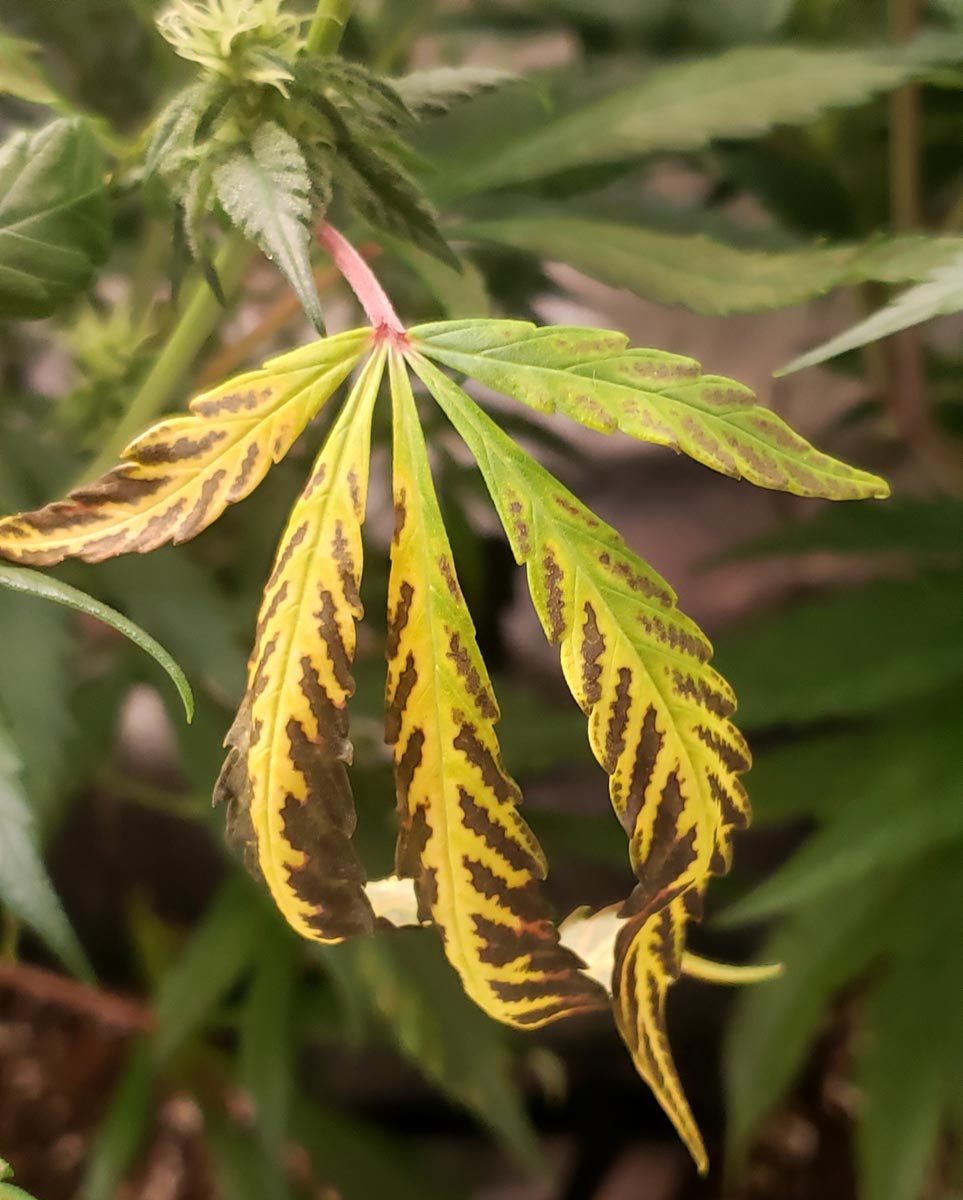
Another example of brown splotches on upper leaves due to low pH.
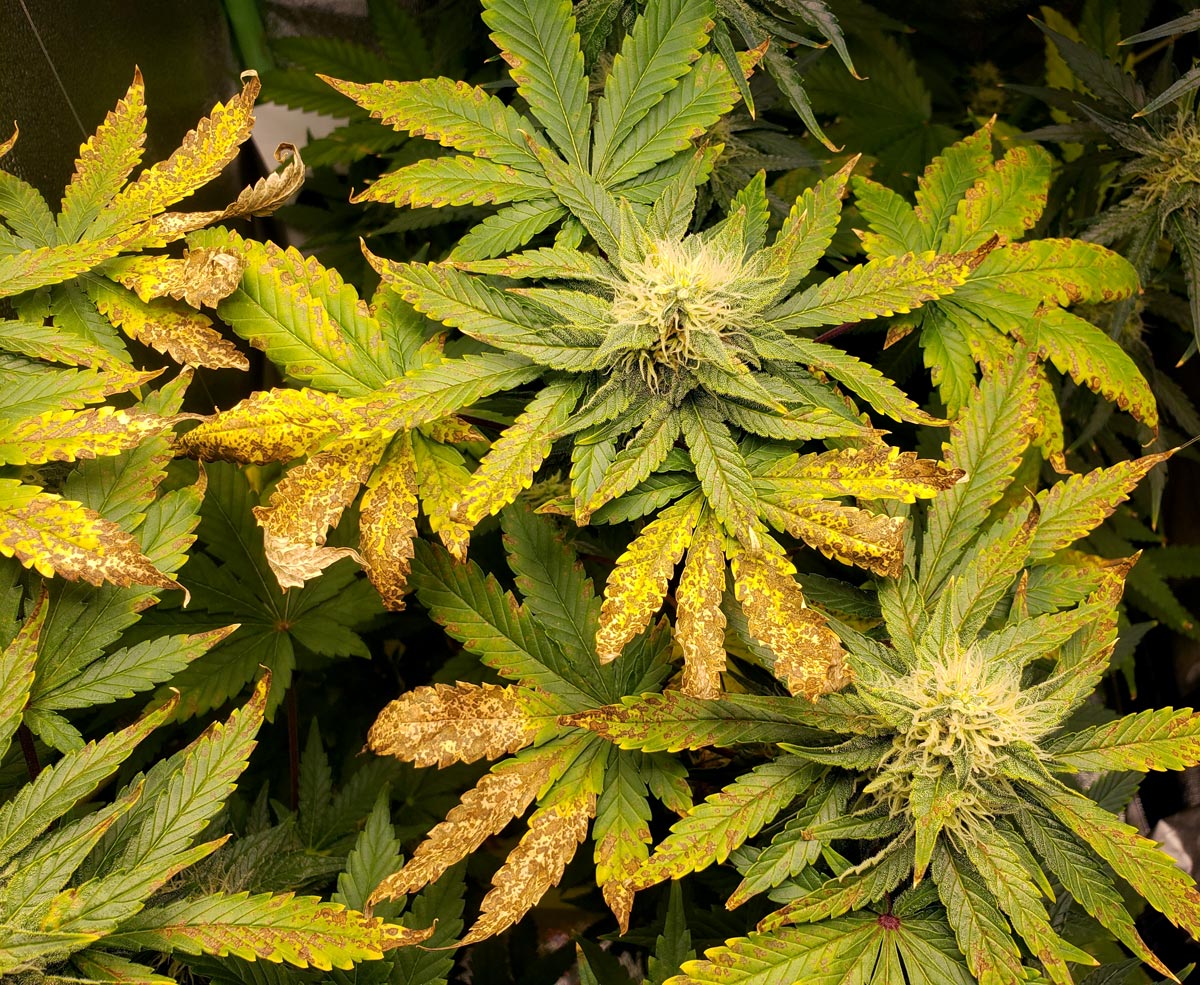
These plants in super soil started showing these symptoms when the pH at the roots got too low. The grower went overboard with natural PH Down (citric crystals), which can build up in the soil over time.
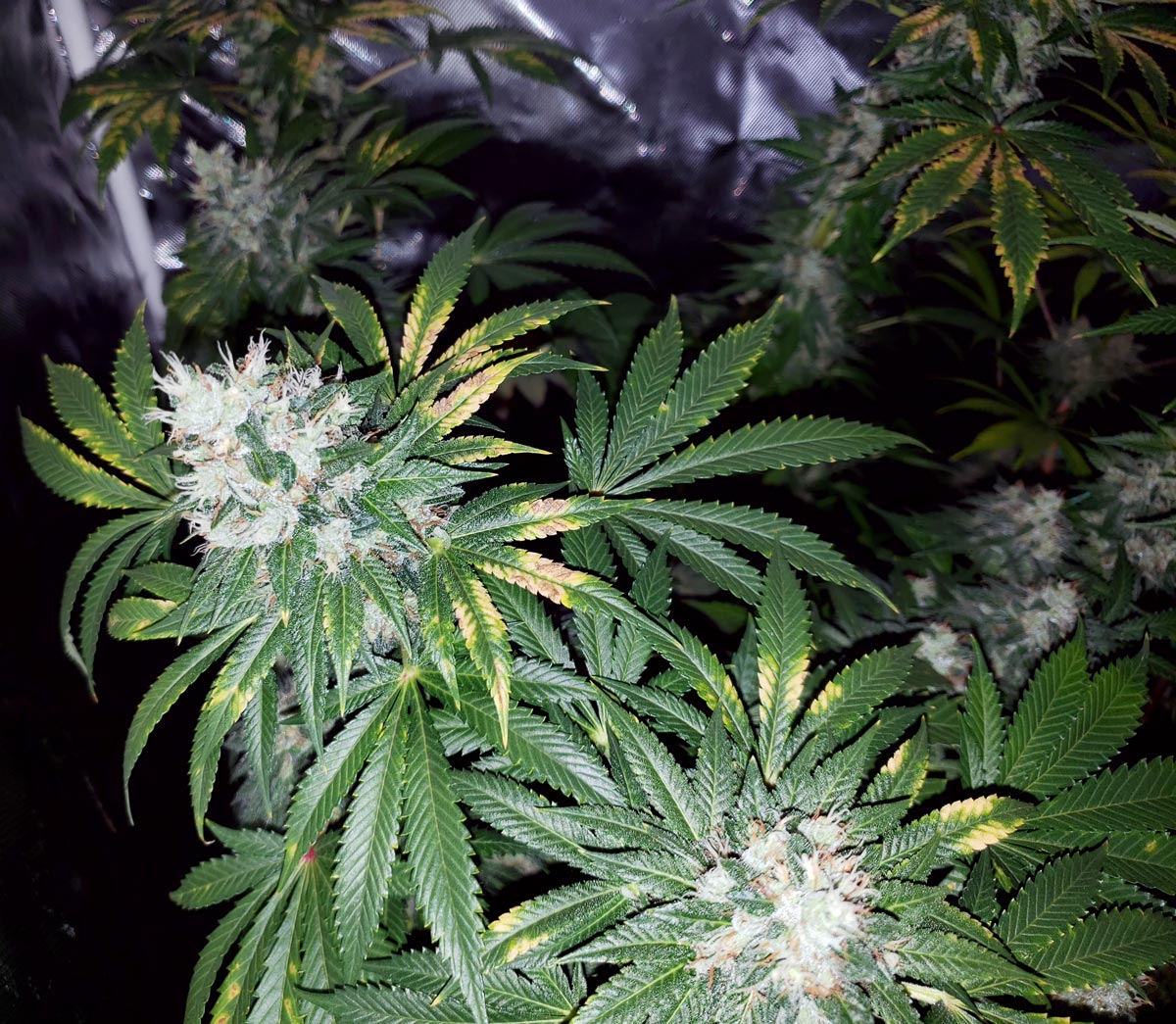
Here is another leaf in that same tent on a different plant. Low pH can cause a variety of similar symptoms, but not every plant reacts the same even in identical conditions. Notice the bright red-purple coloring on the leaf stem.
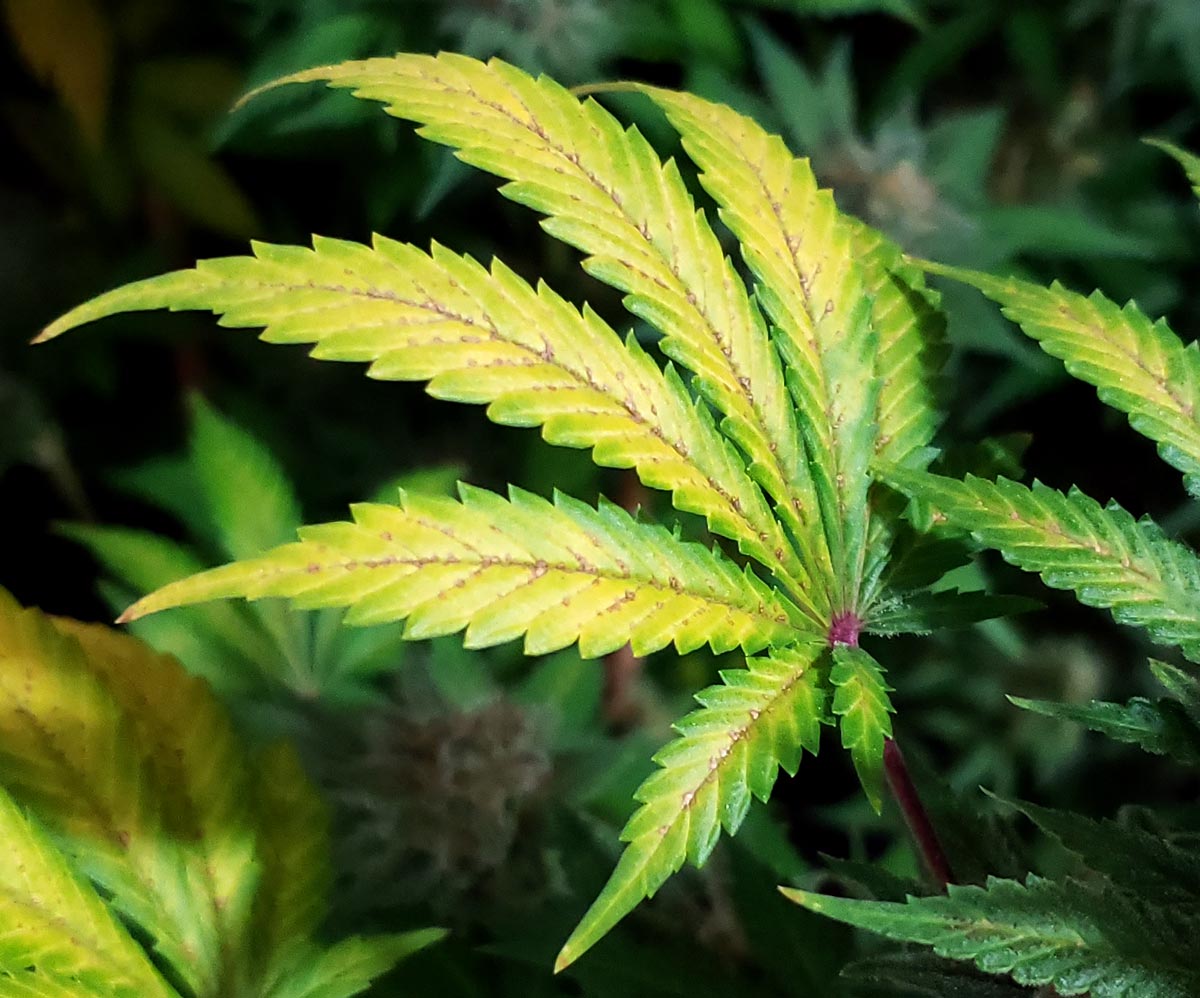
The symptoms progressed quickly and the low pH caused widespread yellowing, red stems, and brown spots. Once the grower started giving these plants properly pH’ed water, the symptoms stopped spreading (though very deficient leaves never turn green again).
Notice how most of the yellowing is at the top where the leaves are getting direct light. If you try to pull off the leaves, they don’t come off easily. The location of the yellowing and them being “stuck on” are major clues that the cause is a pH problem as opposed to something else.
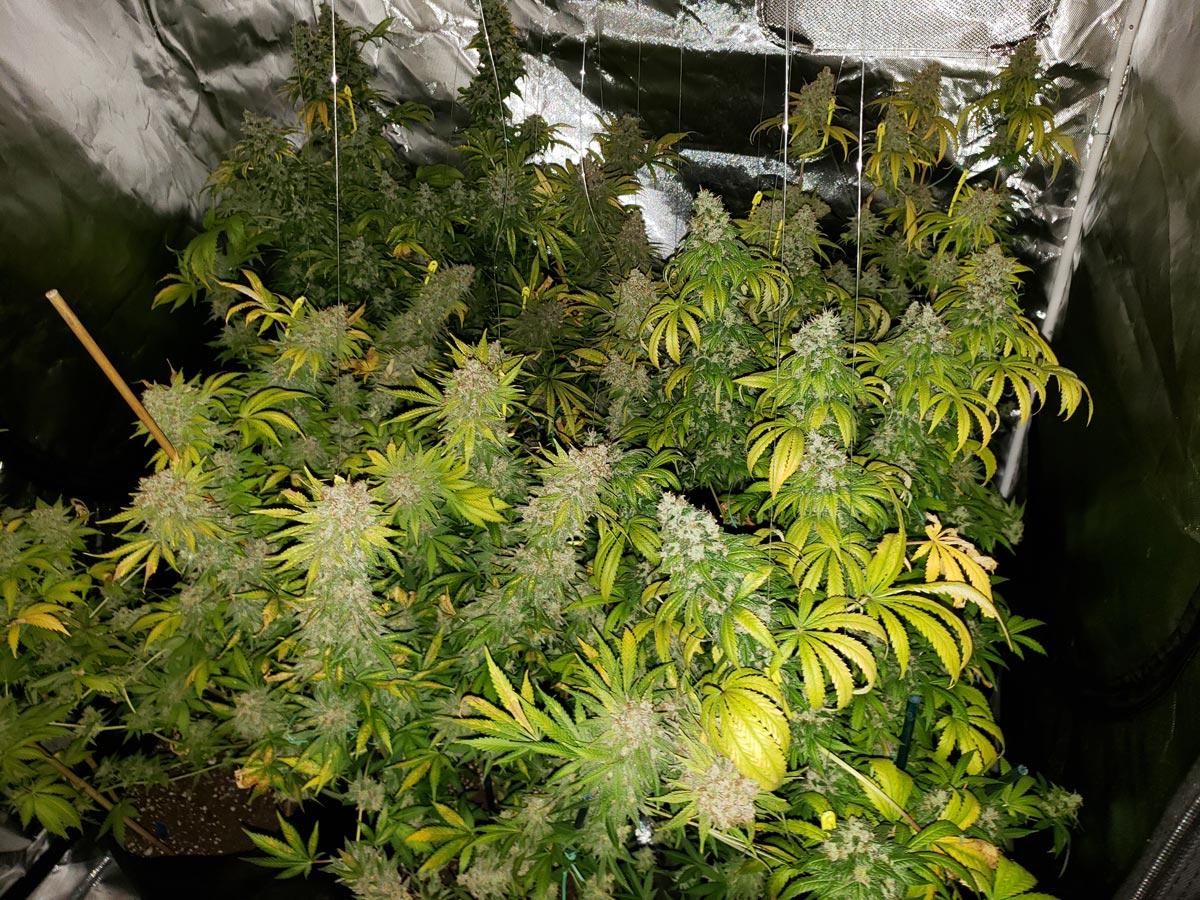
Occasionally you may get similar symptoms from light burn from a too-close grow light, but if the grow light is the recommended distance away, you are most likely looking at a nutrient deficiency caused by pH. It just shows under the lights because those are the hardest-working leaves.
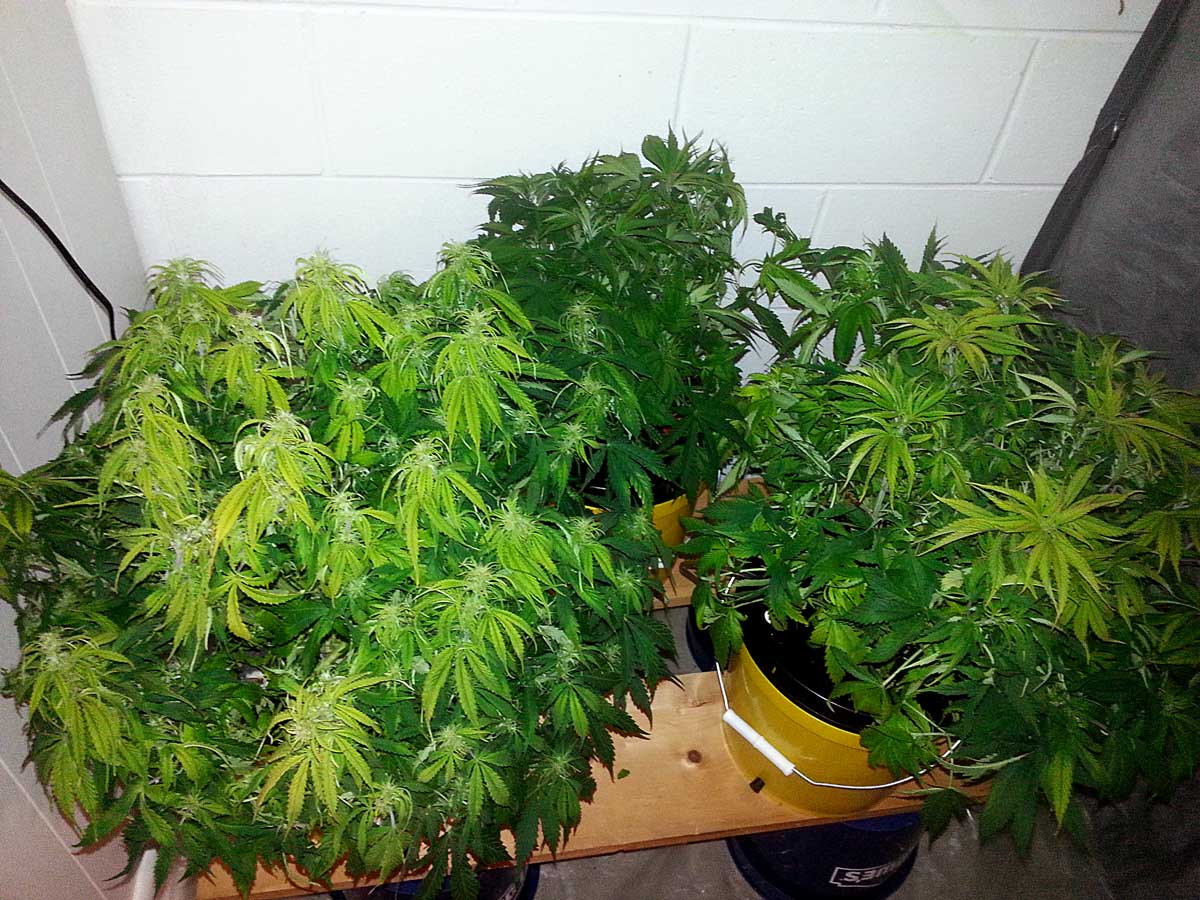
This grower had cannabis plants that looked like this. He also went through the common experience where plants looks great in the vegetative stage, but deficiencies appear after buds start forming.
When nutrient deficiencies appear partway through the flowering stage, often the root cause is pH. For most other causes, you would have seen symptoms earlier.
The grower thought these top yellow leaves came from light stress. The real cause was low pH.
Just remember not to be too hard on yourself if you see symptoms like this. Cannabis plants are more sensitive in the flowering stage. And the fact that you’re on GrowWeedEasy.com reading this means you care about your plants. That’s the sign of a great grower.
Now onto the other side of the nutrient deficiency coin.
Too high pH
Most Common Symptoms
- Yellow spots or stripes in the margins
- Brown spots (especially on lower leaves)
- Yellow edges of leaves
- Yellow or brown tips (leaf tips may wilt)
- Bluish coloring on leaves
- Purple stems (sometimes reddish)
These symptoms were caused by high pH at the plant roots. Brown splotches that look like a phosphorus deficiency are common when the pH is too high.
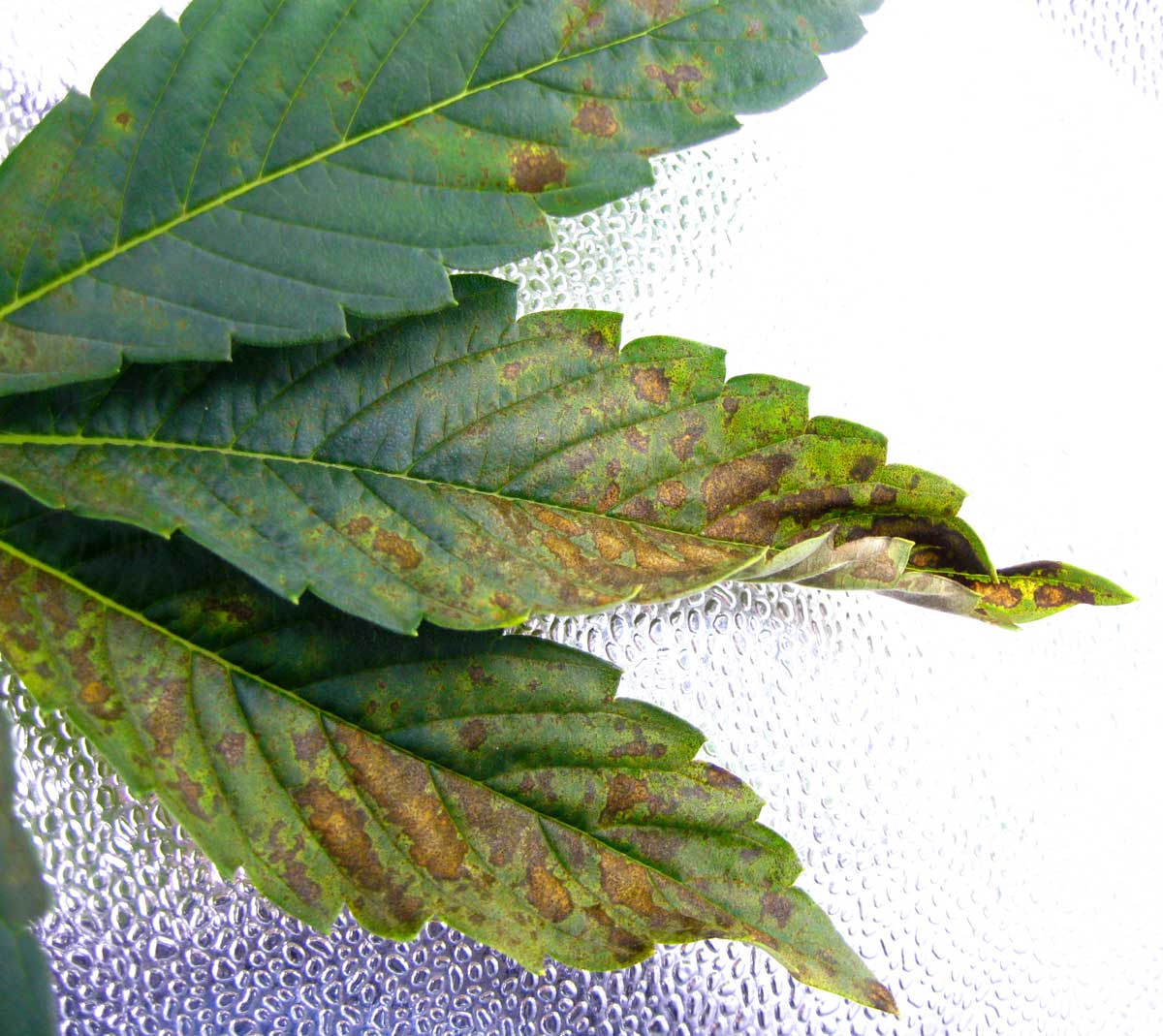
The brown spots from high pH most commonly appear on the lower leaves of the plant.
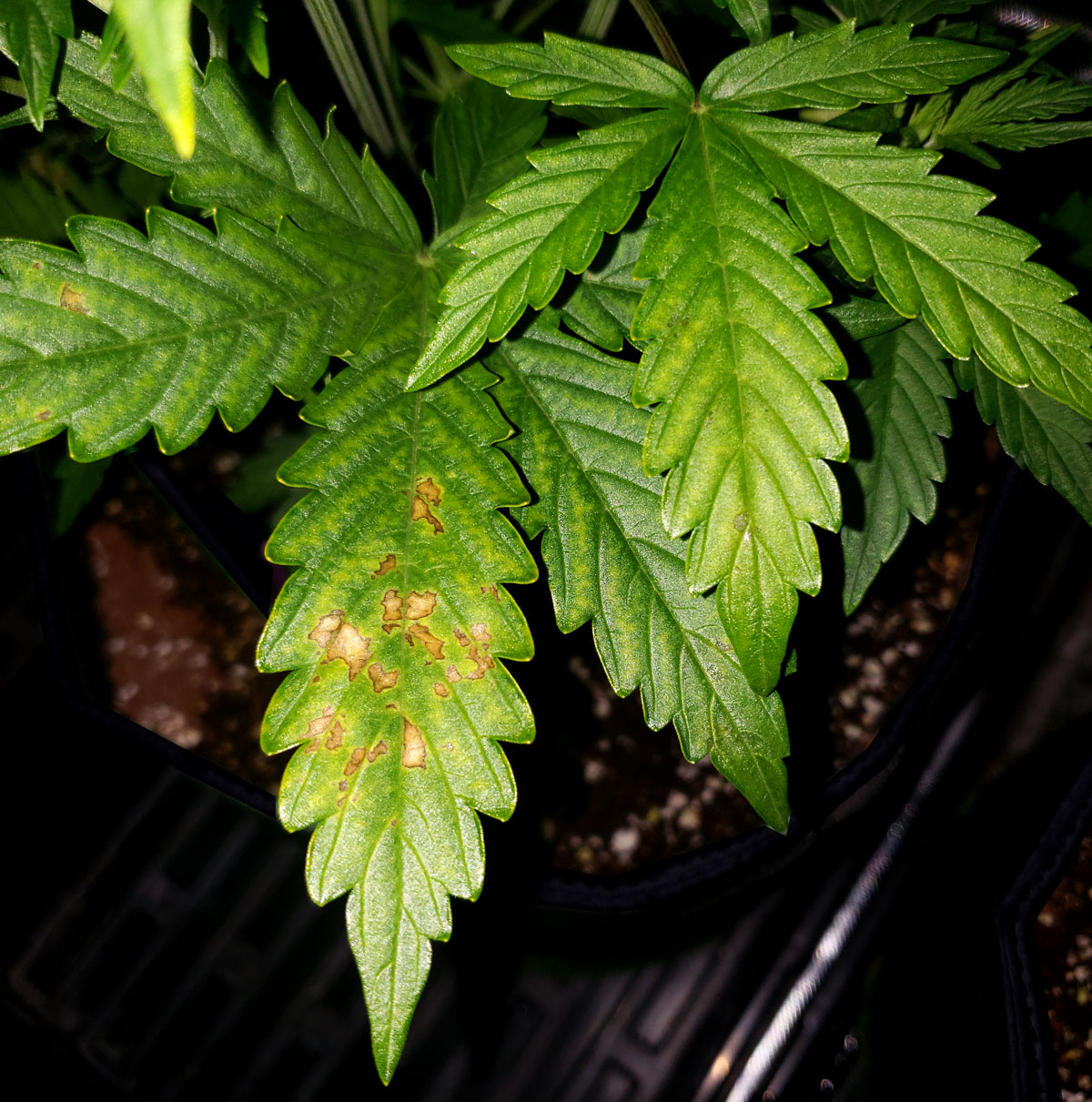
If allowed to progress, the splotches will take over the whole leaf and cause it to die
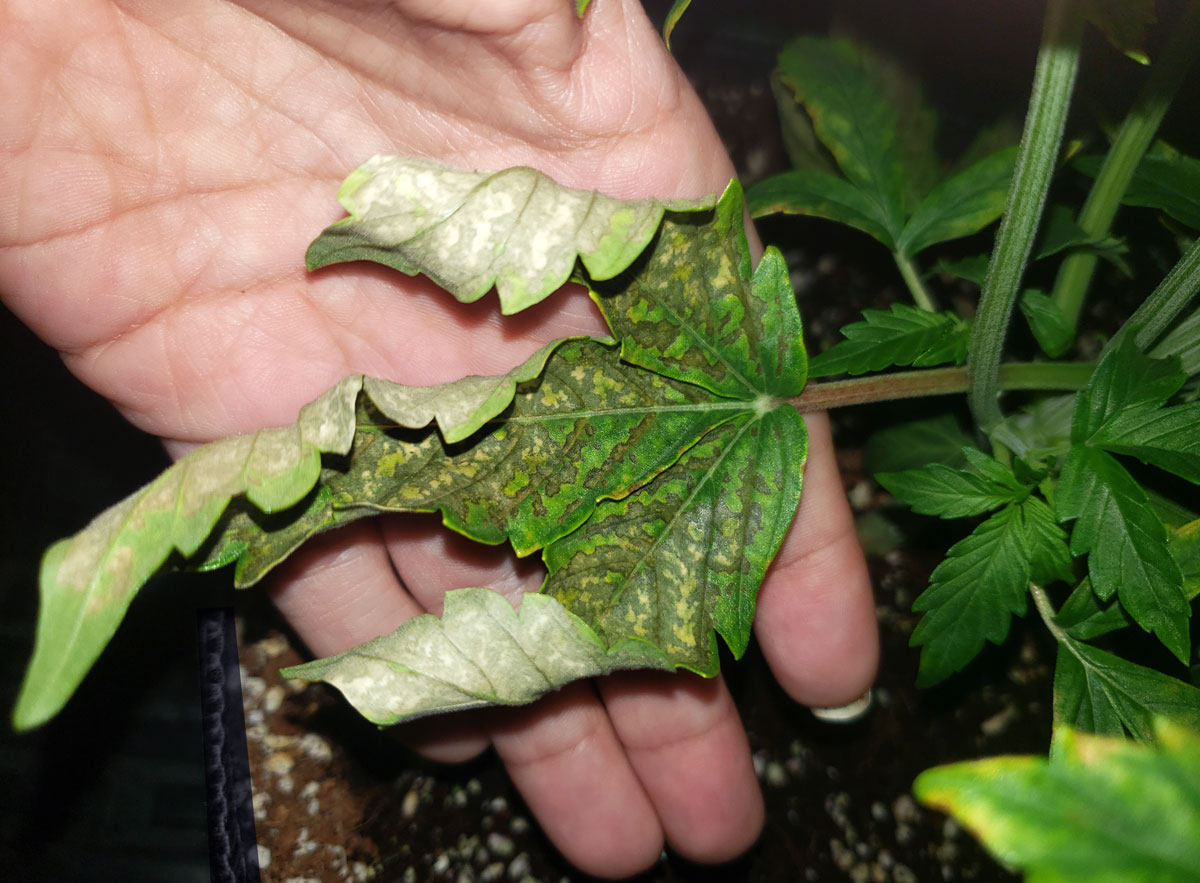
Although red stems are often associated with low pH, it can occasionally be a symptom of high pH, especially if it has more of a purple tone
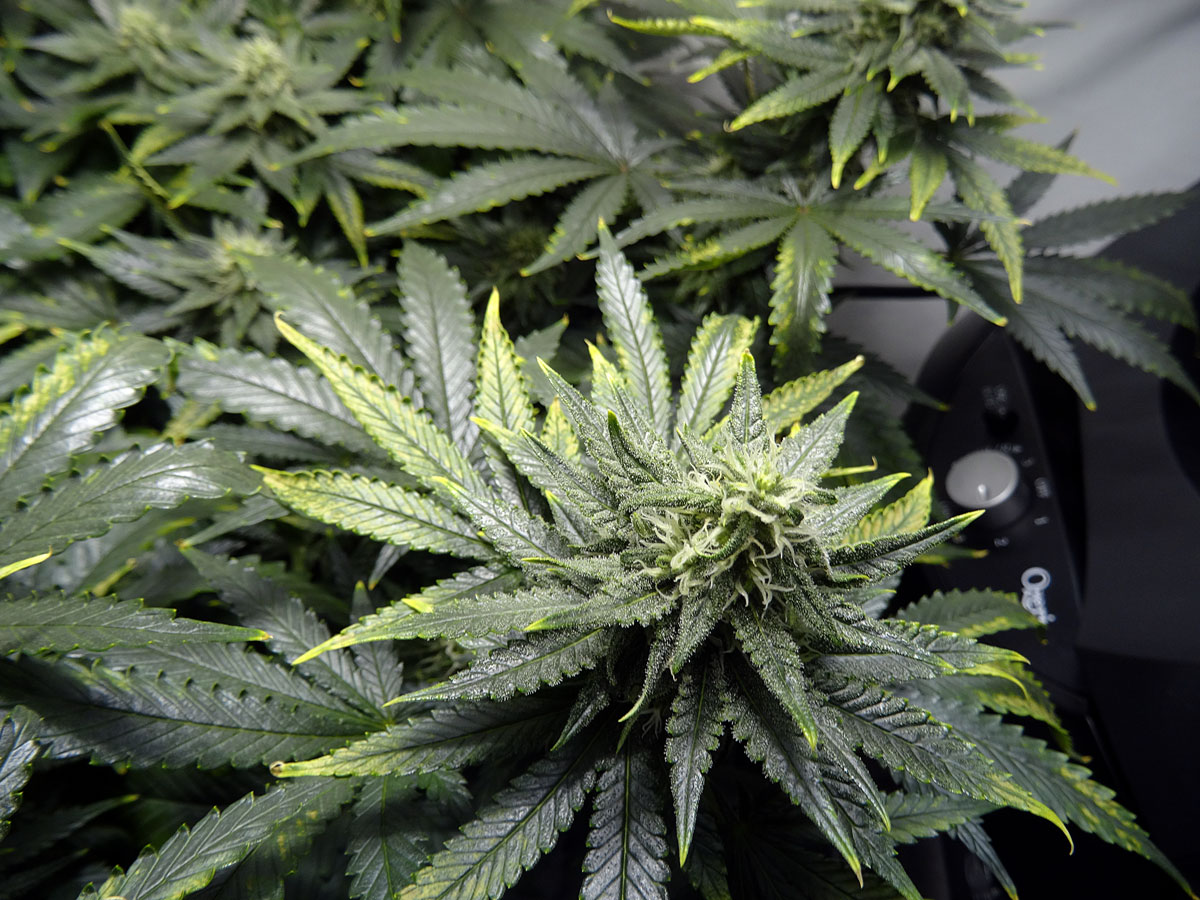
High pH can cause plants to take on a dark coloring that has a blue tint. This is typically accompanied by yellow leaf edges.
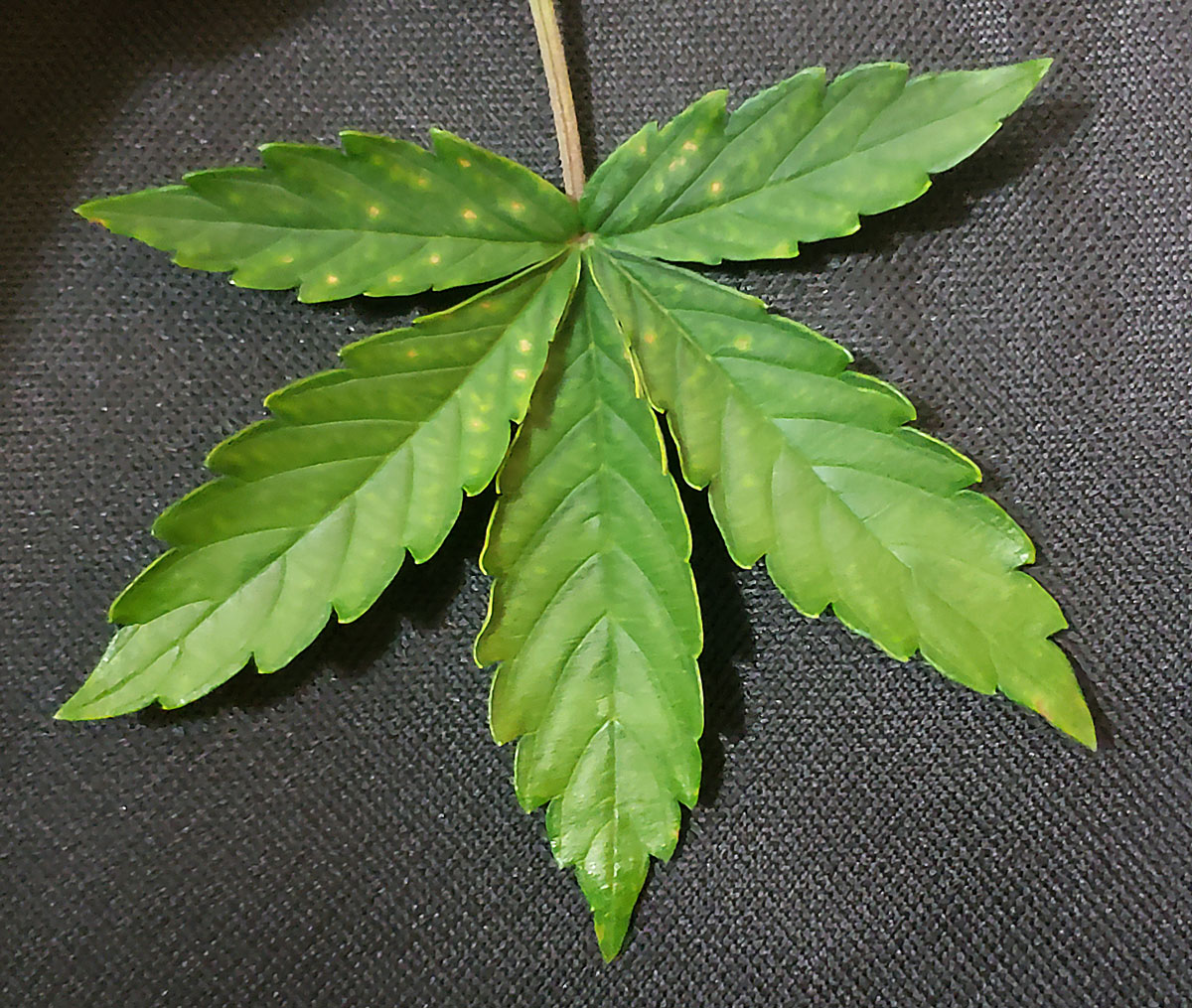
Sometimes the yellowing between the margins looks like spots at first
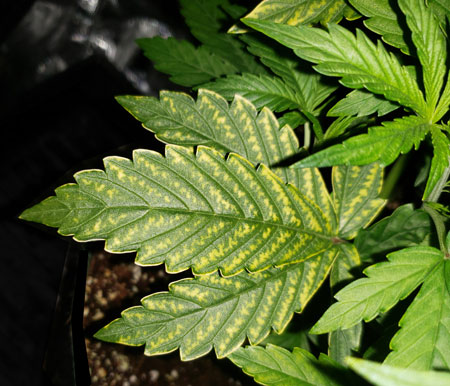
These spots can develop into yellow stripes that look like a magnesium deficiency
Or sometimes the spots turn brown
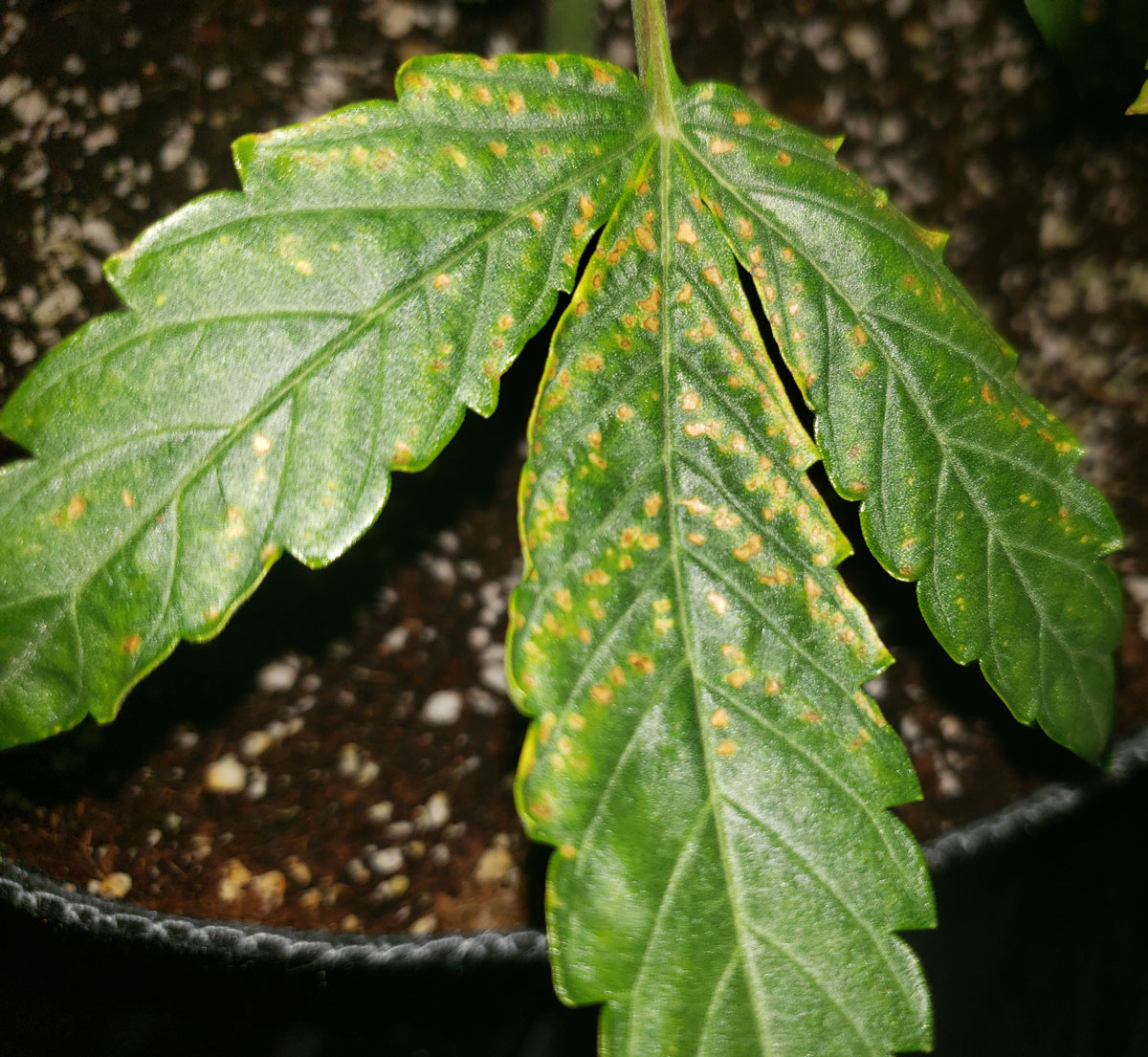
When you see brown leaf tips, it’s common to assume you’re definitely looking at nutrient burn (too many nutrients at once can cause burnt brown tips). However, some nutrient deficiencies look a bit like nutrient burn. It’s important to know the difference because if it’s nutrient burn you need to reduce nutrients, but if it’s a nutrient deficiency you likely need to adjust the pH.
This is a nutrient deficiency caused by too-high pH. This is not nutrient burn. A key difference is the yellowing in the margins indicates this is likely a deficiency.
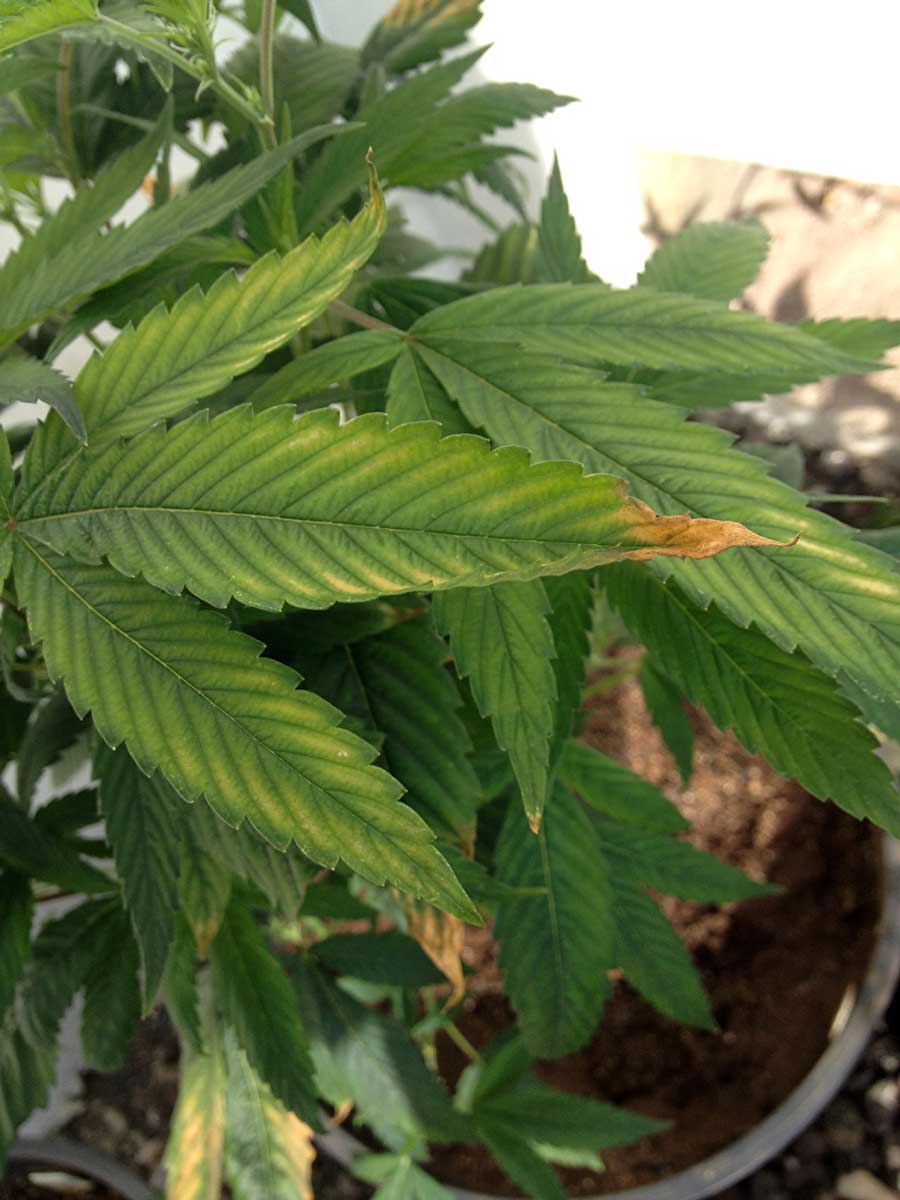
Here another picture of the same plant to help you get an idea of how this deficiency looks on different leaves.
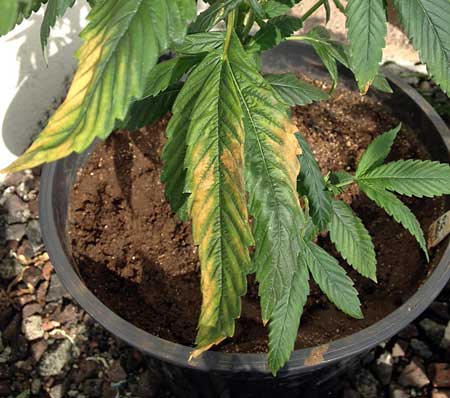
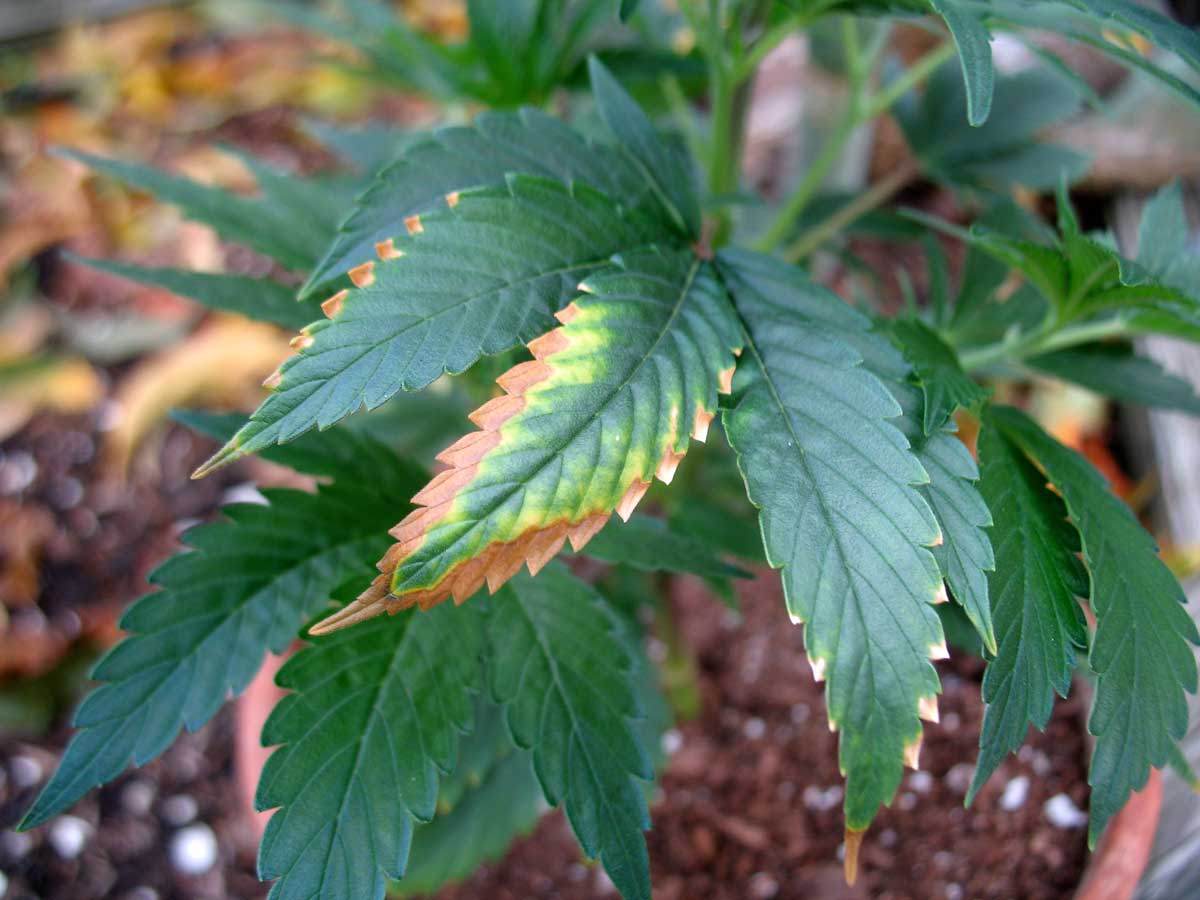
These brown tips are also the result of a nutrient deficiency. Not only is the pH too high, but the thick soil also made it harder for plant roots to get access to nutrients.
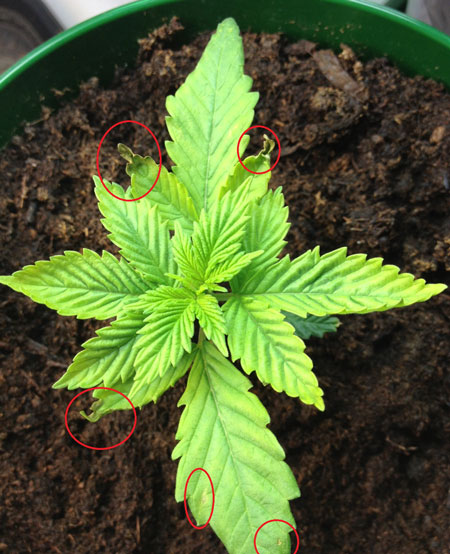
This looks like a potassium deficiency, which is often caused by too-high pH.
This cannabis plant is hydroponics suffered from too-high pH.
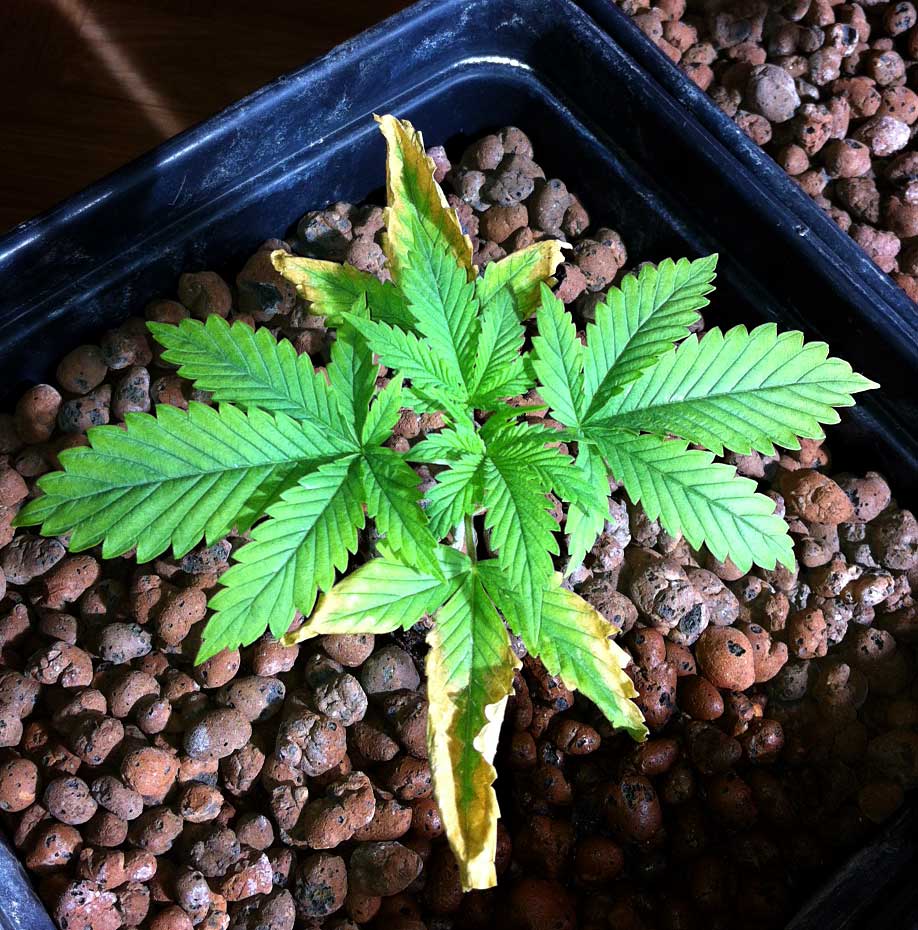
One last high-pH example.
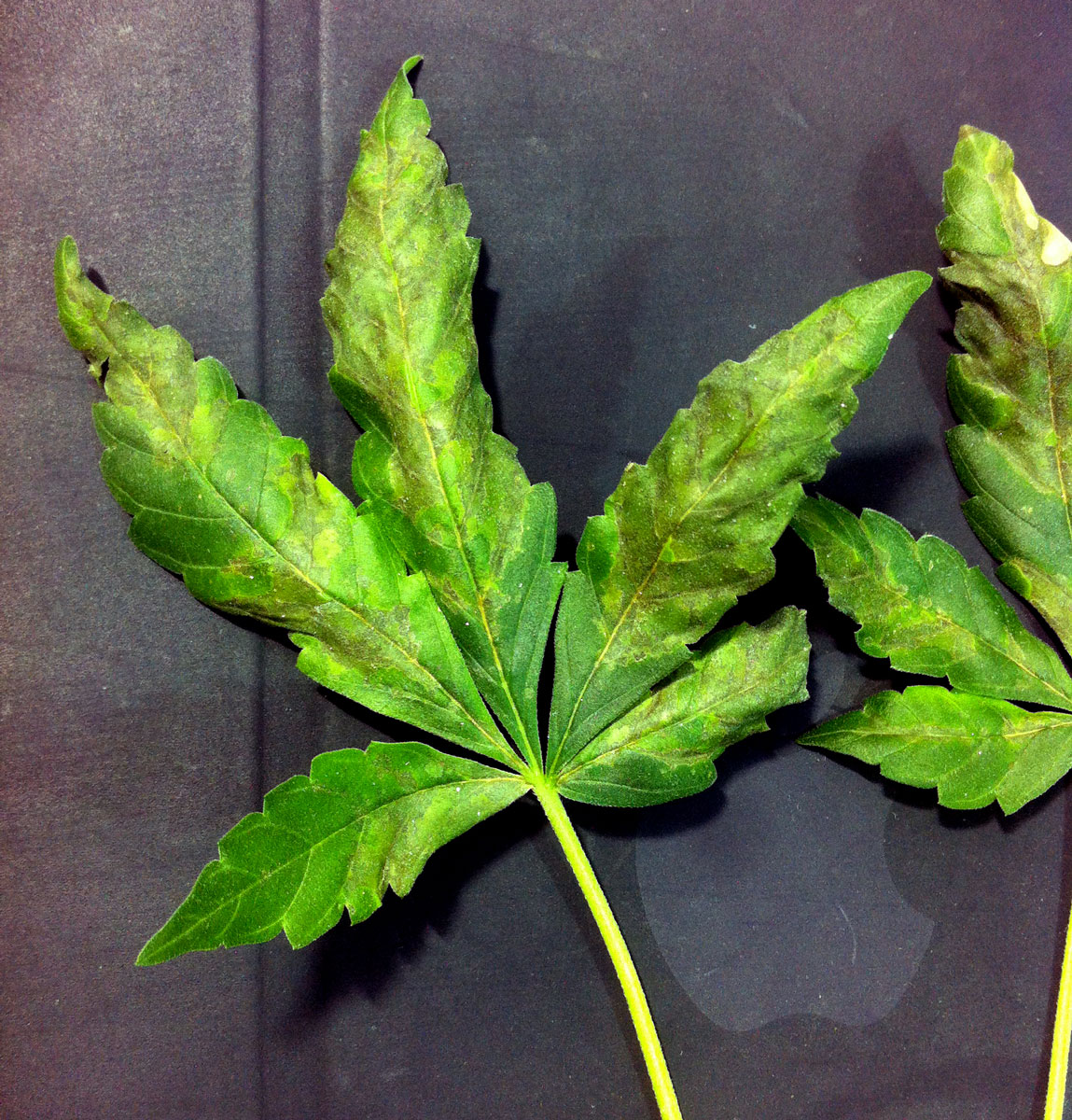
You have now seen a wide array of different nutrient deficiencies that are almost always caused by the pH at the roots being too high or too low.
But what do you do if you believe pH is causing problems in your garden? Luckily, testing and adjusting the pH is easy once you get the tools.
Solution: How to Correct the PH
Tools needed
- Nutrients & Supplements (if any) – learn about cannabis nutrients as well as how to grow without nutrients
- Measuring spoons (most people have these at home already)
- PH Test kit (includes pH test drops plus liquids that can adjust the pH)
- A pH test kit helps you find the pH of your water, using special drops and color matching. I recommend every grower get a pH test kit, as it comes with small bottles of pH adjustment fluid (PH Up and PH Down) for cheap.
- [Optional] A digital pH pen. It’s much more convenient to see the pH number on a screen. Note: Don’t accidentally get a “TDS meter”. It may look the same but doesn’t measure pH.
This video shows the whole process of adding nutrients and adjusting pH to help you make perfect nutrient water every time.
Think of pH Testing as the ultimate plant supplement. Sometimes just a few drops of PH Up or PH Down in your water makes the difference between a bad grow and a legendary harvest.
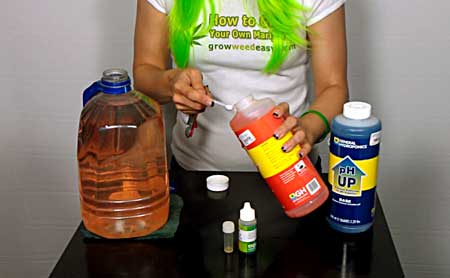
Epic cannabis plants need full access to all nutrients!
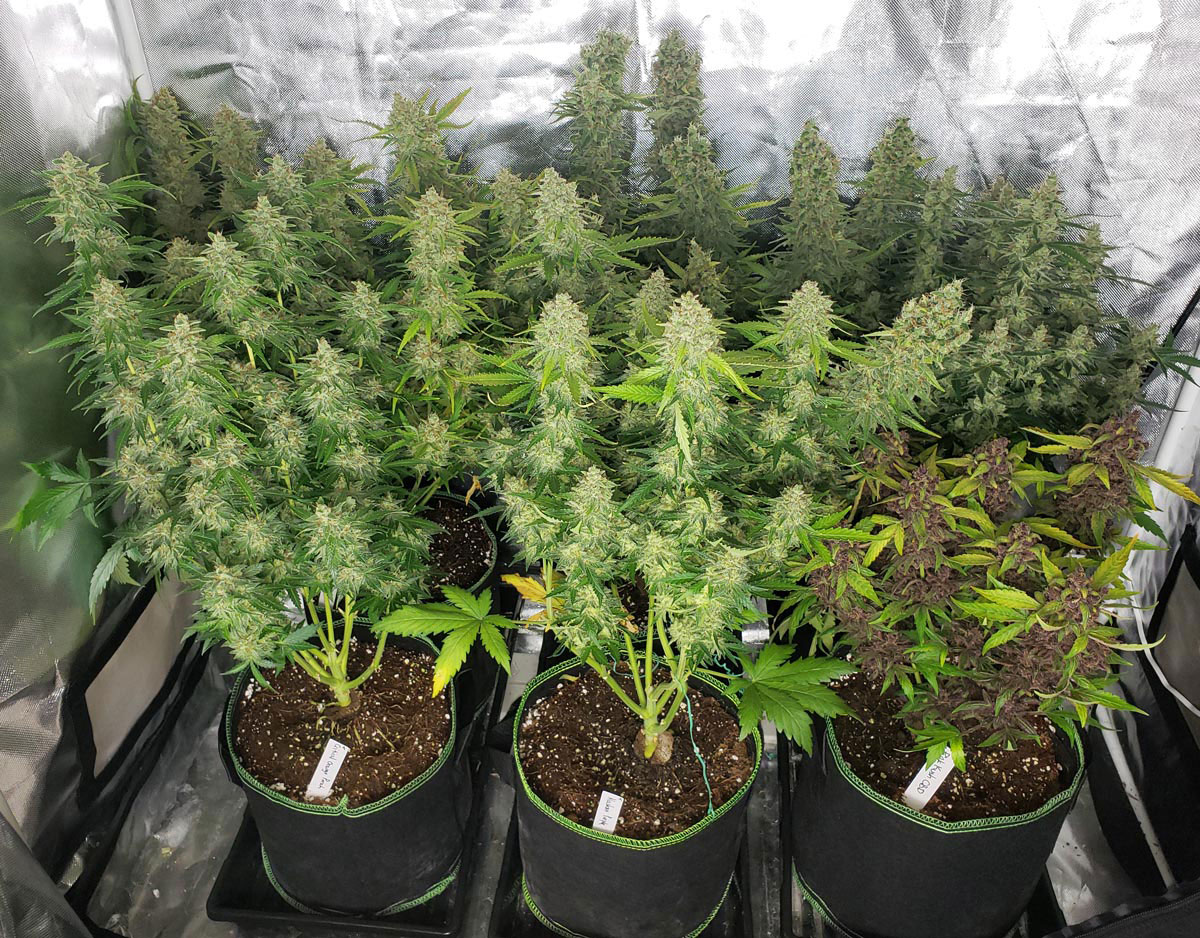
Your next harvest will thank you.
Test if PH is Causing Your Cannabis Nutrient Deficiency
Next time you water your plants, follow these instructions to test whether pH is causing your marijuana nutrient deficiency. There are two types of water you need to test: the water going in, and the water coming out. When the root pH is off, it’s either that the water going is has the incorrect pH, or there is a buildup in the grow medium that is affecting the root pH and needs to be flushed out with good water over time.
- Fill a container with water
- Add all nutrients and supplements (if you’re using any)
- Test the pH of the water using a PH Pen or the liquid drops that came with your PH Test kit
- Compare to see if the pH is in the ideal range
- Soil: 6-7 pH (I aim for 6.3-6.8 pH)
- Coco or Hydro: 5.5-6.5 pH (I aim for 6.0-6.3 pH)
- Adjust the pH if necessary to the proper range.
- Use the PH Up or PH Down liquid that came with your kit (PH Up makes the pH higher and PH Down makes it lower)
- Add a little at a time and re-test the pH. Note: The PH Down is especially powerful. A few drops go a long way.
- Water the plants with your newly adjusted water
- Collect some of the runoff water and test the pH. Ideally, it should come out at about the same pH as the water going in.
- If so, you’re good to go!
- If the runoff pH is much higher or lower, there is an issue with pH at the roots. Take a note of the pH and learn what to do below.
What to do if the runoff pH is too high or low:
- Wait until the next time you make water for your plants.
- Look at your note of the runoff pH from last time.
- Adjust the pH to the opposite side of the ideal range to correct the issue.
- If the pH was low, give water at the upper range of pH for your grow medium
- If the pH was high, give water at the lower range of pH for your grow medium
- Continue doing this every time you give water until the runoff water is about the same pH as the starting water
- You have achieved pH Nirvana. You’re good to go!
