
by Nebula Haze
To “lollipop” a growing cannabis plant means to remove most growth from the bottom of the plant that isn’t getting light. With lollipopping, the cannabis grower leaves the top of the plant untouched, so it’s full on top and bare on bottom, like a lollipop.
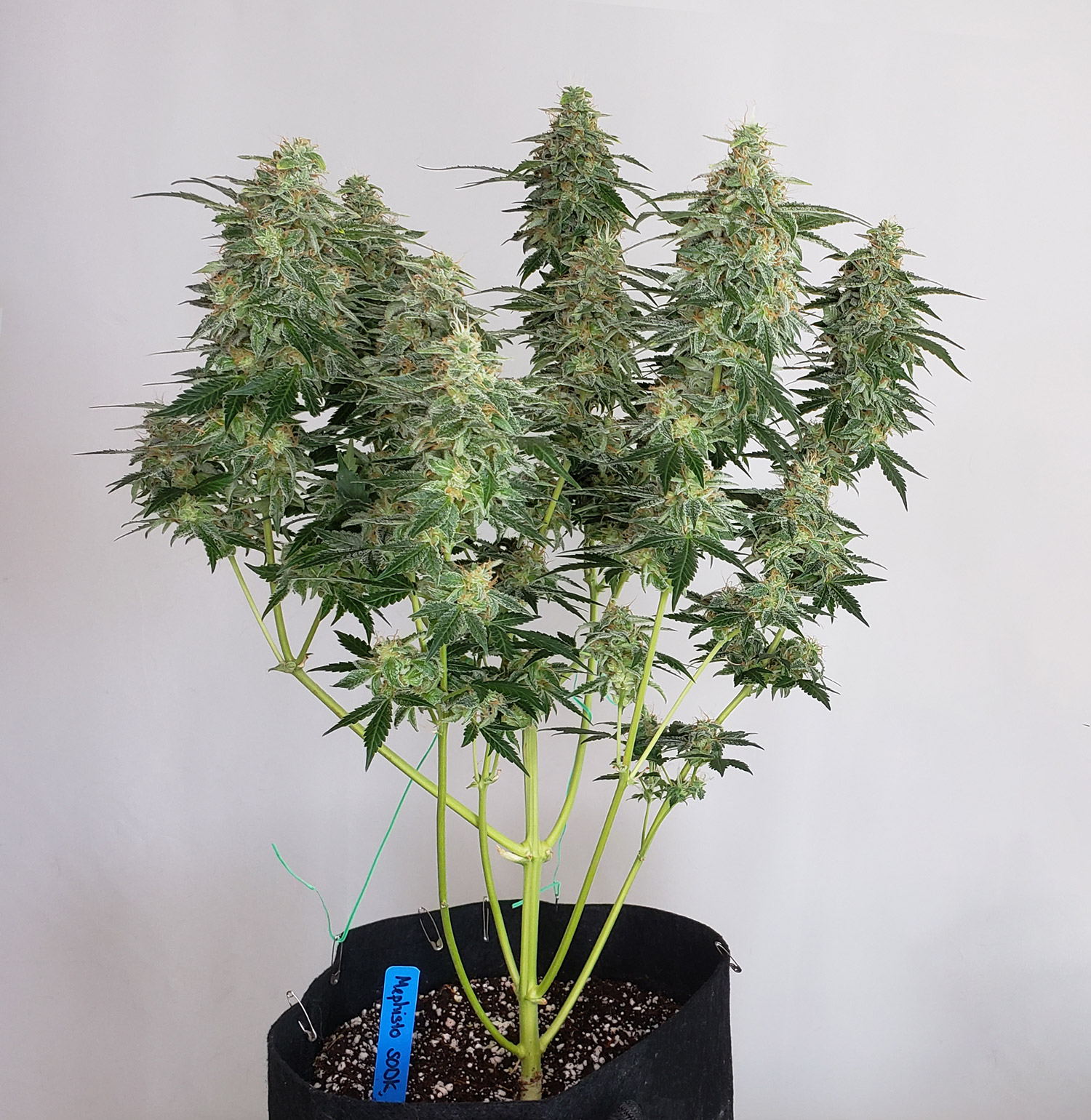
The lollipopping technique leaves the cannabis plant resembling a lollipop. Big on top, bare on the bottom 🍭
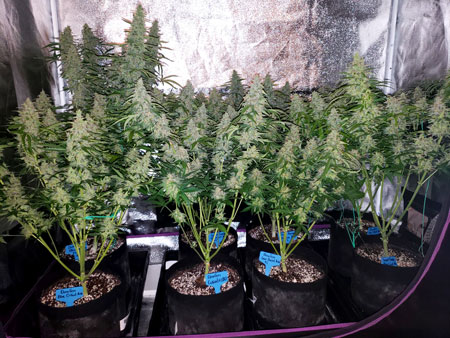
Why lollipop your marijuana plant? It forces the plant to put more energy into the top buds, resulting in bigger, longer, and more dense top buds. As a bonus, lollipopping stops a cannabis plant from wasting energy on buds lower on the plant (which typically don’t get big and are less potent than the top buds on average). This marijuana lollipopping tutorial will teach you how to increase your cannabis yields and bud quality using the lollipop technique.
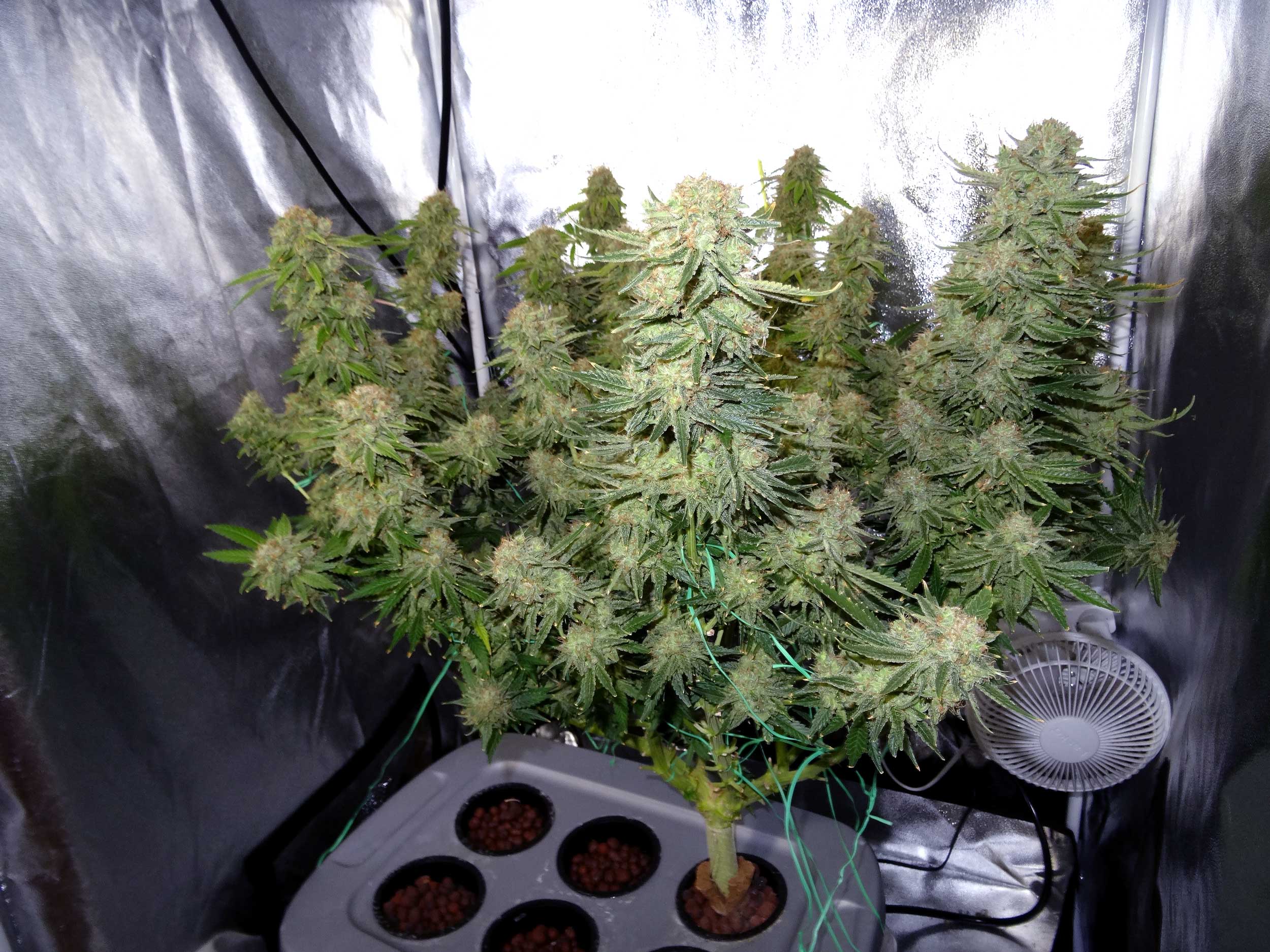
“Lollipopping” cannabis means removing bottom growth so that the marijuana plant puts more energy into the bud sites at the top.
With these lollipopped cannabis plants, the bottom growth has been removed to allow the main buds to get all the light and energy.
Check out this Alaskan Purple Auto from my recent auto-flowering grow journal.
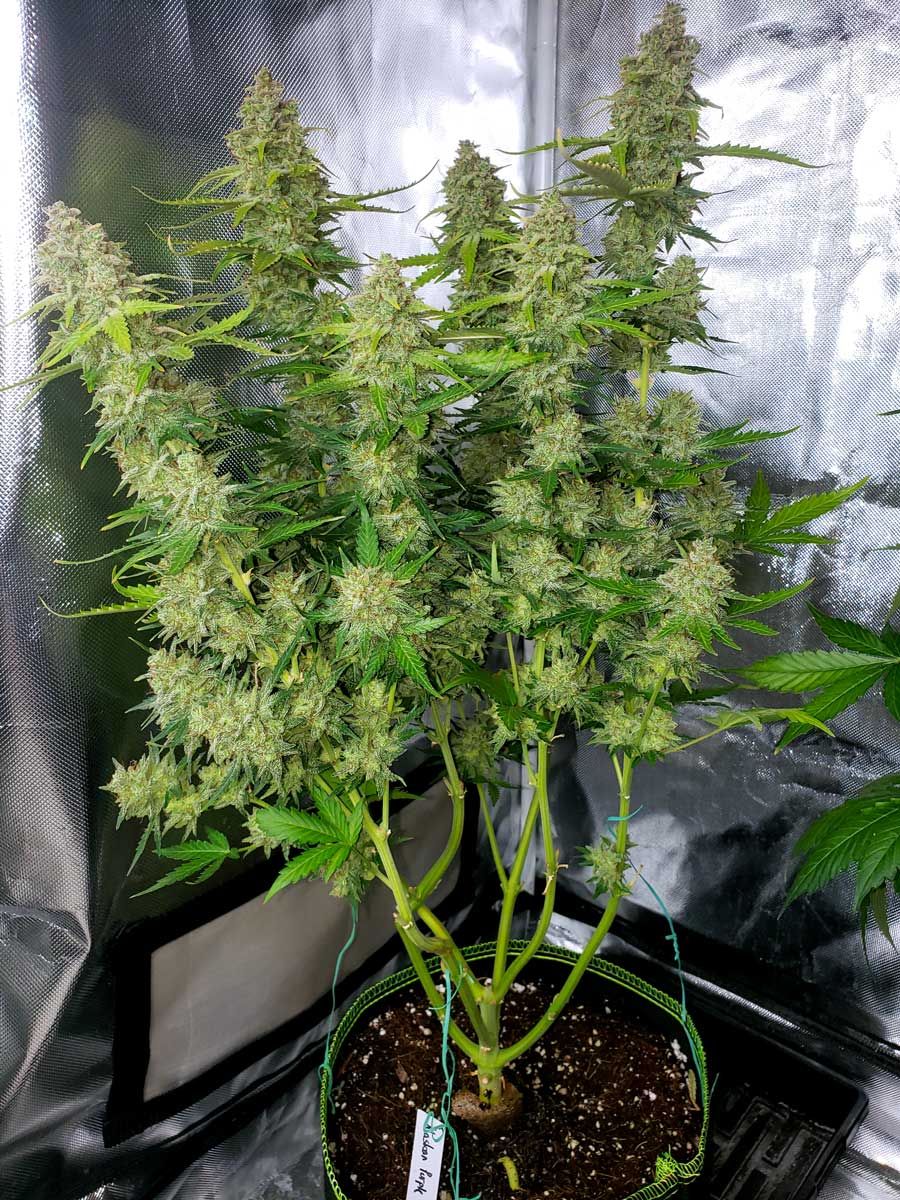
If the plant is already short (like this OG Kush Auto) and you have a powerful light, don’t take off much.
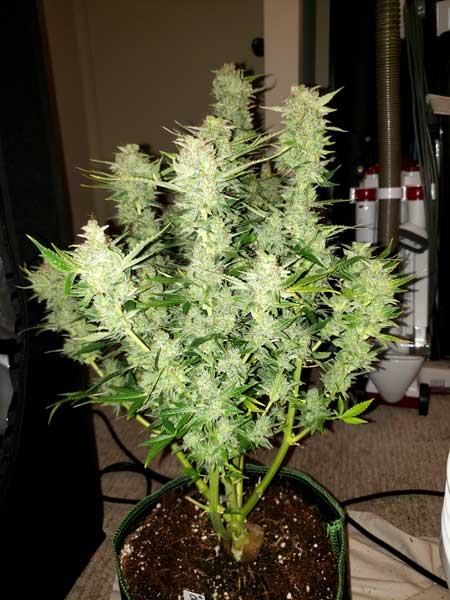
Make sure to always leave long enough buds to take advantage of the grow light penetration.
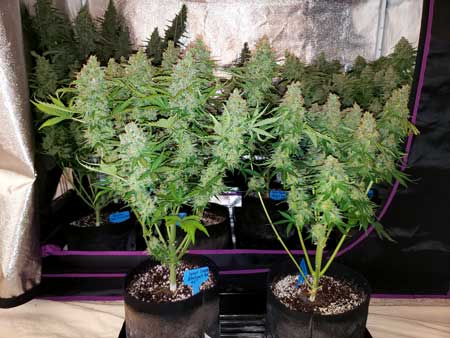
Lollipopped marijuana plants tend to put more “effort” into the top buds, which is what you want (top buds are typically the biggest and most potent buds on a cannabis plant).
Lollipopping is most effective when plants are taller than the light can penetrate.
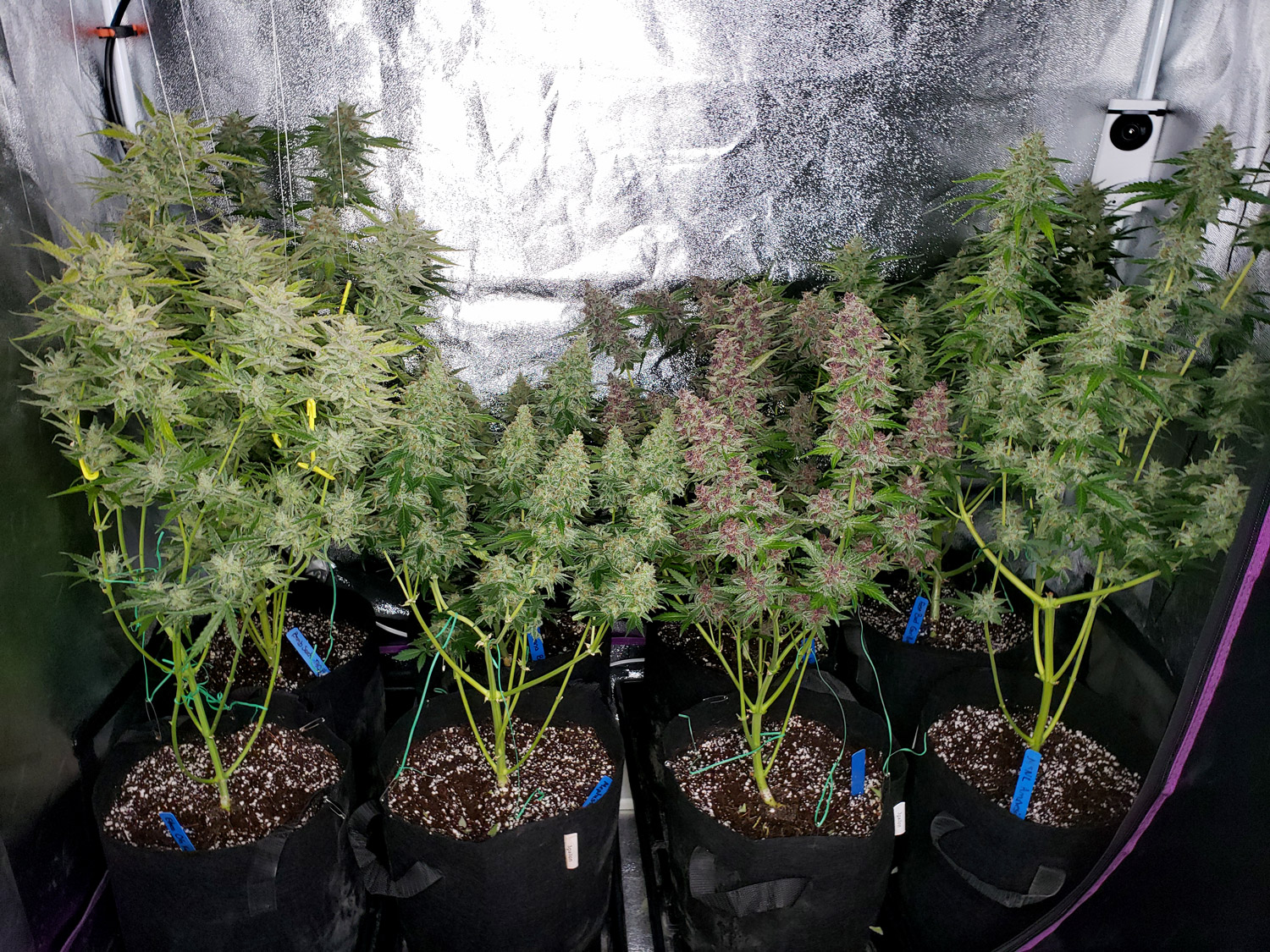
Lollipopping is a good choice when your cannabis plant is so tall that the light from your grow light doesn’t reach the bottom leaves at all. For example, if you have a small grow light with a tall plant, it’s likely the bottom leaves are in total darkness. These leaves do nothing for your plant as far as photosynthesis or bud building, and if they’re removed, your plant will put more energy into other more productive parts of the plant.
Example of lollipopping an untrained cannabis plant
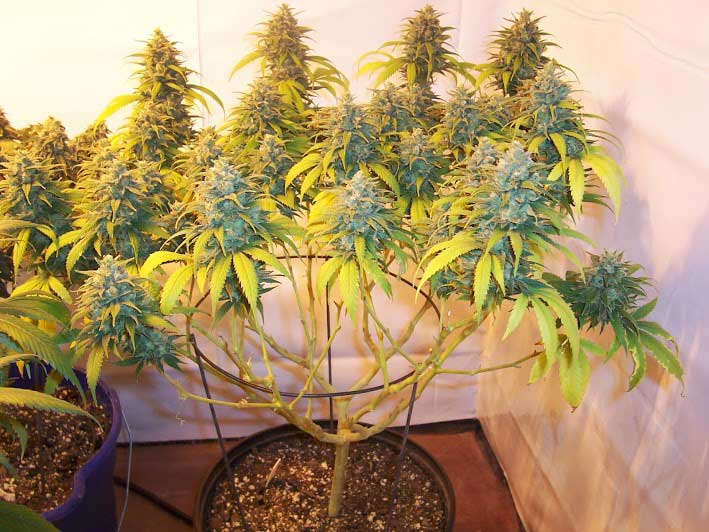
This cannabis plant was grown naturally and it looked like this right before it was put into the flowering stage. It is a perfect candidate for lollipopping.
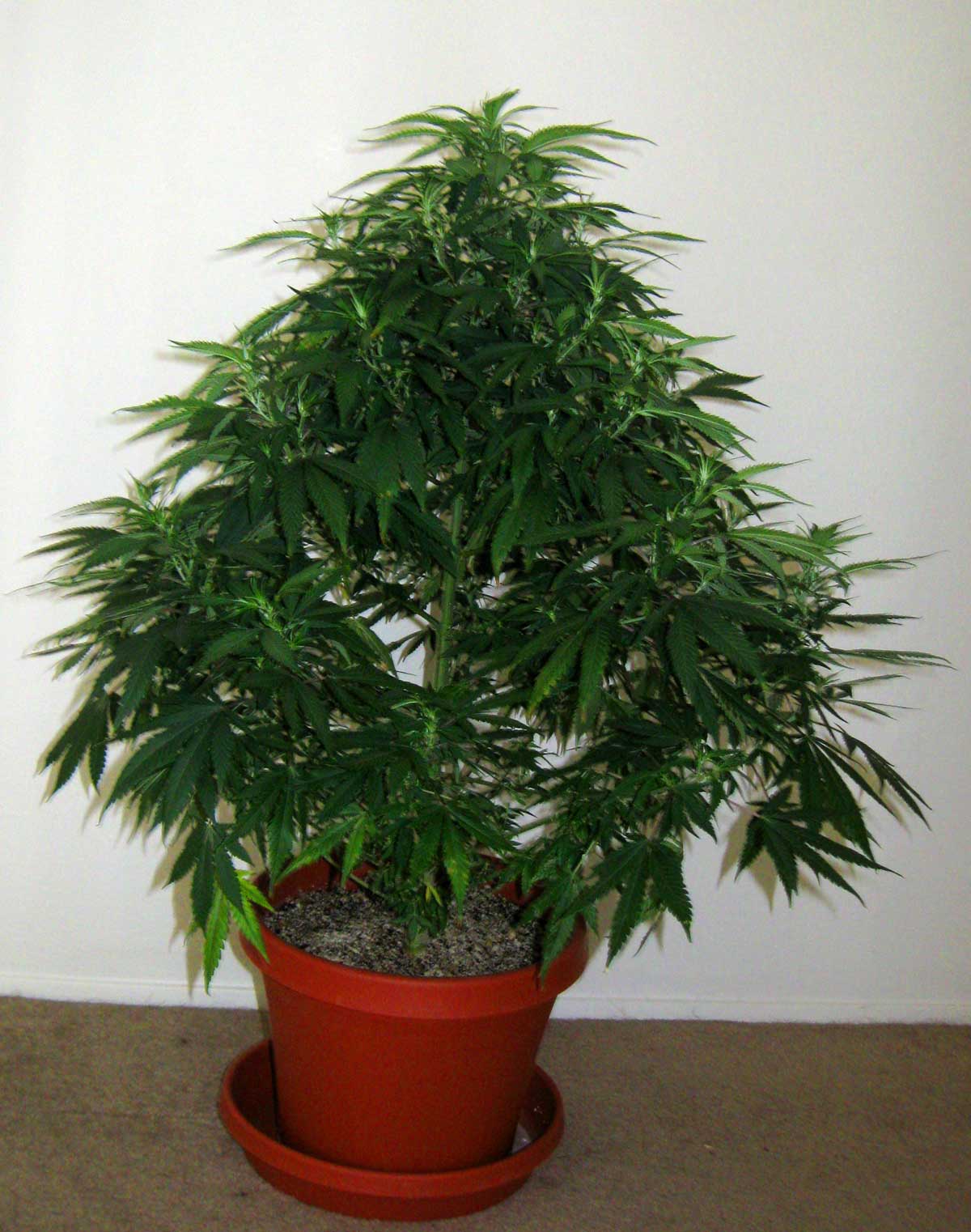
Soon after the cannabis plant started making buds, the grower noticed the bottom buds weren’t getting any light, and as a result, they weren’t getting bigger. In order to help the plant focus on the top buds, the grower removed all the lower bud sites and leaves (“lollipopped the cannabis plant”).
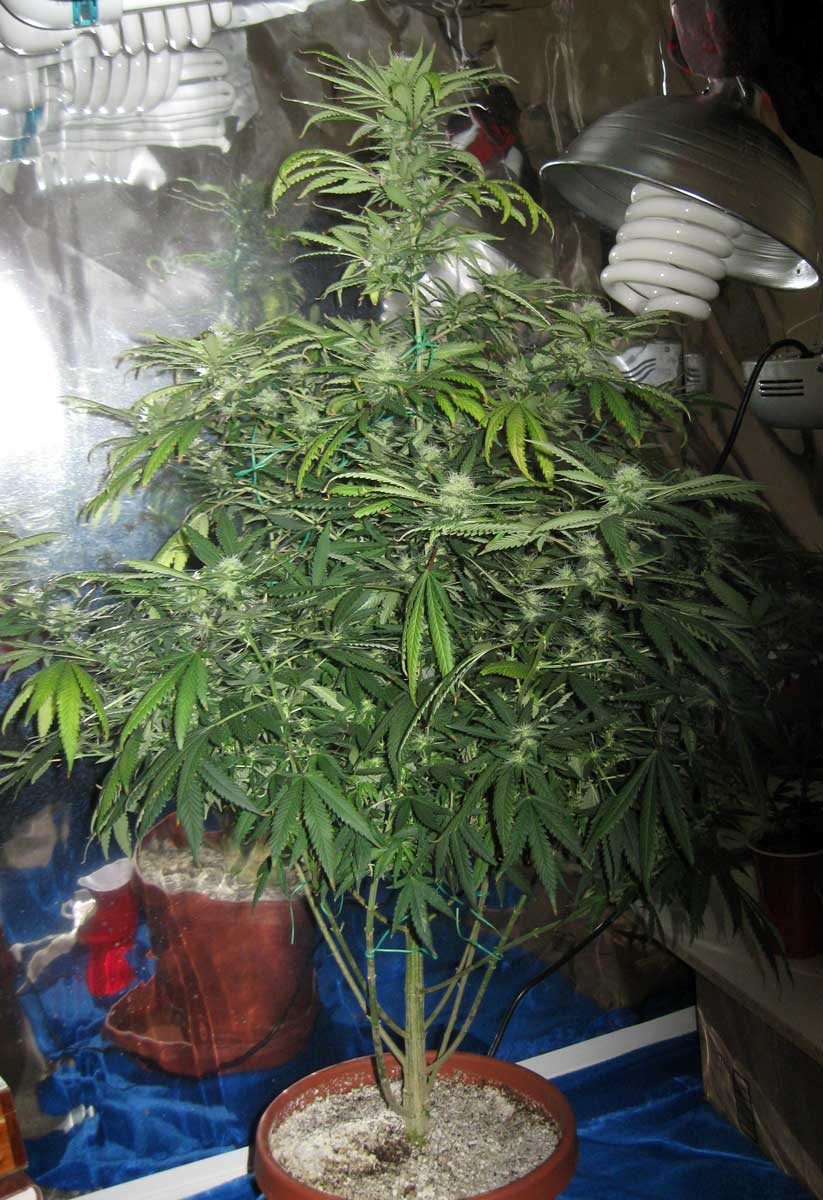
That cannabis plant just before harvest. As you can see, every part of the plant is completely filled with buds, though notice how even though it’s been lollipopped, all the biggest buds are still at the top. When you’re a cannabis grower, your goal is to try to maximize your top buds, as those are typically the biggest and most potent buds on the plant.
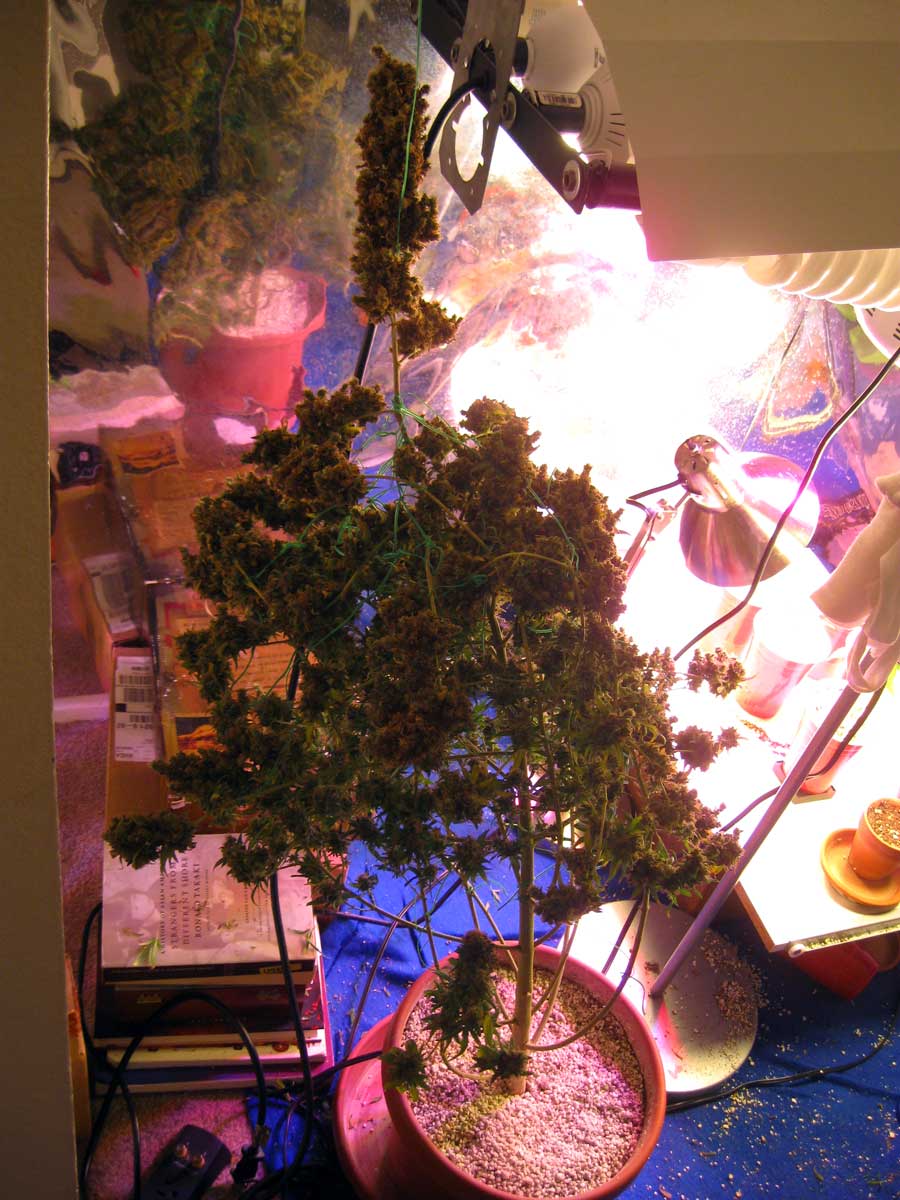
Buds that are lower on the plant (especially those that don’t get direct light) never fatten up properly. There are other cannabis training techniques that are based on these types of physiological reactions by the plant. For example, defoliation in the flowering stage is aimed at removing leaves that don’t get light while increasing the amount of light that gets to bud sites.
Buds lower down on the cannabis plant stay small (even if they get direct light from the sides). This is why many growers train their plants to grow flat (all the buds become top buds!) in addition to lollipopping.
Learn the trifecta – how to train, defoliate, and lollipop like a pro!
How to Lollipop Cannabis for the Higher Yields
This isn’t the only way to lollipop cannabis plants, but this is the method I use and it works well for me.
Step 1: Wait until just before the plants start flowering (making buds)
I have had the best results lollipopping cannabis right before the switch to the flowering stage. Growers don’t typically need to lollipop in the vegetative stage, unless you haven’t trained your plant and it’s gotten very tall or out of control, leaving some leaves in total shadow.
Photoperiod plants: Lollipop plants 0-3 weeks after initiating 12/12. I usually do it right as I initiate 12/12, though I’ve also waited a few weeks. So far, I haven’t noticed that it seems to make much difference if you do it right at 12/12 vs a few weeks later. However, never lollipop an unhealthy or slow-growing plant to prevent stressing it out further.
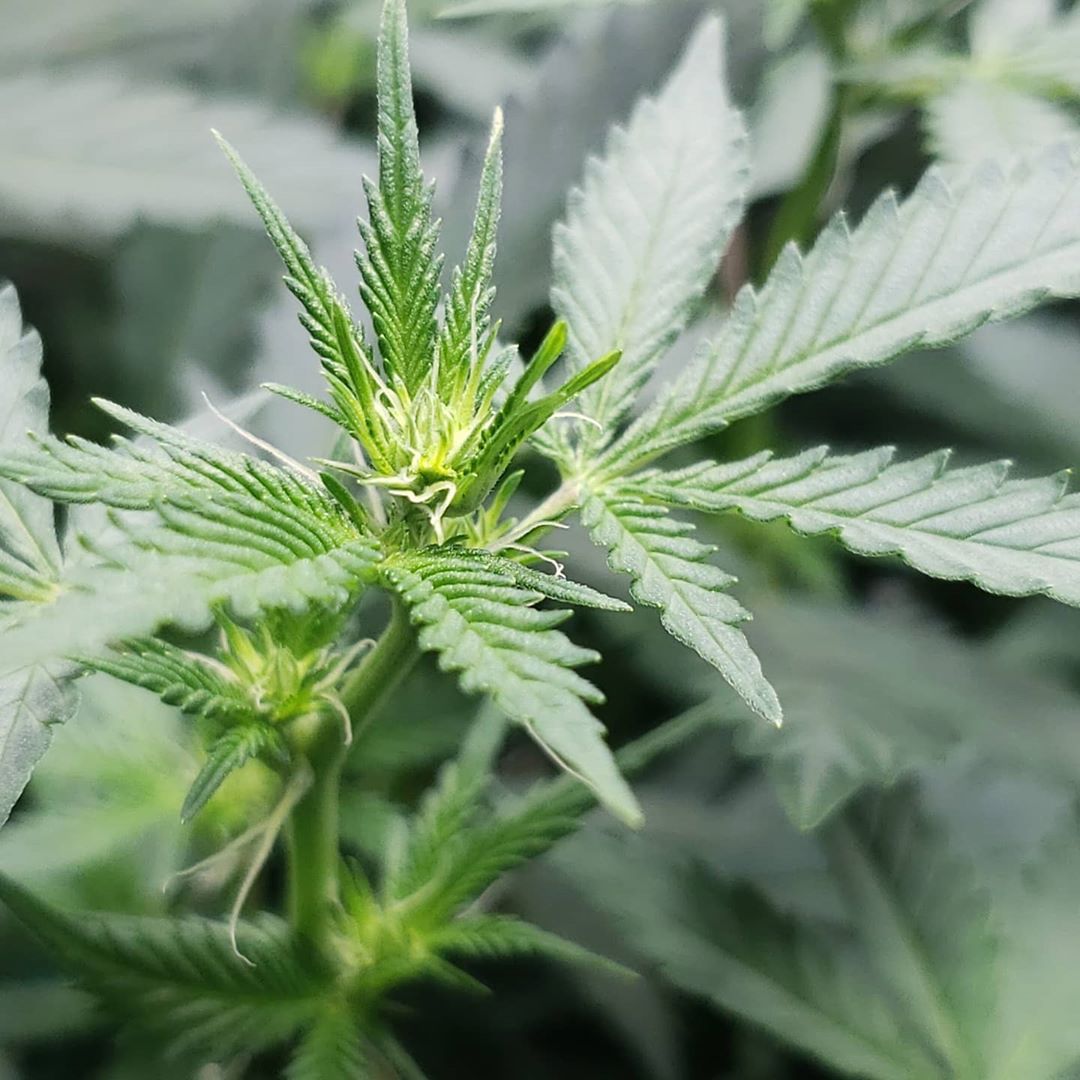
Autoflowering plants: Autoflowering plants often don’t get out-of-control enough to need to lollipopping. If the light is strong and can already get to the bottom of the plant, there is no need to do anything. However, if you’ve got a big autoflowering plant (or a weak grow light) I recommend lollipopping autos right as the buds start forming, like in the picture below.
The best time to lollipop is right around the beginning of the cannabis budding phase, while the plant is still growing vegetatively and before buds have fully formed.
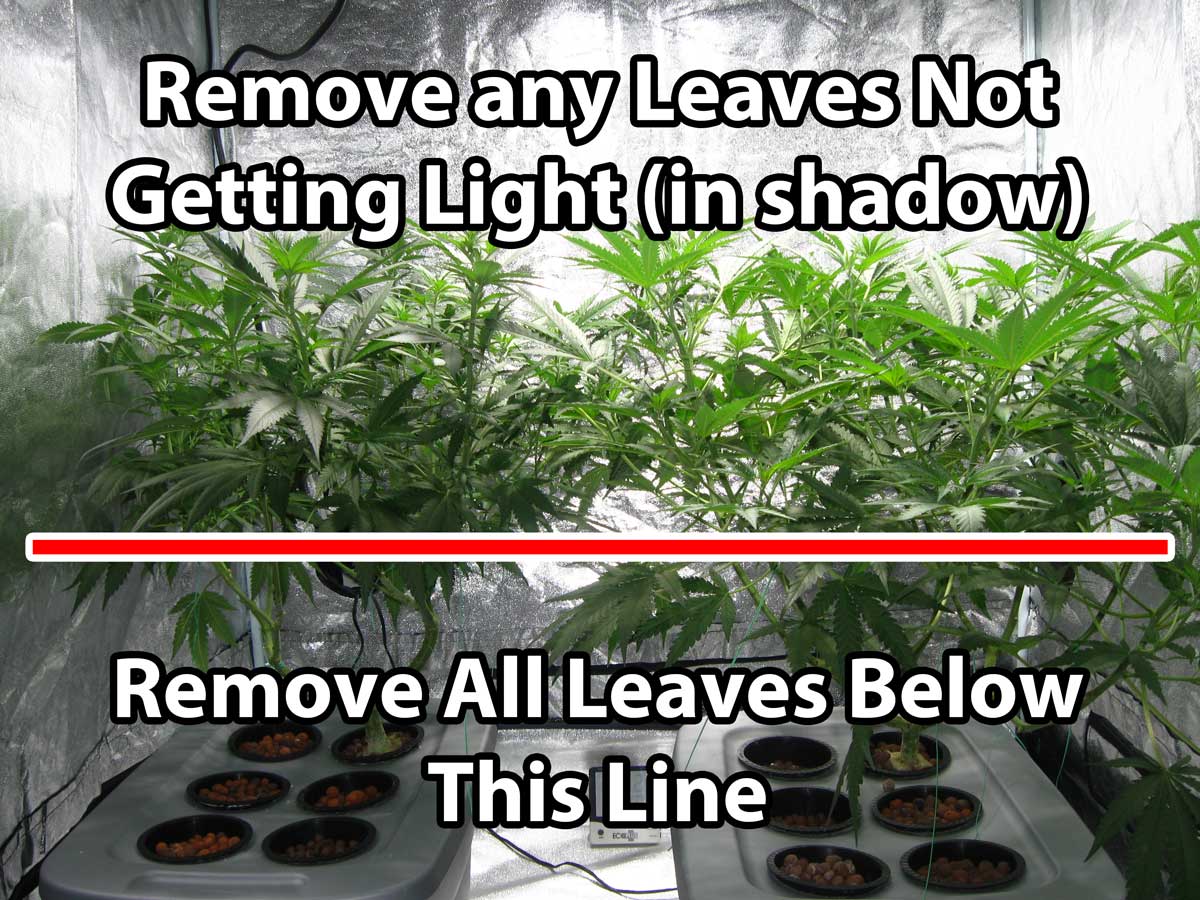
Step 2: Remove all the leaves and vegetation that will never get light
Cannabis growers call the technique “lollipopping” because you’re making the bottom bare like a lollipop stick 🙂 But keep in mind that removing too many bud sites can hurt your yields. When in doubt, it’s better to remove too little and come back to it later. You can always take more leaves, but you can’t put them back!
That’s it!
At that point, you just continue taking care of your cannabis plant (giving a good environment, keeping buds from getting too hot, watering regularly, and ensuring it doesn’t have any nutrient deficiencies).
Extra Cannabis Lollipopping Tips and Tricks
When you train cannabis plants to grow short and wide, combined with using a strong grow light, you may not need to lollipop much at all because the light will already penetrate deep into the plant.
Don’t Take Too Much
This grower stripped all the bud sites from the bottom of the plant while lollipopping, resulting in shortened colas. I’ve done this, too! His yield would have been bigger if he’d allowed those bud sites to continue further down on each stem.
Too much! This hurts yields because buds are shorter than optimal.
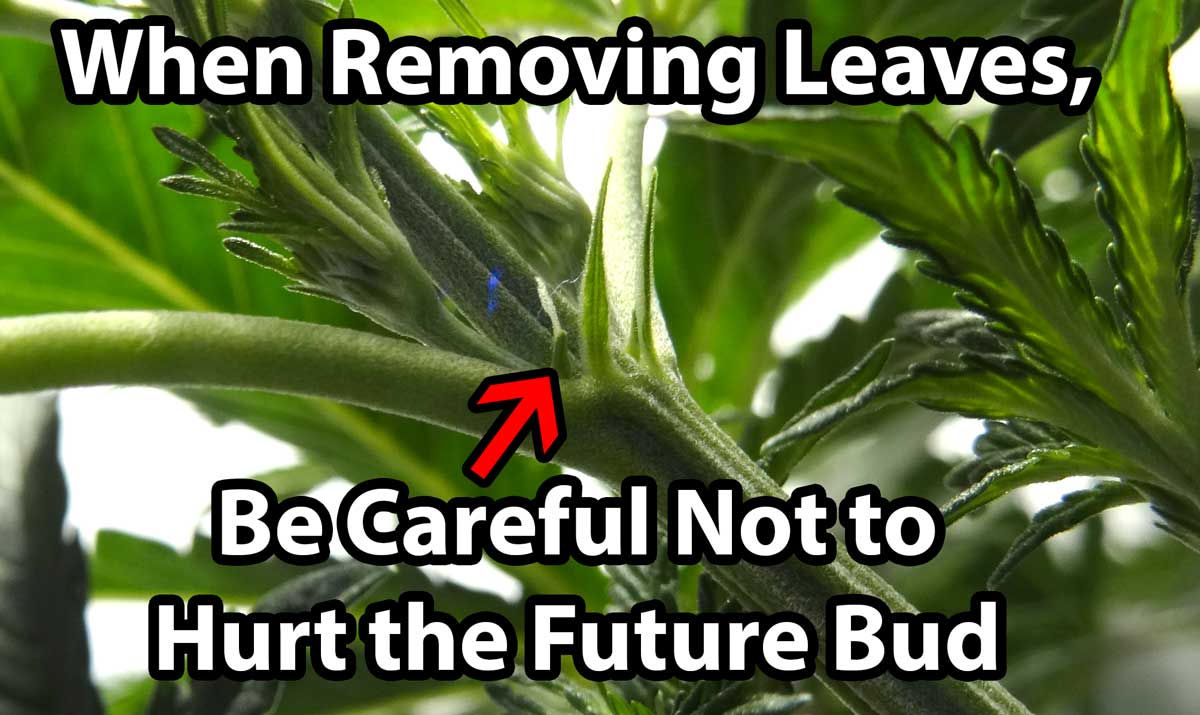
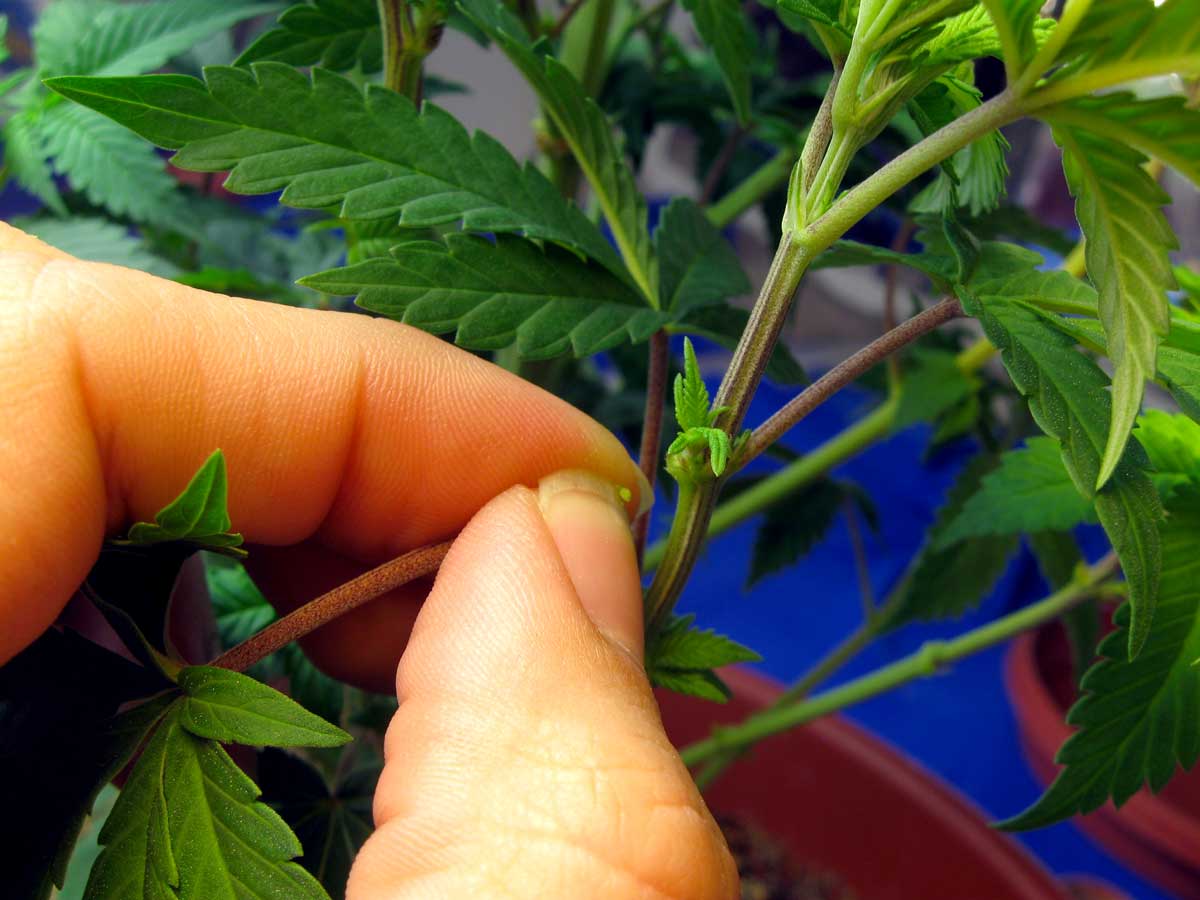
To prevent the problem with the plant above, avoid removing or damaging future bud sites, except for those at the very bottom. It’s easy to accidentally damage bud sites when they’re just tiny pre-flowers like this one, so be extra careful when removing leaves if you’re not also trying to stop the bud from growing.
When one plant is much taller than the others, it helps to lollipop so that the final buds are similar length.
The taller plant was lollipopped, because buds would never fatten down that low.
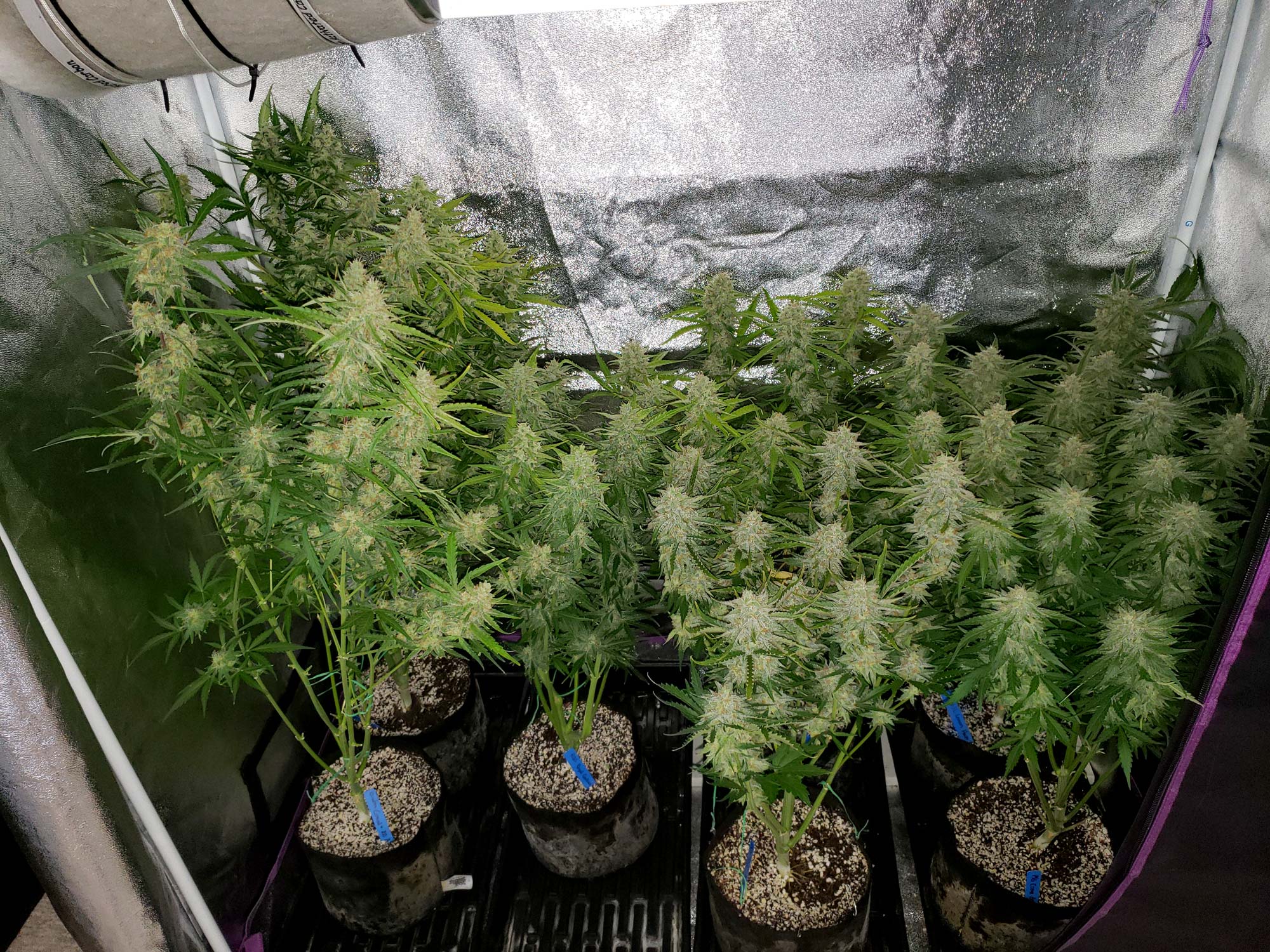
Top buds are best quality buds, so get plants to focus on those!
Grow Light Matters!
A super powerful grow light can cause buds to fatten for quite a long way down. Lollipopping doesn’t help if your buds are already the perfect length for yoru grow light.
Lollipopping these shorter plants (all under 3 feet / 1 meter tall), grown under an ultra-powerful LED, would likely only have lowered yields.
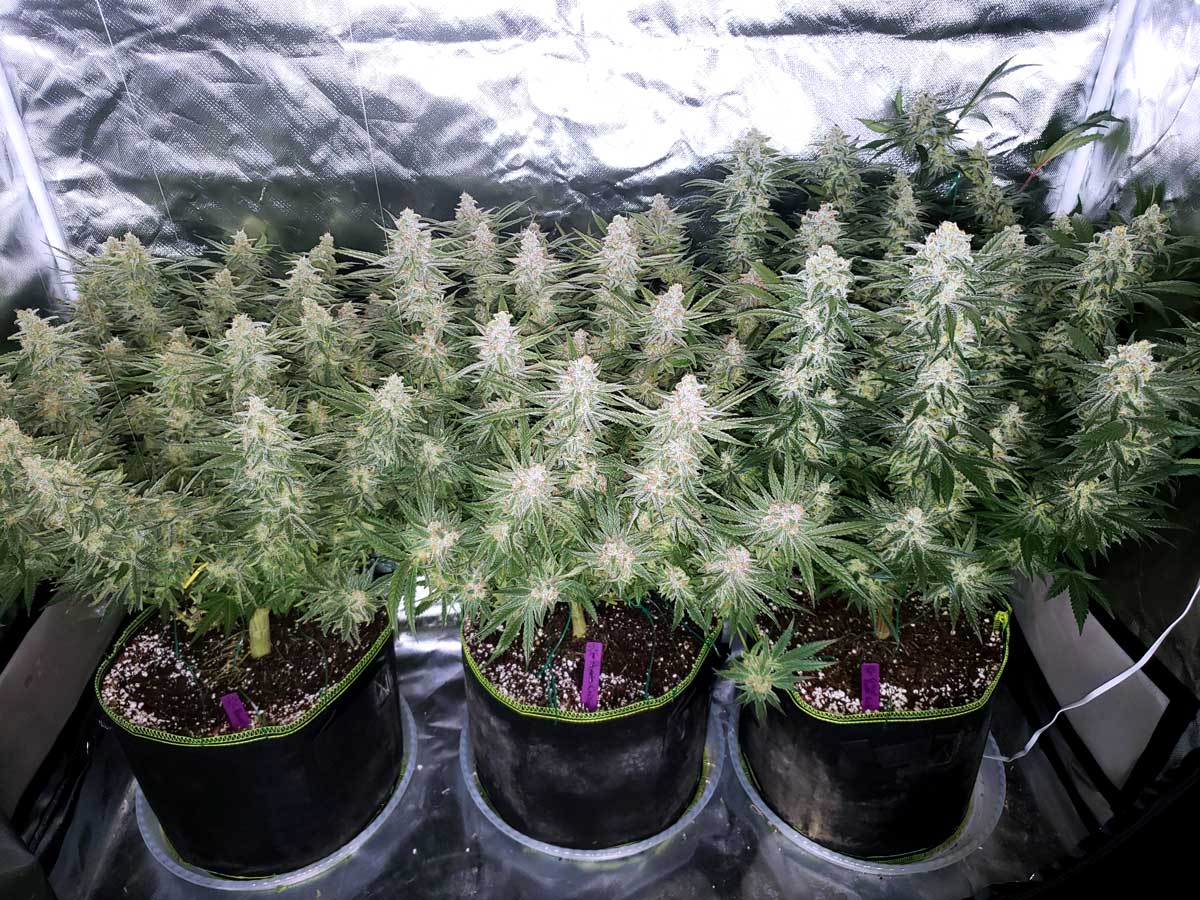
Remember, shorter plants don’t need to be lollipopped with powerful grow lights. (Grown by Kek)
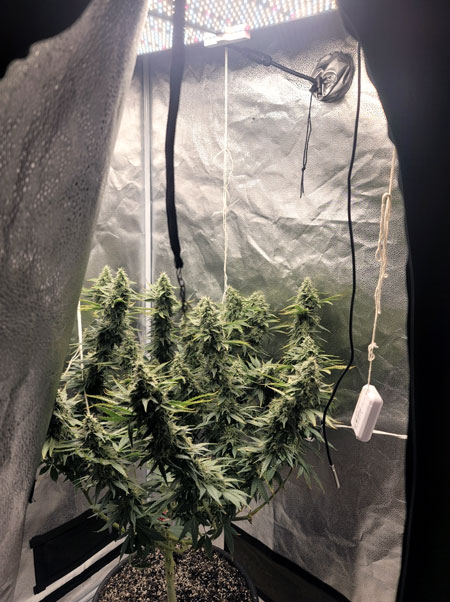
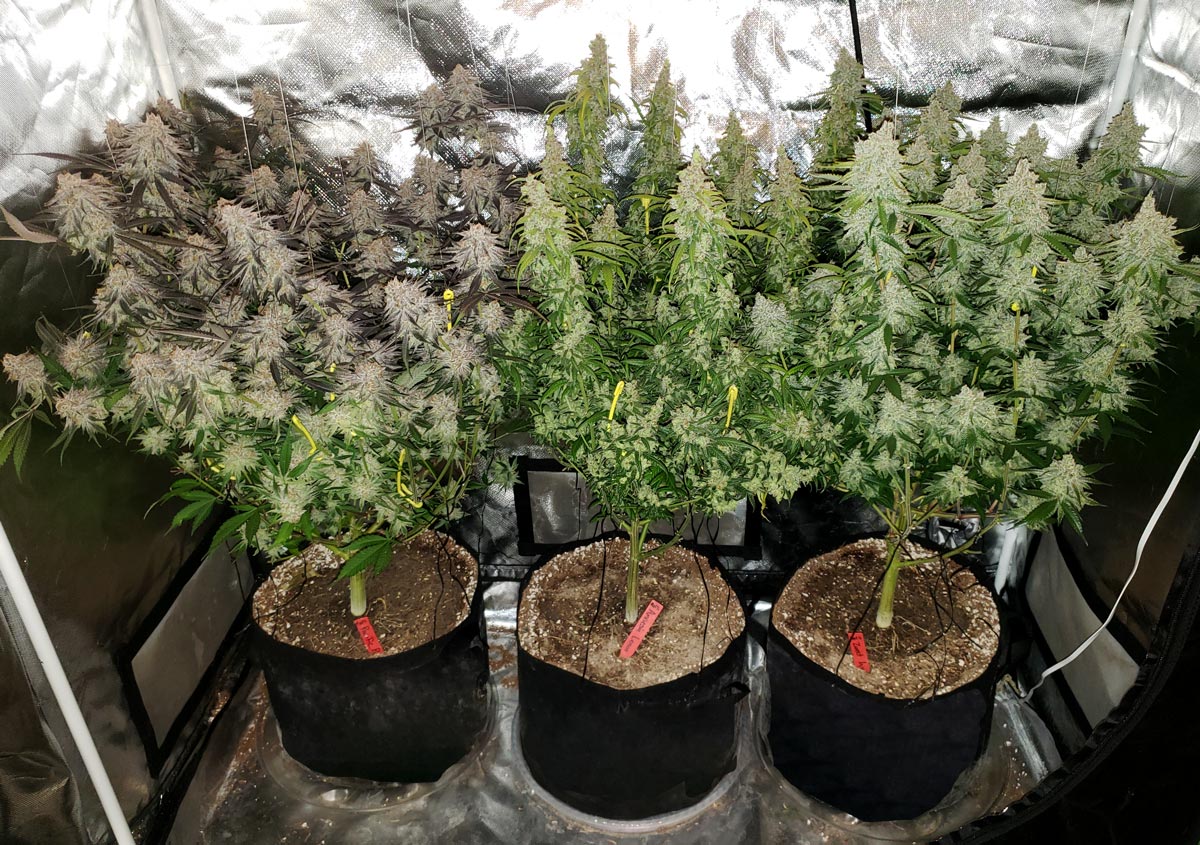
Notice how the bottom of these plants are in total shadow. Despite strong lights, these probably would have benefited from a tiny bit of lollipopping. It probably wouldn’t have made a difference to yield, but could have helped the top buds tighten up and be more dense, without any larfy lower buds that aren’t as good to smoke.
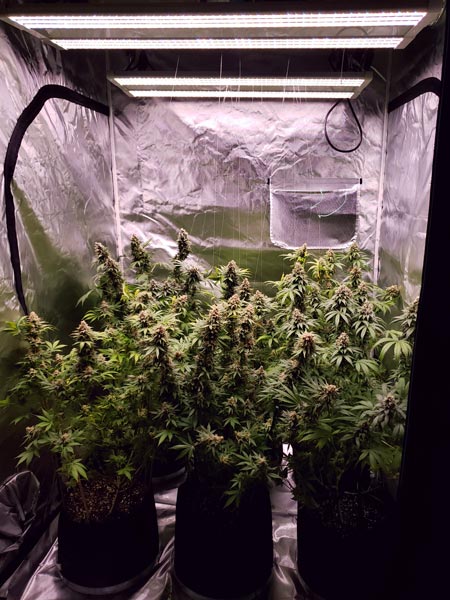
In the next picture, the right Purple Ghost Candy plant was heavily lollipopped, but there is still so much on top that buds were extremely long.
These HLG 350 LEDs are insane. These two LEDs weren’t even at full power.
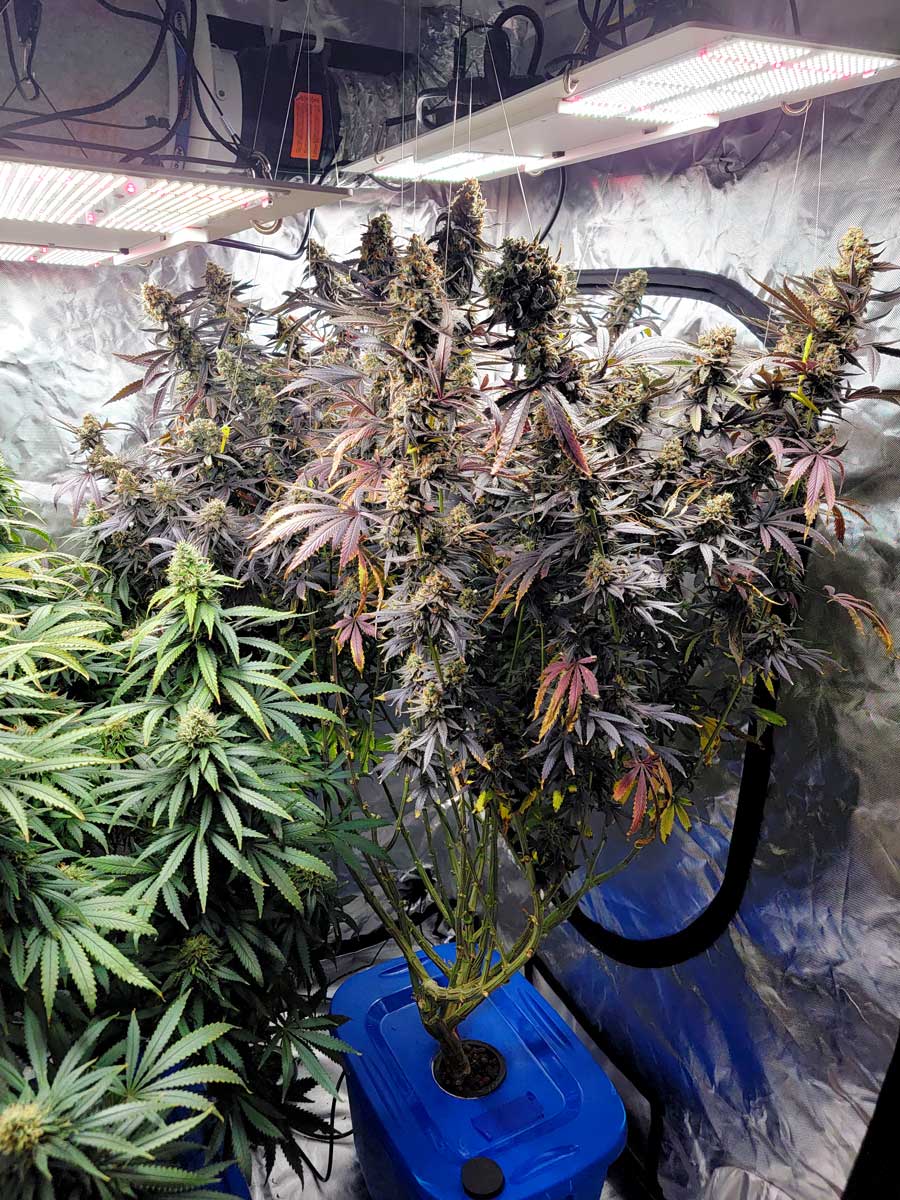
The HLG LEDs combined with the Purple Ghost Candy genetics (check out my review) and lollipopping, produced some of the densest buds I’ve grown yet.
Experiment with different amounts of lollipopping to see what’s best for you! However, keep in mind…
- Fluorescent grow lights don’t penetrate as deeply as more powerful lights. As a result, it makes a lot of sense to lollipop plants that have gotten taller than the lights can reach. That being said, don’t use fluorescent lights to grow weed, use LEDs (they’re better in almost every way for cannabis plants)!
- LED, HPS and LEC grow lights all penetrate much more deeply into the canopy, which means you will get big buds that go deep. As a result, you should remove less leaves and growth from plants grown under these lights when you’re lollipopping. You don’t want to remove growth that is already getting strong direct light as it will turn into buds!
Learn my exact technique from seed to harvest on how to train, defoliate, and lollipop!
You Might Be Interested in One of the Following Cannabis Plant Training Tutorials…
- Simplest Plant Training Guide Ever!
- Complete Plant Training Guide
- How Can I Train an Auto-Flowering Plant?
- 7 Unfortunate Plant Training Mistakes
Detailed Breakdown of Training Techniques
- Low-Stress Training (LST) Tutorial
- Topping vs FIMing Tutorial
- LBH’s Famous ScrOG Tutorial
- Supercropping: Simple Secret to Bigger Yields
- Sea of Green (SoG) Tutorial
- 12-12 from Seed – Flowering Plants Early
- Nebula’s Manifold Tutorial
- How to Manifold Clones
- Alternate Defoliation Tutorial
- What is Re-Vegging / Monstercropping?
